Skip to content
Responsive image
Vendor
Mohrbooks Literary Agency
Sebastian Ritscher
Original language
English
Weblink
https://www.hachettebookgroup.co …

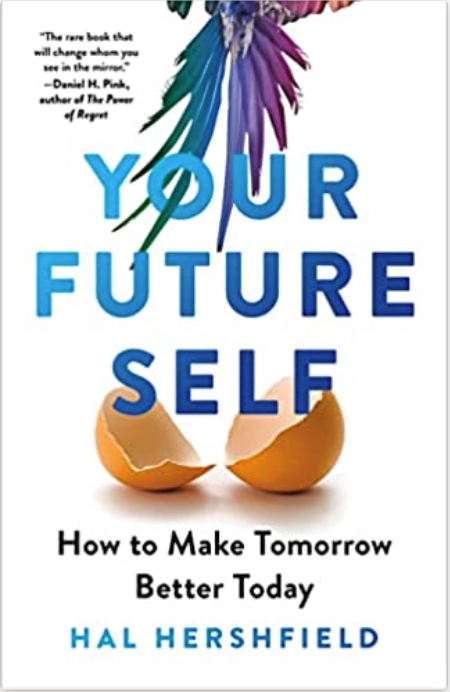
YOUR FUTURE SELF

Hal Hershfield

How to Make Tomorrow Better Today

Psychologist Hal Hershfield reveals how to connect with our "future selves" so that we can improve our lives right now and achieve our greatest hopes for the future.
We've all had the desire to travel through time and see what our lives will be like later in life. While we want the best possible future for ourselves, we often fail to make decisions that would truly make that a reality. Why do we choose steak over vegetables at dinner, waving off concerns about high cholesterol? Why do we splurge on luxury cars rather than save for retirement? Why can't we stick to our exercise programs? Why are so many of us so disconnected from our future selves?

Based on over a decade of groundbreaking research, Your Future Self explains that, in our minds, our future selves often look like strangers. Many of us view the future as incredibly distant, making us more likely to opt for immediate gratification that disregards the health and wellbeing of ourselves in the years to come. People who are able to connect with their future selves, however, are better able to balance living for today and planning for tomorrow. Your Future Self presents the science, describes the mental mistakes we make in thinking about the future, and gives us practical advice for imagining our best future so that we can make that a reality.
Available products
Book

Published 2023-06-06 by Little Brown / Spark

Book

Published 2023-06-06 by Little Brown / Spark

Comments

Hershfield's entertaining and powerful book tells us how thinking about the future can change our behavior in the presentand help us grow into the people we eventually want to be.

Who doesn't want to grow? To have a better future? Fascinating and illuminating, Your Future Self shows us how to get there. It's certain to shift the ways we live - right now and beyond.

How Elvis Got Americans to Accept the Polio Vaccine | Scientific American By Hal Hershfield, Ilana Brody Campaigns to change behavior thrive on three factors: social influence, social norms and vivid examples. Read more...

Would You Rather Have $1 Million or $5,000 Monthly in Retirement? | The Wall Street Journal By Shlomo Benartzi and Hal E. Hershfield The answer will tell you whether you suffer an 'illusion of poverty' or an 'illusion of wealth.' Read more...

An encouraging, practical guide for decision-making.

Why time-starved people are happier | Washington Post By Christopher Ingraham Americans who want more time in their lives are happier than those who want more money, according to new research published in the journal Social Psychological and Personality Science. Read more...

Plan Your Life Again, but Keep It Simple | The New York Times By Kayleen Schaefer Even as we are optimistic about re-emerging from this crisis, plotting the future can feel daunting or even downright impossible. Read more...

The Year We Lost | The Atlantic Story by Joe Pinsker When we look back on 2020, will we see past all the things that didn't happen? Read more...

Immensely insightful and remarkably engaging, Your Future Self is sure to change the current and future lives of many for the better.

A timely idea from one of today's leading behavioral scientists. Your Future Self delivers on its promise, showing you how and why mental time travel makes your tomorrow better today! What's more, this book is both personal and thoroughly grounded in the latest research, much of which Hershfield has pioneered himself.

https://www.youtube.com/embed/tJotBbd7MwQ?iframe=true&width=600&height=400 Read more...

staggering piece on Hal and YOUR FUTURE SELF. Read more...

When you get to the last page of this fascinating book, your future self will thank you for having started it. An insightful and delightful examination of the strange journey we all make through time. Don't leave the present without it!

People who are able to connect with their future selves are better able to balance living for today and planning for tomorrow. Your Future Self presents the science, describes the mental mistakes we make in thinking about the future, and gives us practical advice for imagining our best future so we can make that vision a reality Read more...

Back to the future technology spurs adults to save for retirement | CBS News By Anthony Mason LOS ANGELES -- Young people don't think much about retirement. Two out of five don't think about it at all, according to a survey of adults under 30. Read more...

Why It's So Hard to Put 'Future You' Ahead of 'Present You' | The New York Times By Tim Herrera I have this awful, corny joke I trot out whenever I'm glossing over details for future plans with friends or brushing off something I don't want to deal with: "That's Future Tim's problem. Let that chump deal with it." Poor, poor Future Tim. Constantly set up for failure by that jerk Past Tim. As Present Tim who, ahem, is always on top of things I can say that Past Tim isn't bad. He's just wired that way. And I'm sure as you're reading this, a few instances come to mind of when Past You has, quite inconsiderably, set up Future You for failure. Why do we do this to ourselves? What makes us act against our own self-interest, even when we are acutely aware we're doing so? Read more...

What Should You Choose: Time or Money? | The New York Times By Hal E. Hershfield and Cassie Mogilner Holmes Given the choice between more time or more money, which would you pick? For a beach vacation, you might pay more for a direct flight to gain a couple of extra hours getting sand between your toes. On the other hand, you might take a better-paying job that requires late nights at the office. Read more...

Your Future Self is at once mind-boggling and soul-stirring. Hal Hershfield makes complex science come alive - while also delivering practical tips to close the gap between who we are today and who we can become tomorrow. This is the rare book that will change whom you see in the mirror.

How Much Leisure Time Do the Happiest People Have? | The Atlantic By Joe Pinsker Up and down the economic ladder, many Americans who workand especially those raising kidsare pressed for time, wishing they had more of it to devote to leisure activities (or even just sleeping). At the same time, research has indicated that people who are busy tend to be happier than those who are idle, whether their busyness is purposeful or not. Read more...

UK: Piatkus/Little, Brown UK ; Chinese (simpl.): Citic ; Chinese (compl.): Commonwealth Publishing ; Dutch: Bruna ; Hungarian: Század ; Japanese: Toyo Keizai ; Korean: The Business Books ; Portuguese (Brazil): Planeta Brasil ; Portuguese (Portugal): Lua de Papel ; Russian: Mann, Ivanov and Ferber ; Slovenian: Zalozba Primus

Humans are funny creatures. We know what we need to do to take care of our future selves - eat less, save more, floss - and yet we fail to do them consistently. Hal Hershfield offers an entertaining guide to getting out of our own way that's rooted in science but full of practical ways to change.

Should You Immerse Yourself in Bad News These Days or Ignore It Completely? | Scientific American By Hal Hershfield How can we possibly grapple with the onslaught of information about virus spread, stock market nosedives, canceled plans and uncertainty about the future? Some people wallow in the fear, anxiety and sadness, checking news sites and social media constantly. Others try to suppress it all and ignore the outside world (I'm guessing that Instagram has never seen so much traffic). Read more...

I can't recommend the book more highly, especially because the author's exceptional use of narrative gives this behavioral science volume a surprising page-turner quality. Read more...

Time Is Meaningless Now | Vice By Shayla Love In 1962, a French geologist, Michel Siffre, descended into a cave more than 400 feet below ground and stayed there for two months. He left his watch, and any other indicators of time, at the surface to experience what life was like "beyond time." Read more...

As a pioneering psychologist, Hal Hershfield's research has changed how I think about the future, and he's about to do the same for you. His book offers a fascinating window into who you might become tomorrow - and how you can have more say in that evolution today. Your future self will be grateful that you read it.

Bad Habits? My Future Self Will Deal With That | The New York Times By Alina Tugend People who saw age-enhanced images of themselves said they would put 6.75% of their paychecks into a 401(k) compared with 5.2% who weren't exposed to their future selves. That may not seem like much, "but it's a 30% increase," Professor Hershfield said. Read more...

The Cognitive Biases Tricking Your Brain | The Atlantic Story by Ben Yagoda Science suggests we're hardwired to delude ourselves. Can we do anything about it? Read more...

The future of money: After the pandemic, will you have your own 'financial pandemic'? | BNN Bloomberg By Melissa Leong The global pandemic changed everything in 2020. Now it is going to change everything forever. This is part of "The Future of" series, in which BNN Bloomberg looks at what is next for our transformed economy and daily lives. Read more...

Adam Grant just recommended the book in his most recent newsletter roundup, noting that "your future self will be grateful that you read it."

A fascinating, profound and immediately practical guide to shaping your life to come, while living more richly in the moment. I fully expect future versions of myself to thank me for reading it.

Op-Ed: A lesson from FaceApp: Learning to relate to the older person we will become | Los Angeles Times By Hal E. Hershfield When given the choice, about 85% of people say they would not want to know about some negative event far in the future. Yet in recent days more than 150 million people around the globe have downloaded FaceApp, which allows users to see how they might age in real life wrinkles and all. Read more...