| Vendor | |
|---|---|

|
Liepman Literary Agency
Marc Koralnik |
| Original language | |
| English | |
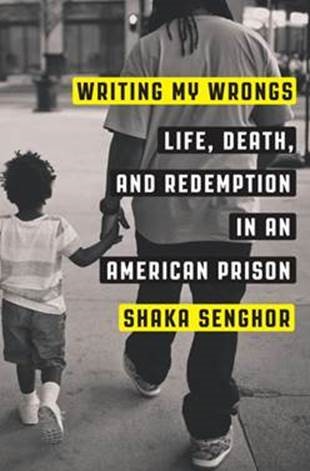
WRITING MY WRONGS
Life, Death, and One Man's Story of Redemption in an American Prison
In life, it's not how you start that matters. It's how you finish.
Shaka Senghor is a man who went from being a convicted murderer serving a 19-year prison sentence to becoming a writer, a mentor, a motivational speaker, and a leading voice on criminal justice reform, and as you will read above, Oprah calls her conversation with Shaka one of the best she's ever had in her life!
His story begins in the 1980s, at the height of the crack epidemic, in a middle-class neighborhood on Detroit's East Side. As a kid, Shaka was a natural leader and an honor-roll student with dreams of becoming a doctorbut when he was 11, his parents' marriage began to disintegrate and the beatings from his mother worsened, culminating in a fight that caused him to run away from home at age 14.
Homeless, hungry, and stinging from the rejection of his mother, Shaka turned to drug dealing to survive. But at age 17, he was shot three times while standing on the corner of his block. Throughout the whole ordeal, nobody hugged him, nobody counseled him, and nobody told him he would be okay. Nobody told him that he would become paranoid, that he would begin carrying a gun, and that fourteen months later, he would fire the shots that ended another man's life.
After pleading guilty to second-degree murder, Shaka entered prison at age 19, bitter, angry, and hurt. He blamed everybody, from his parents to the system, and he channeled that anger into violence. He ran a black market store, he loan sharked, and, halfway through his sentence, he was sent to solitary confinement for 4½ years for assaulting an officer to the point of near-death.
But it was at rock bottomin the hole, an environment that causes many to lose their sanity and even take their own livesthat Shaka's redemption began. After a letter from his 11-year-old son caused him to reexamine his life, Shaka discovered literature, writing, prayer, and the compassion of others as lifelines he could use to confront the demons of his past, forgive those who hurt him, and begin atoning for the wrongs he committed. In the pages of his books and journals, Shaka found a haven from the madness around him, a sanctuary where he could begin doing the hard work of personal change.
Upon his release from prison at age 38, Shaka became an activist and mentor to young men and women facing situations like his, work that led him to fellowships at the MIT Media Lab and the Kellogg Foundation, and invitations to speak at TED and the Aspen Ideas Festival. He currently serves as the Director of Strategy and Innovation with #cut50, a bipartisan initiative to safely and wisely reduce the U.S. prison population by 2025. In addition to serving as a lecturer at the University of Michigan, Shaka speaks regularly at high schools, prisons, churches, and universities across the country.
WRITING MY WRONGS is an unforgettable tale of forgiveness and one that reminds us that our worst deeds don't define who we are or what we can contribute to the world. And it's a lasting testament to the power of compassion, prayer, and unconditional love, for reaching those whom society has forgotten.
Shaka Senghor is a writer, mentor, and motivational speaker. He is the author of six books, a former Director's Fellow at the MIT Media Lab, a Community Leadership Fellow with the Kellogg Foundation, and the founder of The Atonement Project, which helps victims and violent offenders heal through the power of the arts. He currently serves as the Director of Strategy and Innovation with #cut50, a bipartisan initiative to safely and smartly reduce the U.S. prison population in half by 2025.
www.shakasenghor.com
His story begins in the 1980s, at the height of the crack epidemic, in a middle-class neighborhood on Detroit's East Side. As a kid, Shaka was a natural leader and an honor-roll student with dreams of becoming a doctorbut when he was 11, his parents' marriage began to disintegrate and the beatings from his mother worsened, culminating in a fight that caused him to run away from home at age 14.
Homeless, hungry, and stinging from the rejection of his mother, Shaka turned to drug dealing to survive. But at age 17, he was shot three times while standing on the corner of his block. Throughout the whole ordeal, nobody hugged him, nobody counseled him, and nobody told him he would be okay. Nobody told him that he would become paranoid, that he would begin carrying a gun, and that fourteen months later, he would fire the shots that ended another man's life.
After pleading guilty to second-degree murder, Shaka entered prison at age 19, bitter, angry, and hurt. He blamed everybody, from his parents to the system, and he channeled that anger into violence. He ran a black market store, he loan sharked, and, halfway through his sentence, he was sent to solitary confinement for 4½ years for assaulting an officer to the point of near-death.
But it was at rock bottomin the hole, an environment that causes many to lose their sanity and even take their own livesthat Shaka's redemption began. After a letter from his 11-year-old son caused him to reexamine his life, Shaka discovered literature, writing, prayer, and the compassion of others as lifelines he could use to confront the demons of his past, forgive those who hurt him, and begin atoning for the wrongs he committed. In the pages of his books and journals, Shaka found a haven from the madness around him, a sanctuary where he could begin doing the hard work of personal change.
Upon his release from prison at age 38, Shaka became an activist and mentor to young men and women facing situations like his, work that led him to fellowships at the MIT Media Lab and the Kellogg Foundation, and invitations to speak at TED and the Aspen Ideas Festival. He currently serves as the Director of Strategy and Innovation with #cut50, a bipartisan initiative to safely and wisely reduce the U.S. prison population by 2025. In addition to serving as a lecturer at the University of Michigan, Shaka speaks regularly at high schools, prisons, churches, and universities across the country.
WRITING MY WRONGS is an unforgettable tale of forgiveness and one that reminds us that our worst deeds don't define who we are or what we can contribute to the world. And it's a lasting testament to the power of compassion, prayer, and unconditional love, for reaching those whom society has forgotten.
Shaka Senghor is a writer, mentor, and motivational speaker. He is the author of six books, a former Director's Fellow at the MIT Media Lab, a Community Leadership Fellow with the Kellogg Foundation, and the founder of The Atonement Project, which helps victims and violent offenders heal through the power of the arts. He currently serves as the Director of Strategy and Innovation with #cut50, a bipartisan initiative to safely and smartly reduce the U.S. prison population in half by 2025.
www.shakasenghor.com
| Available products |
|---|
|
Book
Published 2016-03-01 by Convergent |