Skip to content
Responsive image
Vendor
Mohrbooks Literary Agency
Sebastian Ritscher
Original language
English
Categories

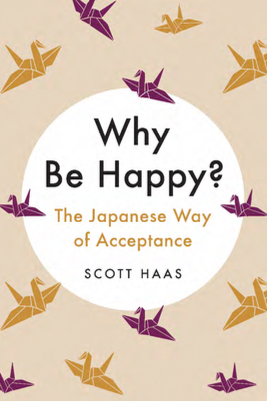
WHY BE HAPPY?

Scott Haas

The Japanese Way of Acceptance

In the tradition of popular concepts of hygge, ikigai, and wabi sabi: a beautiful, practical guide to ukeireru, the Japanese principle of acceptance.
An elegant, practical look at ways we can reduce anxiety and stress and increase overall well-being. By learning and practicing ukeireru, you can: Profoundly improve your relationships, with a greater focus on listening and intuiting; find calm in ritualizing things such as making coffee and drinking tea; embrace the importance of baths and naps; cultivate practical ways of dealing with anger, fear, and arguments - the daily tensions that take up so much of our lives.

Scott Haas did his doctoral internship at Massachusetts Mental Health Center, a Harvard Medical School teaching hospital. He works in Japan three to four times each year.
Available products
Book

Published 2020-07-07 by Hachette Go

Comments

Scott Haas's insightful and engrossing exploration into the Japanese way of acceptance is a road map to a more meaningful life. This wonderful book excites with food for thought that is sumptuous, savory, and nuanced.

Why Be Happy? is a fascinating, suggestive contemplation, filtered through experiences in Japan, of the happiness perplex in America. Haas perceives the basic elements of contentment in Japan as acceptance and empathy and asks if these aren't more satisfyingly found in the connections between people than in the isolated (American) individual.

"How can I be happy?" We all want to know the answer and pursue it for life. ... Clinical psychologist Scott Haas discovered a refreshingly simple and effective way to attain happiness through his intimate experience with Japanese culture over years... He introduces the idea in his new book Why Be Happy? ... Read more...

Scott Haas has written a valuable book that is enormously helpful for integrating our Western approach with Japanese practices for stress reduction. Both anecdotal and grounded in research, the book is extremely pragmatic. By focusing on Japanese methods to reduce stress, he then suggests that the subsequent calm can enable people to better address the systemic and institutional causes of their stress.

Respect, flexibility, and the inspiration to articulate core values are the key elements to understanding different cultures. With these three approaches, Why Be Happy? describes quite eloquently the values that Japanese people want to hand to the next generation.

UK: John Murray Learning ; Bulgaria: Kragozor ; Chinese (compl.): Ecus Cultural Enterprise Ltd. ; French: Editions Leduc ; Italian: Newton Compton ; Poland: Foksal ; Russia: Popuri ; Spain: RBA Libros ; Vietnamese: Le Chi Culture and Communications

Scott Haas describes dualism of life in Japan perfectly. He allows the reader to view the culture through his experiences as the Japanese simultaneously strive for perfection or imperfection, depending on whether you view it (the culture) from a western or Japanese standpoint. I highly recommend Why Be Happy? to anybody who's interested in learning about Japan. Omedetoo gozaimasu!

hachettego.com/titles/scott-haas/why-be-happy/9780738285511/

Scott Haas understands that Japanese cuisine reflects culture and history; he takes us behind the scenes and shows how the food is a sure way to appreciate Japan.