| Vendor | |
|---|---|

|
Fritz Agency
Christian Dittus |
| Original language | |
| English | |
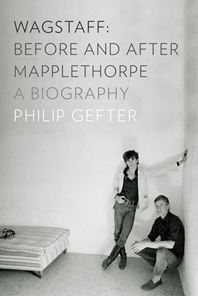
WAGSTAFF: BEFORE AND AFTER MAPPLETHORPE
Biography on a grand cultural level, here is the long-awaited story of Sam Wagstaff and his indelible influence on the world of late-twentieth-century art.
Sam Wagstaff, the legendary curator, collector, and patron of the arts, emerges as a cultural visionary in this groundbreaking biography. Even today remembered primarily as the mentor and lover of Robert Mapplethorpe, the once infamous photographer, Wagstaff, in fact, had an incalculableand largely overlookedinfluence on the world of contemporary art and photography, and on the evolution of gay identity in the latter part of the twentieth century.
After a typical education for a young man of his class - Hotchkiss and Yale -, but increasingly uncomfortable with his career and his double life, he abandoned advertising, turned to the formal study of art history, and embarked on a radical personal transformation that was in perfect harmony with the tumultuous social, cultural, and sexual upheavals of the 1960s.
Wagstaff became a curator, in 1961, at Hartford's Wadsworth Atheneum, where he mounted both the first museum show of minimal art, and sculptor Tony Smith's first museum show, while lending his early support to artists Andy Warhol, Ray Johnson, and Richard Tuttle, among many others. Later, as a curator at the Detroit Institute of Arts, he brought the avant-garde to a regional museum, offending its more staid trustees in the process.
After returning to New York City in 1972, the fifty-year-old Wagstaff met the twenty-five-year-old Queens-born Robert Mapplethorpe, then living with Patti Smith. What at first appeared to be a sexual dalliance became their now historic lifelong romance, in which Mapplethorpe would foster Wagstaff's own burgeoning interest in contemporary photography and Wagstaff would help secure Mapplethorpe's reputation in the art world. In spite of their profound class differences, the artistic union between the philanthropically inclined Wagstaff and the prodigiously talented Mapplethorpe would rival that of Stieglitz and O'Keefe, or Rivera and Kahlo, in their ability to help reshape contemporary art history.
Positioning Wagstaff's personal life against the rise of photography as a major art form and the simultaneous formation of the gay rights movement, Philip Gefter's absorbing biography provides a searing portrait of New York just before and during the age of AIDS. The result is a definitive and memorable portrait of a man and an era.
After a typical education for a young man of his class - Hotchkiss and Yale -, but increasingly uncomfortable with his career and his double life, he abandoned advertising, turned to the formal study of art history, and embarked on a radical personal transformation that was in perfect harmony with the tumultuous social, cultural, and sexual upheavals of the 1960s.
Wagstaff became a curator, in 1961, at Hartford's Wadsworth Atheneum, where he mounted both the first museum show of minimal art, and sculptor Tony Smith's first museum show, while lending his early support to artists Andy Warhol, Ray Johnson, and Richard Tuttle, among many others. Later, as a curator at the Detroit Institute of Arts, he brought the avant-garde to a regional museum, offending its more staid trustees in the process.
After returning to New York City in 1972, the fifty-year-old Wagstaff met the twenty-five-year-old Queens-born Robert Mapplethorpe, then living with Patti Smith. What at first appeared to be a sexual dalliance became their now historic lifelong romance, in which Mapplethorpe would foster Wagstaff's own burgeoning interest in contemporary photography and Wagstaff would help secure Mapplethorpe's reputation in the art world. In spite of their profound class differences, the artistic union between the philanthropically inclined Wagstaff and the prodigiously talented Mapplethorpe would rival that of Stieglitz and O'Keefe, or Rivera and Kahlo, in their ability to help reshape contemporary art history.
Positioning Wagstaff's personal life against the rise of photography as a major art form and the simultaneous formation of the gay rights movement, Philip Gefter's absorbing biography provides a searing portrait of New York just before and during the age of AIDS. The result is a definitive and memorable portrait of a man and an era.
| Available products |
|---|
|
Book
Published 2014-11-01 by Liveright (W.W. Norton) |