| Vendor | |
|---|---|

|
Mohrbooks Literary Agency
Sebastian Ritscher |
| Original language | |
| English | |
| Categories | |
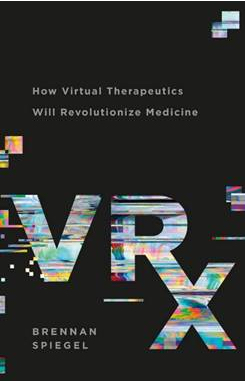
VRX
How Virtual Therapeutics Will Revolutionize Medicine
This will be the first book to explain to the public the science and potential of immersive therapeutics which have proven able to help paraplegics re-learn how to walk, mitigate compulsive behavior, manage labor pain, restore quality of life to dementia patients, and even address the opioid epidemic by offering effective and nonaddictive replacements for drugs like oxycodone and fentanyl.
Brennan Spiegel is a leading doctor, and the director of one of the foremost programs in the world for digital medicine.
A virtualist is a doctor who specializes in virtual medicine. She uses tools like VR headsets, spatial acoustics, haptic feedback, and even olfactory mimicry to induce reactions in patients' bodies that help treat a variety of physiological and psychological conditions, from chronic pain, to compulsive behavior, without the use of pharmaceuticals or surgical techniques. Virtualists don't exist yet, but after reading VRx, they just might.
In recent years, scientists have established that people's perceptions - their subjective experiences of the world - strongly influence how their bodies work. We typically have little control over our perceptions, particularly when we are sick. But what could we do if we did? In VRx Brennan Spiegel introduces readers to a new kind of medicine, called virtual therapeutics, answering exactly this question, using technology that is already available.
It works through two basic but powerful psychological concepts: embodied cognition, the idea that thought processes involve the whole body, not just the brain; and presence, the ability of virtual reality to trick your body into thinking it's somewhere that it isn't, or can do something that it can't usually do. VRx takes readers on a mind-bending journey through the ways in which these deep connections between our minds and our bodies are being put to good use. We learn about the woman who endures an exceptionally painful labor by completing breathing exercises on a digital beach, the schizophrenic patient who literally confronts the demon inside his head, the burn victims who are able to manage their pain better after traversing snowy virtual landscapes, and the doctor who confronted his own fear of mortality by watching himself die.
Brimming with extraordinary stories of the power of virtual therapeutics to treat both physical and psychological conditions, VRx offers nothing short of a completely new way of healing.
Brennan Spiegel is Director of Health-Services Research at Cedars-Sinai Medical Center and Professor of Medicine and Public Health at the University of California, Los Angeles. Dr. Spiegel directs the Cedars-Sinai Center for Outcomes Research and Education, a multidisciplinary team that investigates how technology can strengthen the patient-doctor bond and improve clinical outcomes. His team developed one of the largest and most widely-documented therapeutic virtual reality program in the world at Cedars-Sinai. He founded Virtual Medicine, the first international symposium dedicated to medical virtual reality. He lives in Los Angeles, CA.
A virtualist is a doctor who specializes in virtual medicine. She uses tools like VR headsets, spatial acoustics, haptic feedback, and even olfactory mimicry to induce reactions in patients' bodies that help treat a variety of physiological and psychological conditions, from chronic pain, to compulsive behavior, without the use of pharmaceuticals or surgical techniques. Virtualists don't exist yet, but after reading VRx, they just might.
In recent years, scientists have established that people's perceptions - their subjective experiences of the world - strongly influence how their bodies work. We typically have little control over our perceptions, particularly when we are sick. But what could we do if we did? In VRx Brennan Spiegel introduces readers to a new kind of medicine, called virtual therapeutics, answering exactly this question, using technology that is already available.
It works through two basic but powerful psychological concepts: embodied cognition, the idea that thought processes involve the whole body, not just the brain; and presence, the ability of virtual reality to trick your body into thinking it's somewhere that it isn't, or can do something that it can't usually do. VRx takes readers on a mind-bending journey through the ways in which these deep connections between our minds and our bodies are being put to good use. We learn about the woman who endures an exceptionally painful labor by completing breathing exercises on a digital beach, the schizophrenic patient who literally confronts the demon inside his head, the burn victims who are able to manage their pain better after traversing snowy virtual landscapes, and the doctor who confronted his own fear of mortality by watching himself die.
Brimming with extraordinary stories of the power of virtual therapeutics to treat both physical and psychological conditions, VRx offers nothing short of a completely new way of healing.
Brennan Spiegel is Director of Health-Services Research at Cedars-Sinai Medical Center and Professor of Medicine and Public Health at the University of California, Los Angeles. Dr. Spiegel directs the Cedars-Sinai Center for Outcomes Research and Education, a multidisciplinary team that investigates how technology can strengthen the patient-doctor bond and improve clinical outcomes. His team developed one of the largest and most widely-documented therapeutic virtual reality program in the world at Cedars-Sinai. He founded Virtual Medicine, the first international symposium dedicated to medical virtual reality. He lives in Los Angeles, CA.
| Available products |
|---|
|
Book
Published 2020-10-06 by Basic Books |