| Vendor | |
|---|---|

|
Liepman Literary Agency
Marc Koralnik |
| Original language | |
| Romanian | |
| Categories | |
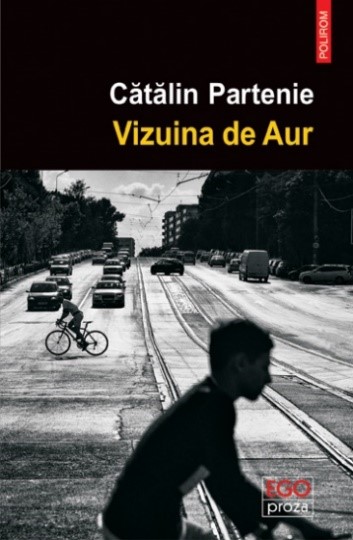
VIZUINA DE AUR (Golden Burrow)
Bucharest, 1988. Nicolae Ceausescu's darkest years. Paul, a first-year philosophy student, wants to play the drums in a rock band but is expelled and ends up as the guard of a forgotten depot in which a theatre keeps its scenery and props. He spends all his time there with his girlfriend Oksana (a waitress who just finished high school) and his best-friend Stefan (a first-year high school student who plays the guitar). Using stage furniture and props, Oksana builds inside the depot the interior of a home. They call it The Golden Burrow' and there they have the time of their lives. Oksana is pregnant but is afraid to tell Paul; abortion is illegal, and illegal abortion is ex¬pensive and dangerous.
In April 1989, without telling anything to anyone, Paul swims across the Danube and defects. He is caught by the Yugoslavian authorities but can emigrate to Canada. However, in December 1989, he returns to Bucharest secretly, just after Ceausescu has fled his headquarters. In the chaos that follows he is shot dead in front of Muzica, the city's biggest record store.
Almost 30 years later, Paul's son Victor contacts Stefan and asks him to write down all that he can remember about his father. He would also like to find out if his father knew that Oksana was pregnant when he left Romania. Stefan, however, is an unreliable narrator, and Victor will have to imagine for himself what kind of man his father was.
A philosophical, charming and cinematic tragicomedy like a New Romanian Wave take on Plato's cave.
Catalin Partenie is a Romani¬an-Canadian philosopher, teaching at the National School of Political Studies in Bucharest. He completed he Ph.D. in Philosophy at the Uni¬versity of Glasgow, and was also a graduate student at Oxford. He has taught in Can¬ada and Europe, and is the editor of Plato. Selected Myths (Oxford's World Classics) and Plato's Myths (Cambridge UP). His short story Gudrun has earned an Honorable Mention at the Frank McCourt Interna¬tional Contest and has been published in The Southampton Review. THE GOLDEN BUR¬ROW is his first novel.
A bitter-sweet, pro¬foundly affecting story of the redeeming pow¬er art and music can have in our survival as human beings in times of hardship. Vladimir Mirodan, Emeritus Professor of Theatre, Univer¬sity of the Arts, London
This is a novel whose words are like a cur¬tain; open them, and great characters will start singing on the stage: freedom, friend¬ship, love. Peter Kerek, director of the theatrical adaptation of the novel
In April 1989, without telling anything to anyone, Paul swims across the Danube and defects. He is caught by the Yugoslavian authorities but can emigrate to Canada. However, in December 1989, he returns to Bucharest secretly, just after Ceausescu has fled his headquarters. In the chaos that follows he is shot dead in front of Muzica, the city's biggest record store.
Almost 30 years later, Paul's son Victor contacts Stefan and asks him to write down all that he can remember about his father. He would also like to find out if his father knew that Oksana was pregnant when he left Romania. Stefan, however, is an unreliable narrator, and Victor will have to imagine for himself what kind of man his father was.
A philosophical, charming and cinematic tragicomedy like a New Romanian Wave take on Plato's cave.
Catalin Partenie is a Romani¬an-Canadian philosopher, teaching at the National School of Political Studies in Bucharest. He completed he Ph.D. in Philosophy at the Uni¬versity of Glasgow, and was also a graduate student at Oxford. He has taught in Can¬ada and Europe, and is the editor of Plato. Selected Myths (Oxford's World Classics) and Plato's Myths (Cambridge UP). His short story Gudrun has earned an Honorable Mention at the Frank McCourt Interna¬tional Contest and has been published in The Southampton Review. THE GOLDEN BUR¬ROW is his first novel.
A bitter-sweet, pro¬foundly affecting story of the redeeming pow¬er art and music can have in our survival as human beings in times of hardship. Vladimir Mirodan, Emeritus Professor of Theatre, Univer¬sity of the Arts, London
This is a novel whose words are like a cur¬tain; open them, and great characters will start singing on the stage: freedom, friend¬ship, love. Peter Kerek, director of the theatrical adaptation of the novel
| Available products |
|---|
|
Book
Published 2023-05-11 by Polirom |