| Vendor | |
|---|---|

|
Liepman Literary Agency
Marc Koralnik |
| Original language | |
| English | |
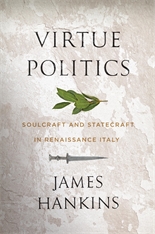
VIRTUE POLITICS
Soulcraft and Statecraft in Renaissance Italy
A bold, revisionist account of political thought during the Italian Renaissancefrom Petrarch to Machiavellithat reveals the all-important role of character in shaping society, both in citizens and in their leaders.
Convulsed by a civilizational crisis, the great thinkers of the Renaissance set out to reconceive the nature of society. Everywhere they saw problems. Corrupt and reckless tyrants sowing discord and ruling through fear; elites who prized wealth and status over the common good; military leaders waging endless wars. Their solution was at once simple and radical. Men, not walls, make a city, as Thucydides so memorably said. They would rebuild their city, and their civilization, by transforming the moral character of its citizens. Soulcraft, they believed, was a precondition of successful statecraft.
A dazzlingly ambitious reappraisal of Renaissance political thought by one of our generation's foremost intellectual historians, Virtue Politics challenges the traditional narrative that looks to the Renaissance as the seedbed of modern republicanism and sees Machiavelli as its exemplary thinker. James Hankins reveals that what most concerned the humanists was not reforming laws or institutions so much as shaping citizens. Character mattered more than constitutions. It would have to be nurtured through a new program of education they called the studia humanitatis: the humanities.
We owe our education in the humanities and much beside that to the bold experiment of these passionate and principled thinkers. The questions they askedShould a good man serve a corrupt regime? What character virtues are necessary in a leader? What is the source of political legitimacy? Is wealth accumulation detrimental to social cohesion? Should citizens be expected to fight for their country?had a profound impact on later debates about good government and are vital again today.
JAMES HANKINS is Professor of History at Harvard University and the Founder and General Editor of the I Tatti Renaissance Library. He is the editor of The Cambridge Companion to Renaissance Philosophy and Renaissance Civic Humanism and is widely regarded as one of the world's leading authorities on humanist political thought.
A dazzlingly ambitious reappraisal of Renaissance political thought by one of our generation's foremost intellectual historians, Virtue Politics challenges the traditional narrative that looks to the Renaissance as the seedbed of modern republicanism and sees Machiavelli as its exemplary thinker. James Hankins reveals that what most concerned the humanists was not reforming laws or institutions so much as shaping citizens. Character mattered more than constitutions. It would have to be nurtured through a new program of education they called the studia humanitatis: the humanities.
We owe our education in the humanities and much beside that to the bold experiment of these passionate and principled thinkers. The questions they askedShould a good man serve a corrupt regime? What character virtues are necessary in a leader? What is the source of political legitimacy? Is wealth accumulation detrimental to social cohesion? Should citizens be expected to fight for their country?had a profound impact on later debates about good government and are vital again today.
JAMES HANKINS is Professor of History at Harvard University and the Founder and General Editor of the I Tatti Renaissance Library. He is the editor of The Cambridge Companion to Renaissance Philosophy and Renaissance Civic Humanism and is widely regarded as one of the world's leading authorities on humanist political thought.
| Available products |
|---|
|
Book
Published 2019-12-01 by Harvard University Press |