| Vendor | |
|---|---|

|
Mohrbooks Literary Agency
Sebastian Ritscher |
| Original language | |
| English | |
| Categories | |
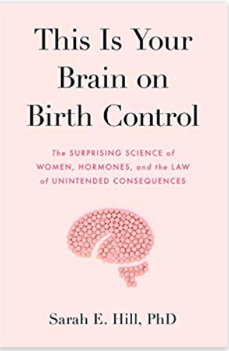
THIS IS YOUR BRAIN ON BIRTH CONTROL
The Surprising Science of Sex, Women, Hormones, and the Law of Unintended Consequences
TCU Professor of Psychology Sarah Hill's untitled book, revealing the unexpected and largely unknown effects of the birth control pill, as well as the new science, some of it conducted in Hill's own lab, that shows how it affects everything from the stress response to mate selection to declining levels of male achievement
This is new, accessible science and practical information on a topic of vital importance to women around the world. Dr. Sarah E. Hill isn't here to bash the birth control pillafter all, she was on it for 15 years and credits it with allowing her to earn advanced degrees and for having two planned children. But Hill is also at the forefront of groundbreaking research on the effects of the pill, which affects virtually every system in women's bodies. For example, women on the pill don't have a standard stress response, and there are links between its use and an increase in autoimmune disorders. Further,
Hill has been studying the effects of mate choice in relation to the pill, and she makes a case for how it might be changing the behavior of men. One of the major lessons of this book is that we women and men alike are all so affected by our hormones that they form our core identities, who we think we are. This book enlightens us on the latest findings, but it is also a call for better science. For too long, women have been understudied as research subjects. Their cycles are more complicated, it's more expensive to do research on them, and scientists are under so much pressure to publish that it's often easier just to use a largely male testing pool, or one that ignores important factors for women. We saw this with antidepressant dosage, but that's the tip of the iceberg. And, as Hill points outlots of the findings related to the pill are very political, and they're not always comfortable for us to accept. Which is why we need a voice like hers to break it down for us.
Sarah E. Hill is a star psychologist with a PhD from the University of Texas, where she studied with one of the founding fathers of evolutionary psychology, David M. Buss. In less than a decade, she's published over 40 scientific articles and has secured half a million dollars' worth of federal research grant money to study women, their health, and their mating and sexual psychology.She is regularly sought after for quotes by media like The New York Times, The Washington Post, Scientific American, The Economist, and many others.
Hill has been studying the effects of mate choice in relation to the pill, and she makes a case for how it might be changing the behavior of men. One of the major lessons of this book is that we women and men alike are all so affected by our hormones that they form our core identities, who we think we are. This book enlightens us on the latest findings, but it is also a call for better science. For too long, women have been understudied as research subjects. Their cycles are more complicated, it's more expensive to do research on them, and scientists are under so much pressure to publish that it's often easier just to use a largely male testing pool, or one that ignores important factors for women. We saw this with antidepressant dosage, but that's the tip of the iceberg. And, as Hill points outlots of the findings related to the pill are very political, and they're not always comfortable for us to accept. Which is why we need a voice like hers to break it down for us.
Sarah E. Hill is a star psychologist with a PhD from the University of Texas, where she studied with one of the founding fathers of evolutionary psychology, David M. Buss. In less than a decade, she's published over 40 scientific articles and has secured half a million dollars' worth of federal research grant money to study women, their health, and their mating and sexual psychology.She is regularly sought after for quotes by media like The New York Times, The Washington Post, Scientific American, The Economist, and many others.
| Available products |
|---|
|
Book
Published 2019-10-08 by Avery |
|
Book
Published 2019-10-08 by Avery |