| Vendor | |
|---|---|

|
Liepman Literary Agency
Marc Koralnik |
| Original language | |
| English | |
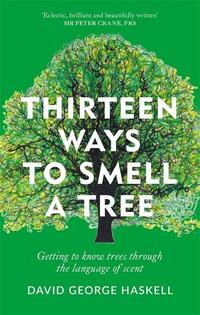
THIRTEEN WAYS TO SMELL A TREE
Thirteen Ways to Smell a Tree takes you on a journey to connect with trees through the sense most aligned to our emotions and memories.
Thirteen essays are included that explore the evocative scents of trees, from the smell of a book just printed as you first open its pages, to the calming scent of Linden blossom, to the ingredients of a particularly good gin & tonic:
In your hand: a highball glass, beaded with cool moisture.
In your nose: the aromatic embodiment of globalized trade. The spikey, herbal odor of European juniper berries. A tang of lime juice from a tree descended from wild progenitors in the foothills of the Himalayas. Bitter quinine, from the bark of the South American cinchona tree, spritzed into your nostrils by the pop of sparkling tonic water.
Take a sip, feel the aroma and taste of three continents converge.
Each essay also contains a practice the reader is invited to experience. For example, taking a tree inventory of our own home, appreciating just how many things around us came from trees. And if you've ever hugged a tree when no one was looking, try breathing in the scents of different trees that live near you, the smell of pine after the rain, the refreshing, mind-clearing scent of a eucalyptus leaf crushed in your hand.
David Haskell's work integrates scientific, literary, and contemplative studies of the natural world. He is a professor of biology and environmental studies at the University of the South and a Guggenheim Fellow. His 2017 book The Songs of Trees won the John Burroughs Medal for Outstanding Nature Writing. His 2012 book The Forest Unseen was a finalist for the Pulitzer Prize and the PEN/E.O. Wilson Literary Science Writing Award, and won the 2013 Best Book Award from the National Academies, the National Outdoor Book Award, and the Reed Environmental Writing Award. His new book, Sounds Wild and Broken will be published by Viking in Spring 2022.
In your hand: a highball glass, beaded with cool moisture.
In your nose: the aromatic embodiment of globalized trade. The spikey, herbal odor of European juniper berries. A tang of lime juice from a tree descended from wild progenitors in the foothills of the Himalayas. Bitter quinine, from the bark of the South American cinchona tree, spritzed into your nostrils by the pop of sparkling tonic water.
Take a sip, feel the aroma and taste of three continents converge.
Each essay also contains a practice the reader is invited to experience. For example, taking a tree inventory of our own home, appreciating just how many things around us came from trees. And if you've ever hugged a tree when no one was looking, try breathing in the scents of different trees that live near you, the smell of pine after the rain, the refreshing, mind-clearing scent of a eucalyptus leaf crushed in your hand.
David Haskell's work integrates scientific, literary, and contemplative studies of the natural world. He is a professor of biology and environmental studies at the University of the South and a Guggenheim Fellow. His 2017 book The Songs of Trees won the John Burroughs Medal for Outstanding Nature Writing. His 2012 book The Forest Unseen was a finalist for the Pulitzer Prize and the PEN/E.O. Wilson Literary Science Writing Award, and won the 2013 Best Book Award from the National Academies, the National Outdoor Book Award, and the Reed Environmental Writing Award. His new book, Sounds Wild and Broken will be published by Viking in Spring 2022.
| Available products |
|---|
|
Book
Published 2021-11-01 by Viking |