| Vendor | |
|---|---|

|
Mohrbooks Literary Agency
Sebastian Ritscher |
| Original language | |
| English | |
| Categories | |
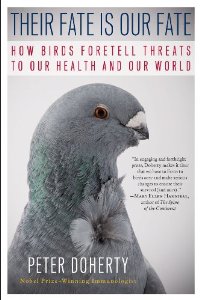
THEIR FATE IS OUR FATE
How Birds Foretell Threats to the Health of Our World, and Why We Should Listen
Through personal stories and colourful examples, Nobel-prize winner Peter Doherty shows how birds are vital to cutting-edge scientific research. By studying birds, we can further understand the nature of human diseases such as cancer, malaria and influenza, and develop new vaccines and cures. In his engaging and enthusiastic way, Peter argues that the insights birds provide us will have a significant impact on our future.
By endangering the lives of birds through human activities, we ultimately present a threat to our very own wellbeing. Sentinel Chickens shows why we should give our feathered friends our close and sustained attention.
Author's note: The idea of ‘sentinel chickens’ seemed pretty incongruous when I first heard the phrase as a young undergraduate … The notion of the humble chicken waiting like a trained soldier, alert and focused, for some unseen and approaching enemy just didn’t seem likely. Hens en garde!
And yet guard they do. Not only chickens, but puffins, eagles, canaries and pelicans, birds of all kinds are recruited by humans to help us interpret changes in our complex and unpredictable world.These amazing creatures continually sample the atmosphere, oceans, forests and insect populations, signalling toxic and environmental dangers that threaten all vertebrates.
Peter’s pioneering research into human immune systems earned him the Nobel Prize for Physiology and Medicine in 1996. He currently divides his professional timebetween the University of Melbourne and St Jude Children’s Hospital in Memphis, where he is helping unravel the mystery of childhood cancer. His first book The Beginner's Guide to Winning the Nobel Prize was published in Australia and New Zealand by Melbourne University Publishing in August 2005 and in the US and UK by Columbia University Press. Translation rights for this title have been sold in Korea, Poland, Taiwan (Chinese Complex), India (English) and Germany. His second book, A Light History of Hot Air, was published by Melbourne University Publishing in October 2007.
Author's note: The idea of ‘sentinel chickens’ seemed pretty incongruous when I first heard the phrase as a young undergraduate … The notion of the humble chicken waiting like a trained soldier, alert and focused, for some unseen and approaching enemy just didn’t seem likely. Hens en garde!
And yet guard they do. Not only chickens, but puffins, eagles, canaries and pelicans, birds of all kinds are recruited by humans to help us interpret changes in our complex and unpredictable world.These amazing creatures continually sample the atmosphere, oceans, forests and insect populations, signalling toxic and environmental dangers that threaten all vertebrates.
Peter’s pioneering research into human immune systems earned him the Nobel Prize for Physiology and Medicine in 1996. He currently divides his professional timebetween the University of Melbourne and St Jude Children’s Hospital in Memphis, where he is helping unravel the mystery of childhood cancer. His first book The Beginner's Guide to Winning the Nobel Prize was published in Australia and New Zealand by Melbourne University Publishing in August 2005 and in the US and UK by Columbia University Press. Translation rights for this title have been sold in Korea, Poland, Taiwan (Chinese Complex), India (English) and Germany. His second book, A Light History of Hot Air, was published by Melbourne University Publishing in October 2007.
| Available products |
|---|
|
Book
Published 2013-09-01 by The Experiment |
|
Book
Published 2013-09-01 by The Experiment |