| Vendor | |
|---|---|

|
Liepman Literary Agency
Marc Koralnik |
| Original language | |
| Chamorro | |
| Categories | |
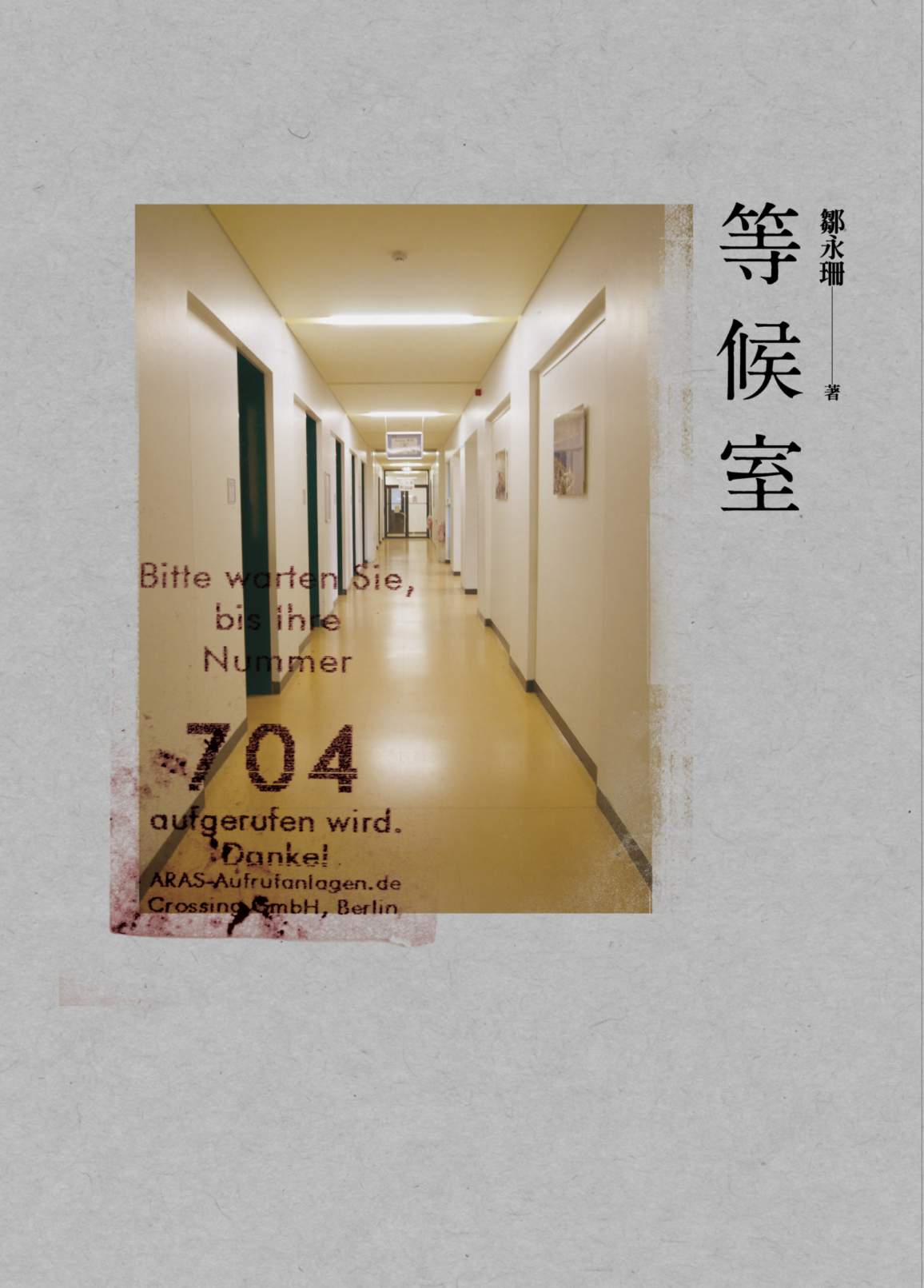
THE WAITING ROOM
A short Chinese novel with a much more Western sensibility, but viewed from an Eastern perspective. A classic European immigrant novel with a unique Asian twist.
The days went by like falling sand. He wasn't in the mood to decorate his room. He didn't have a lot of possessions, and settling down wasn't any trouble, he just had a vague feeling that he could leave this place any time, so his clothes stayed in his suitcase without making their way into the closet. A new place to live, but this didn't necessarily translate into a new beginning. His being in this room with one mattress one closet one chair one suitcase one pillow and one blanket that he couldn't really call his own, didn't naturally give him the ability to start anew. Ming-Chang Hsu followed his wife to Germany and now she's left him, so here he sits, waiting to get a piece of paper that will allow him to stay. They met in college, she was popular and charismatic, he quiet and always buried in books. No one else understood their relationship, but he let things slide, didn't notice that things were changing, until one day she just said she was leaving. He didn't know what to say. So she handed him the divorce papers. And now he waits to hand his documents to Ms Meyer, the woman without a name, who will decide if he can stay. To Ms Meyer, who has worked for twenty years in this office, checking documents and verifying information, these people are not people. They are files. Files to be opened, checked and closed again. One word can describe Ms Meyer, one word droops from her face and weighs down her diabetic legs: weary. She is weary from the endless stream of weary faces which greet her day after weary day. Ming-Chang's landlady, Mrs. Nesmeyanova, has come to Berlin from Belarus. Mr. Nesmeyanova wants Berlin to be their home, wants his wife to learn German. But she can't feel at home in her new home. Their son no longer speaks to his father, and instead has his own struggles to fit in, eager to shake his foreignness. Turkish-German artist Christine creates Aufzeichnungen (notes, documents, files). Ming-Chang is captured by her exhibition, and in turn, she is flattered; never has anyone engaged with her art like this before. An invitation back to hers follows. Where rather than take him to bed, she confides in Ming-Chang that she is pregnant and the father of her baby has left. Tsou's novel plays with repetition, mundanity, and waiting, recalling the classics of existentialism such as Patrick Suesskind's THE PIGEON or Albert Camus' L'ETRANGER, with a hint of experimental bureaucratic novels such as B.S. Johnson's CHRISTIE MALRY'S OWN DOUBLE-ENTRY and David Foster Wallace's THE PALE KING. Economical, clean and gentle, THE WAITING ROOM recalls the gestural simplicity and power of a Chinese ink painting, being Chinese more in mood rather than content. Tsou Yung-Shan (b.1975) graduated from the Department of Mechanical Engineering at National Taiwan University, before moving to Germany in 2001 to pursue a graduate degree in art, where she now lives and works as an artist. Her creative work includes painting, calligraphy and writing. Taking inspiration from trivial everyday objects, Tsou has developed a unique material semiotics, which she calls Aufzeichnungen (notes). Her work is characterized by the dialogue between image and language, between content and the process of writing. She has also drawn inspiration from the gulf between the German language and her mother tongue, using its more precise grammar to stretch the subtleties of Chinese.
| Available products |
|---|
|
Book
Published 2023-05-11 by Muses |