| Vendor | |
|---|---|

|
Liepman Literary Agency
Marc Koralnik |
| Original language | |
| English | |
| Weblink | |
| http://www.overlookpress.com/ten … | |
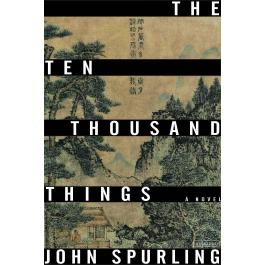
THE TEN THOUSAND THINGS
THE TEN THOUSAND THINGS is a sweeping historical narrative of the collapse and founding of dynasties.
Set in fourteenth century China, THE TEN THOUSAND THINGS is a sweeping historical narrative of the collapse and founding of dynasties, but it is also a discovery through the mind of one man, a scholar's struggle with the Confucian ideals of how to be in this world and how to live well. Wang Meng, one of the greatest Chinese landscape painters, though not recognised as such until two centuries after his death, is the central character of this lavish and somehow exotic novel which shows a lively portrait of a gifted and sensitive man, longing for the beauty and solitude of nature, but involved nevertheless in the friendships, politics and fashionable pursuits of a highly civilised people, set against a background of foreign domination, nationalism and violent turmoil as one empire is torn apart and another born. The middle years of Wang's life coincided with the terrible period of famine, flood, plague, rebellion, anarchy and civil war which finally drove the Mongols out of China. The new Emperor was a mendicant monk before becoming a bandit and then defeating his rivals for power. Although initially appearing a wise ruler, he soon turned into a Chinese version of Stalin. During one of his massive purges, Wang Meng was thrown into prison, where he died of starvation in his late seventies. THE TEN THOUSAND THINGS tells Wang's story from his own point of view: his attempts through his paintings to understand and express the mysteries of nature and human destiny; his relationships with his family, friends and servants; his adventures as the reluctant strategist for a group of bandits led by a woman known as The White Tigress; and his three personal encounters with the Emperor, first as Buddhist novice, then as warlord, finally as "Son of Heaven". John Spurling's previous novels are THE RAGGED END (Weidenfeld & Nicolson, 1989) and AFTER ZENDA (Andre Deutsch, 1995). He has had 28 plays performed on stage, television and radio, including at the National Theatre. He is a frequent reviewer and was previously for twelve years the art critic of The New Statesman. He lives in London and is married to the biographer Hilary Spurling.
| Available products |
|---|
|
Book
Published by Overlook Press |