| Vendor | |
|---|---|

|
Mohrbooks Literary Agency
Sebastian Ritscher |
| Original language | |
| English | |
| Categories | |
| Weblink | |
| thesportsgene.com | |
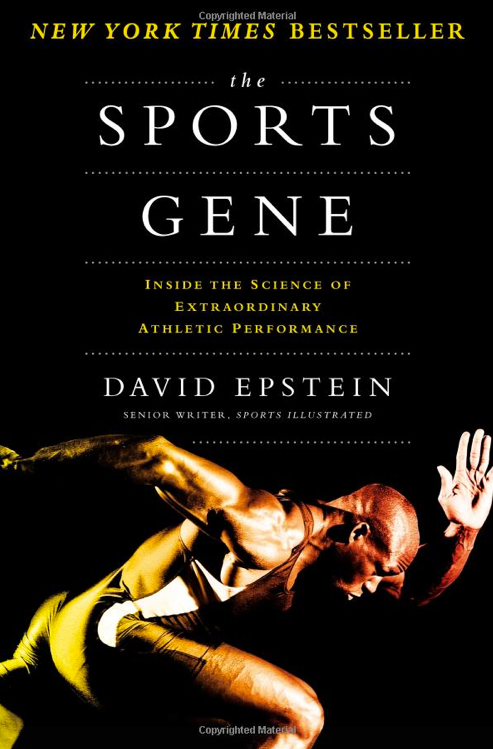
THE SPORTS GENE
Inside the Science of Extraordinary Athletic Performance
How much of our athletic success is because of our genetics, and how much can we impact our potential? Sports Illustrated writer David Epstein brings all of the relevant and ground-breaking genetic science to bear on the great nature versus nurture question as pertains to sports.
He explains that so much of what we take for granted as to who will and will not excel in sports is false. The greatest baseball and cricket batters must be born with the genes to react to 100 mph balls, right? Think again. They're no quicker than you. But athletic talent is nothing without the free will to train. But then, perhaps that very will is a genetic talent all its own. Epstein reveals how certain athletic talents that appear to be largely genetic are not, and how others that appear to be complete creations of training rely on genes and talent. And just as the genetic medicine revolution has taught doctors that no two patients respond to medication the same way, so are exercise geneticists learning that our unique DNA ensures that no two athletes respond to the medicine of training the same way. THE SPORTS GENE will transform the way we think about who we are as athletes, and because scientists pursuing the deepest nature of human athleticism have ventured into the bramble patches of gender and race in sports, this book necessarily follows them there. (What genes make male athletes superior to female athletes? Are Jamaicans and Kenyans born to dominate Olympic running?) With on-the-ground reporting from below the equator and above the Arctic circle, and scores of interviews with Olympic and world champions, THE SPORTS GENE is a provocative book mixing sports and science, and is sure to appeal to readers of bestsellers THE TALENT CODE and BORN TO RUN.
The research for the book took SPORTS ILLUSTRATED's Epstein all over the world, including Jamaica, Kenya, Sweden, Finland, Scotland and Japan. Additional reporting was done in China (2008) and England (2012) during the Olympics. Featured in some chapters are countries which fund a considerable amount of sports and exercise science: Australia, Japan, Denmark, Holland, and Finland. It's also worth noting that the topic of genetically engineering athletes or having a perfect form of man does come up, and the conclusions refute any eugenic ideology. The epilogue discusses the ridiculousness and impossibility of the idea that we should be trying to genetically engineer the perfect athlete. And in the chapter "The Big Bang of Body Types," a bit of racial science from the past is discussed and summarily debunked with respect to sports.
David Epstein writes about the developing science around sport -- from performance-enhancing drugs to the lucky genetics that separate a professional athlete from a duffer. A science writer and longtime contributor to Sports Illustrated, he's helped break stories on steroids in baseball, fraudulently marketed health remedies, and big-money irregularities in "amateur" college football. In 2007, inspired by the death of a childhood friend, he wrote a moving exploration of the most common cause of sudden death in young athletes, a hard-to-diagnose heart irregularity known as HCM. Now an investigative reporter at ProPublica, Epstein is the author of The Sports Gene, a book that explores the complex factors that make up a championship athlete. Is there such a thing as natural greatness, or can even extreme skills -- like the freaky-fast reaction of a hockey great -- be learned? Conversely, is the desire and will to master extreme skills something you're born with?
The research for the book took SPORTS ILLUSTRATED's Epstein all over the world, including Jamaica, Kenya, Sweden, Finland, Scotland and Japan. Additional reporting was done in China (2008) and England (2012) during the Olympics. Featured in some chapters are countries which fund a considerable amount of sports and exercise science: Australia, Japan, Denmark, Holland, and Finland. It's also worth noting that the topic of genetically engineering athletes or having a perfect form of man does come up, and the conclusions refute any eugenic ideology. The epilogue discusses the ridiculousness and impossibility of the idea that we should be trying to genetically engineer the perfect athlete. And in the chapter "The Big Bang of Body Types," a bit of racial science from the past is discussed and summarily debunked with respect to sports.
David Epstein writes about the developing science around sport -- from performance-enhancing drugs to the lucky genetics that separate a professional athlete from a duffer. A science writer and longtime contributor to Sports Illustrated, he's helped break stories on steroids in baseball, fraudulently marketed health remedies, and big-money irregularities in "amateur" college football. In 2007, inspired by the death of a childhood friend, he wrote a moving exploration of the most common cause of sudden death in young athletes, a hard-to-diagnose heart irregularity known as HCM. Now an investigative reporter at ProPublica, Epstein is the author of The Sports Gene, a book that explores the complex factors that make up a championship athlete. Is there such a thing as natural greatness, or can even extreme skills -- like the freaky-fast reaction of a hockey great -- be learned? Conversely, is the desire and will to master extreme skills something you're born with?
| Available products |
|---|
|
Book
Published 2013-08-01 by Current |
|
Book
Published 2013-08-01 by Current |