| Vendor | |
|---|---|

|
Fritz Agency
Christian Dittus |
| Original language | |
| English | |
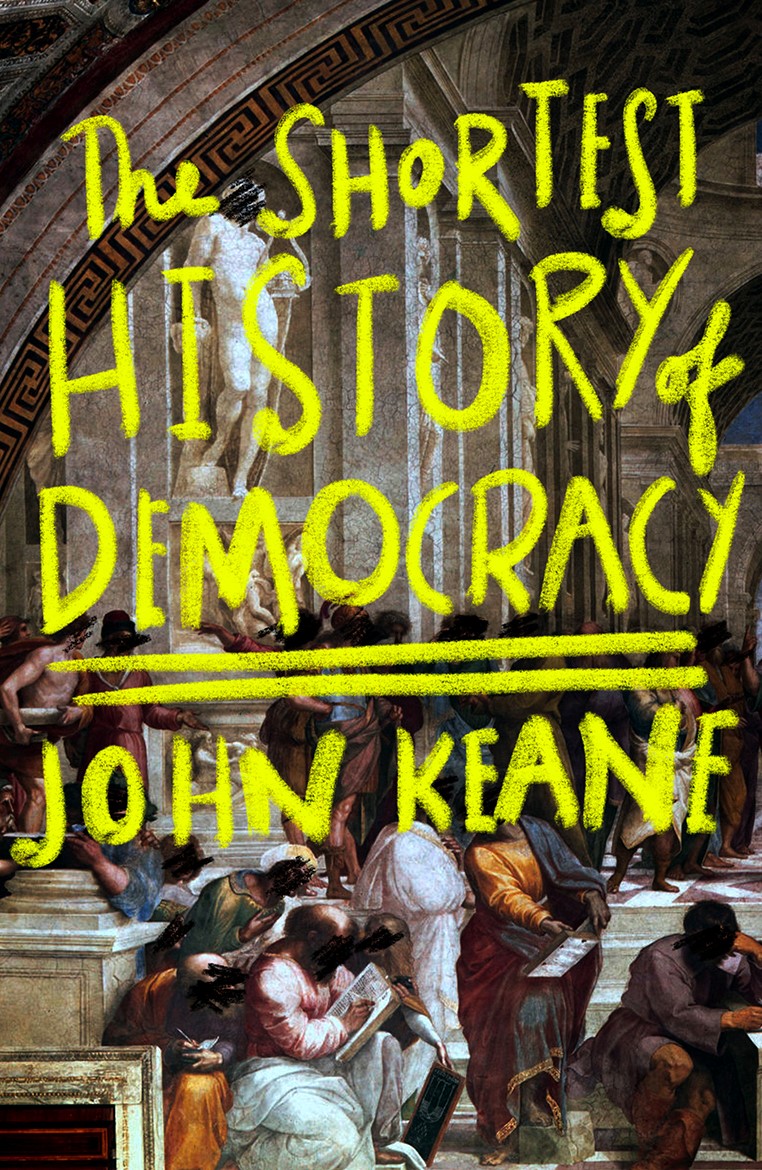
THE SHORTEST HISTORY OF DEMOCRACY
In an age of fake news and half-truths, the radical potential of democracy is more important than ever, as this nimble, illuminating history by a celebrated political theorist reveals.
From its beginnings in Syria-Mesopotamia and not Athens to its role in fomenting revolutionary fervour in France and America, democracy has subverted fixed ways of deciding who should enjoy power and privilege, and why. For democracy encourages people to do something radical: to come together as equals, to determine their own lives and futures.
In this vigorous, illuminating history, acclaimed political thinker John Keane traces its byzantine history, from the age of assembly democracy in Athens, to European-inspired electoral democracy and the birth of representative government, to our age of monitory democracy. He gives new reasons why democracy is a precious global ideal. As the world has come to be shaped by democracy, it has grown more worldly American-style liberal democracy is giving way to regional varieties with a local character in places such as Taiwan, India, Senegal and South Africa.
In an age of crisis, we need the radical potential of democracy more than ever. Does it have a future, or will the demagogues and despots win? We are about to find out.
John Keane is professor of politics at the University of Sydney and the Wissenschaftszentrum Berlin and founded London's Centre for the Study of Democracy and the Sydney Democracy Network. Among his many books, The Life and Death of Democracy was shortlisted for the 2010 Prime Minister's Literary Award for Non-Fiction and translated into many languages. He was recently nominated for the Balzan and Holberg prizes, for outstanding global contributions to the human sciences.
From its beginnings in Syria-Mesopotamia and not Athens to its role in fomenting revolutionary fervour in France and America, democracy has subverted fixed ways of deciding who should enjoy power and privilege, and why. For democracy encourages people to do something radical: to come together as equals, to determine their own lives and futures.
In this vigorous, illuminating history, acclaimed political thinker John Keane traces its byzantine history, from the age of assembly democracy in Athens, to European-inspired electoral democracy and the birth of representative government, to our age of monitory democracy. He gives new reasons why democracy is a precious global ideal. As the world has come to be shaped by democracy, it has grown more worldly American-style liberal democracy is giving way to regional varieties with a local character in places such as Taiwan, India, Senegal and South Africa.
In an age of crisis, we need the radical potential of democracy more than ever. Does it have a future, or will the demagogues and despots win? We are about to find out.
John Keane is professor of politics at the University of Sydney and the Wissenschaftszentrum Berlin and founded London's Centre for the Study of Democracy and the Sydney Democracy Network. Among his many books, The Life and Death of Democracy was shortlisted for the 2010 Prime Minister's Literary Award for Non-Fiction and translated into many languages. He was recently nominated for the Balzan and Holberg prizes, for outstanding global contributions to the human sciences.
| Available products |
|---|
|
Book
Published 2022-02-01 by Black Inc. |