| Vendor | |
|---|---|

|
Liepman Literary Agency
Marc Koralnik |
| Original language | |
| English | |
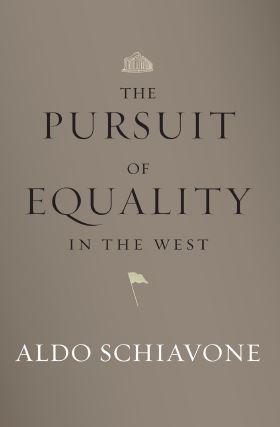
THE PURSUIT OF EQUALITY IN THE WEST
One of the world's foremost historians of Western political and legal thought proposes a bold new model for thinking about equality at a time when its absence threatens democracies everywhere.
How much equality does democracy need to survive? Political thinkers have wrestled with that question for millennia. Aristotle argued that some are born to command and others to obey. Antiphon believed that men, at least, were born equal. Later the Romans upended the debate by asking whether citizens were equals not in ruling but in standing before the law. Aldo Schiavone guides us through these and other historical thickets, from the first democracy to the present day, seeking solutions to the enduring tension between democracy and inequality.
Turning from Antiquity to the modern world, Schiavone shows how the American and the French revolutions attempted to settle old debates, introducing a new way of thinking about equality. Both the French revolutionaries and the American colonists sought democracy and equality together, but the European tradition (British Labour, Russian and Eastern European Marxists, and Northern European social democrats) saw formal equalityequality before the lawas a means of obtaining economic equality. The American model, in contrast, adopted formal equality while setting aside the goal of economic equality.
The Pursuit of Equality in the West argues that the US and European models were compatible with industrial-age democracy, but neither suffices in the face of today's technological revolution. Opposing both atomization and the obsolete myths of the collective, Schiavone thinks equality anew, proposing a model founded on neither individualism nor the erasure of the individual but rather on the universality of the impersonal human, which coexists with the sea of differences that makes each of us unique.
ALDO SCHIAVONE was a professor of Roman law at the Istituto Italiano di Scienze Umane, which he founded. He is the Principal Investigator of a European Research Council project on Roman legal thought based at the University of Rome La Sapienza. His publications include The End of the Past, The Invention of Law in the West, Spartacus, and Pontius Pilate.A member of the American Academy of Arts and Sciences, he lives in Rome.
Turning from Antiquity to the modern world, Schiavone shows how the American and the French revolutions attempted to settle old debates, introducing a new way of thinking about equality. Both the French revolutionaries and the American colonists sought democracy and equality together, but the European tradition (British Labour, Russian and Eastern European Marxists, and Northern European social democrats) saw formal equalityequality before the lawas a means of obtaining economic equality. The American model, in contrast, adopted formal equality while setting aside the goal of economic equality.
The Pursuit of Equality in the West argues that the US and European models were compatible with industrial-age democracy, but neither suffices in the face of today's technological revolution. Opposing both atomization and the obsolete myths of the collective, Schiavone thinks equality anew, proposing a model founded on neither individualism nor the erasure of the individual but rather on the universality of the impersonal human, which coexists with the sea of differences that makes each of us unique.
ALDO SCHIAVONE was a professor of Roman law at the Istituto Italiano di Scienze Umane, which he founded. He is the Principal Investigator of a European Research Council project on Roman legal thought based at the University of Rome La Sapienza. His publications include The End of the Past, The Invention of Law in the West, Spartacus, and Pontius Pilate.A member of the American Academy of Arts and Sciences, he lives in Rome.
| Available products |
|---|
|
Book
Published 2022-06-01 by Harvard University Press |