| Vendor | |
|---|---|

|
Mohrbooks Literary Agency
Sebastian Ritscher |
| Original language | |
| English | |
| Categories | |
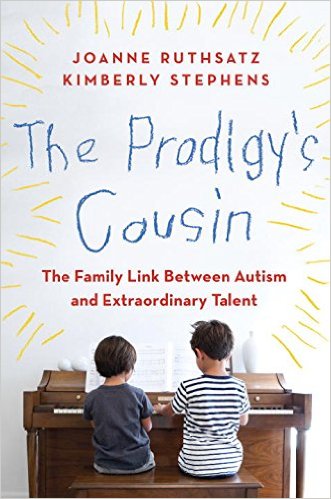
THE PRODIGY'S COUSIN
Kimberly Stephens Joanne Ruthsatz
The Family Link Between Autism and Extraordinary Talent
In PRODIGY'S COUSIN Joanne Ruthsatz, a psychologist, and Kimberly Stephens, a journalist, explore the potential link between autism and children born with extraordinary talent—prodigies.
We all know the autistic genius stereotypes. The absentminded professor with untied shoelaces. The geeky Silicon Valley programmer who writes bullet proof code but can’t get a date. But there is another set of (tiny) geniuses whom you would never add to those ranks—child prodigies. We mostly know them as the chatty and charming tykes who liven up day time TV with violin solos and engaging banter. These kids aren’t autistic, and there has never been any kind of scientific connection between autism and prodigy.
Until now.
Over the course of her career, psychologist Joanne Ruthsatz has quietly assembled the largest-ever research sample of these children. Their accomplishments are epic. One could reproduce radio tunes by ear on a toy guitar at two years old. Another was a thirteen-year-old cooking sensation. And what Ruthsatz’s investigation revealed is noth ing short of astonishing. Though the prodigies aren’t autistic, many have autistic family members. Each prodigy has an extraordinary memory and a keen eye for detail—well-known but often-overlooked strengths associated with autism.
Ruthsatz and her daughter and coauthor, Kim berly Stephens, now propose a startling possibility: What if the abilities of child prodigies stem from a genetic link with autism? And could prodigies— children who have many of the strengths of autism but few of the challenges—be the key to a long-awaited autism breakthrough?
In The Prodigy’s Cousin, Ruthsatz and Stephens narrate the poignant stories of the children they have studied, including that of a two-year-old who loved to spell words like “algorithm” and “confeder ation,” a six-year-old painter who churned out mas terpieces faster than her parents could hang them, and a typically developing thirteen-year-old who smacked his head against a church floor and woke up a music prodigy.
This inspiring tale of extraordinary children, indomitable parents, and a researcher’s unorthodox hunch is essential reading for anyone interested in the brain and human potential. Ruthsatz and Stephens take us from the prodigies’ homes to the depths of the autism archives to the cutting edge of genetics research, all while upending our under standing of what makes exceptional talent possible.
Joanne Ruthsatz holds a Ph.D. in experimental psychology from Case Western Reserve University and graduated Phi Beta Kappa with a psychology major from Bowling Green State University. She is a professor of psychology at Ohio State University, and has been studying gifted children for 15 years. Her research has been published in distinguished scientific journals, including Intelligence, Behavior Genetics, Journal for the Education of the Gifted and Brain and Behavior Science. Her research has also been featured on 60 Minutes, The Huffington Post, U.S. News and World Report, and Time.com, among others.
Her daughter, Kimberly Stephens, is a freelance writer. She has worked as a newspaper and magazine journalist and as an attorney. She is an honors graduate of Princeton University and Harvard Law School and is currently a Ph.D. candidate in sociology at Brown University. She has co-authored two academic papers on child prodigies and is a member of the D.C. Science Writers Association.
Until now.
Over the course of her career, psychologist Joanne Ruthsatz has quietly assembled the largest-ever research sample of these children. Their accomplishments are epic. One could reproduce radio tunes by ear on a toy guitar at two years old. Another was a thirteen-year-old cooking sensation. And what Ruthsatz’s investigation revealed is noth ing short of astonishing. Though the prodigies aren’t autistic, many have autistic family members. Each prodigy has an extraordinary memory and a keen eye for detail—well-known but often-overlooked strengths associated with autism.
Ruthsatz and her daughter and coauthor, Kim berly Stephens, now propose a startling possibility: What if the abilities of child prodigies stem from a genetic link with autism? And could prodigies— children who have many of the strengths of autism but few of the challenges—be the key to a long-awaited autism breakthrough?
In The Prodigy’s Cousin, Ruthsatz and Stephens narrate the poignant stories of the children they have studied, including that of a two-year-old who loved to spell words like “algorithm” and “confeder ation,” a six-year-old painter who churned out mas terpieces faster than her parents could hang them, and a typically developing thirteen-year-old who smacked his head against a church floor and woke up a music prodigy.
This inspiring tale of extraordinary children, indomitable parents, and a researcher’s unorthodox hunch is essential reading for anyone interested in the brain and human potential. Ruthsatz and Stephens take us from the prodigies’ homes to the depths of the autism archives to the cutting edge of genetics research, all while upending our under standing of what makes exceptional talent possible.
Joanne Ruthsatz holds a Ph.D. in experimental psychology from Case Western Reserve University and graduated Phi Beta Kappa with a psychology major from Bowling Green State University. She is a professor of psychology at Ohio State University, and has been studying gifted children for 15 years. Her research has been published in distinguished scientific journals, including Intelligence, Behavior Genetics, Journal for the Education of the Gifted and Brain and Behavior Science. Her research has also been featured on 60 Minutes, The Huffington Post, U.S. News and World Report, and Time.com, among others.
Her daughter, Kimberly Stephens, is a freelance writer. She has worked as a newspaper and magazine journalist and as an attorney. She is an honors graduate of Princeton University and Harvard Law School and is currently a Ph.D. candidate in sociology at Brown University. She has co-authored two academic papers on child prodigies and is a member of the D.C. Science Writers Association.
| Available products |
|---|
|
Book
Published 2016-03-01 by Current |
|
Book
Published 2016-03-01 by Current |