Skip to content
Responsive image
Vendor
Liepman Literary Agency
Marc Koralnik
Original language
English
Weblink
http://www.hup.harvard.edu/catal …

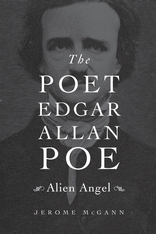
THE POET EDGAR ALLAN POE

Jerome McGann

The Poet Edgar Allan Poe takes its own readers on a spirited tour through a wide range of Poe's verse as well as the critical and theoretical writings in which he laid out his arresting ideas about poetry and poetics.
The poetry of Edgar Allan Poe has had a rough ride in America, as Emerson's sneering quip about “The Jingle Man” testifies. That these poems have never lacked a popular audience has been a persistent annoyance in academic and literary circles; that they attracted the admiration of innovative poetic masters in Europe and especially France—notably Baudelaire, Mallarmé, and Valéry—has been further cause for embarrassment. Jerome McGann offers a bold reassessment of Poe's achievement, arguing that he belongs with Whitman and Dickinson as a foundational American poet and cultural presence. Not all American commentators have agreed with Emerson's dim view of Poe's verse. For McGann, a notable exception is William Carlos Williams, who said that the American poetic imagination made its first appearance in Poe's work. The Poet Edgar Allan Poe explains what Williams and European admirers saw in Poe, how they understood his poetics, and why his poetry had such a decisive influence on Modern and Post-Modern art and writing. McGann contends that Poe was the first poet to demonstrate how the creative imagination could escape its inheritance of Romantic attitudes and conventions, and why an escape was desirable. The ethical and political significance of Poe's work follows from what the poet takes as his great subject: the reader. Jerome McGann is University Professor and John Stewart Bryan Professor of English at the University of Virginia.
Available products
Book

Published 2014-10-01 by Harvard University Press

Comments

“[Shows] Poe as a consummate craftsman who daringly reimagined how poems invent meaning.”

“McGann persuasively defends Poe's poetry against its many detractors, who have criticized the work as all ‘jingle' (Ralph Waldo Emerson) and lacking in ‘intellectual content' (Yvor Winters). Through close readings of Poe's marginalia, reviews, and letters, as well as his essays on poetic composition, notably ‘The Poetic Principle,' McGann shows how Poe worked out a sophisticated theory of poetics It will certainly provide readers with a deeper appreciation of the writer's achievements as a poet.”

“McGann [wants] to set the record straight, right an imbalance and show why Poe deserves a place beside Whitman and Emily Dickinson, the venerated father and mother of American poetry. His marvelous short book combines old-fashioned ‘close reading' with a capacious historical and theoretical sense of Poe's place in American literature and mid-19th-century American culture McGann's basic thesis about Poe's poems (he calls them ‘Poe-try') and his remarks about individual gestures, lines, sounds and rhythms are constantly engaging. Readers who believe that God is in the details will find plenty to astonish them By moving away from poetry's expository and thematic features to its aesthetic and rhetorical ones, McGann has performed an important cultural and intellectual service.”—Willard Spiegelman,

“McGann succeeds in forcing us to rethink Poe's poetry Poe's sound experiments, especially his strange variations on meter, deserve, as McGann shows by citing numerous rhythmic anomalies, to be taken seriously In an age of predominantly, and purposely, flat and prosaic ‘free verse,' mnemonic patterning is perhaps re-emerging as the emblem of poetic power. In this sense, Poe is once again Our Contemporary In making the case for the close link between the poetry and the aesthetic theory, [McGann] succeeds admirably: Poe's reputation as poete maudit belies the fact that here was a poet who knew exactly what he was doing.”—Marjorie Perloff,