| Vendor | |
|---|---|

|
Mohrbooks Literary Agency
Sebastian Ritscher |
| Original language | |
| English | |
| Categories | |
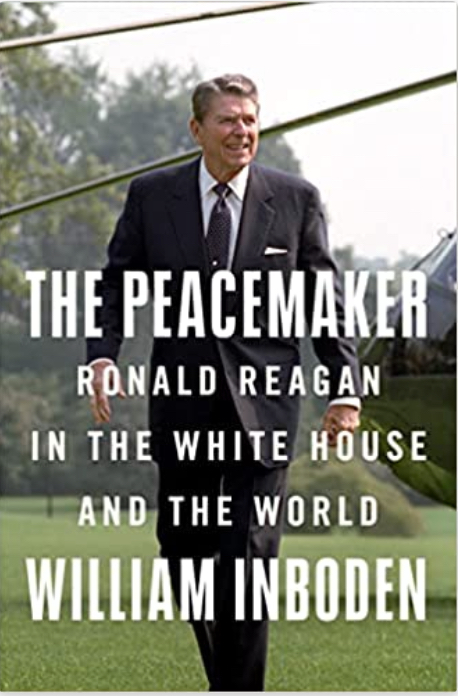
THE PEACEMAKER
Ronald Reagan in the White House and the World
An in-depth and masterful account of how Ronald Reagan's foreign policy "team of rivals" won the Cold War and laid the foundation for the 21st century.
Today the ending of the Cold War seems a foregone conclusion. But in the early 1980s, US intelligence and other experts believed the Soviet Union was strong, stable, and would last into the next century. Ronald Reagan entered the White House with no certainty of what would happen next, only an overriding faith in American democracy and an abiding belief that the communist system - and the threat of nuclear war - must be brought to an end.
THE PEACEMAKER is the story of the eight years of Reagan's presidency, as he and his national security team managed, in real time, multiple crises around the globe. From the emergence of global terrorism, wars in the Middle East, the rise of Japan, and the awakening of China to proxy conflicts in Latin America, Africa, and Asia, Reagan's team oversaw the worldwide expansion of democracy, globalization, free trade, and the information revolution. Yet no issue was greater than the Cold War standoff with the Soviet Union. As president, Reagan cast aside the four-decades-old policy of containment and challenged the Soviets in an arms race and ideological contest that pushed them toward economic and political collapse, all while extending an olive branch of diplomacy.
Reagan's revolving team included Secretaries of State Al Haig and George Shultz; Secretaries of Defense Caspar Weinberger and Frank Carlucci; National Security Advisors Bill Clark, John Poindexter, and Bud McFarlane; Chief of Staff James Baker; CIA Director Bill Casey; and United Nations Ambassador Jeane Kirkpatrick. Talented and devoted to their cause, the team's inner rivalries and backstabbing at times led to missteps and crises. But over the course of the administration, Reagan and his team developed the strategies that brought us to the brink of the Cold War's peaceful conclusion and remade the world.
William Inboden is executive director of the Clements Center for National Security and associate professor of Public Policy and History at the LBJ School of Public Affairs, both at the University of Texas at Austin. Prior to academia, he worked for fifteen years as a policymaker in Washington, DC, and overseas, including senior positions with the State Department and the National Security Council in the George W. Bush administration. A graduate of Stanford University, he earned his doctorate at Yale. He is a life member of the Council on Foreign Relations and his commentary has appeared in numerous outlets, including The Wall Street Journal, The New York Times, The Washington Post, the Los Angeles Times, Foreign Affairs, Foreign Policy, The Weekly Standard, World, NPR, CNN, Sky News, and the BBC.
THE PEACEMAKER is the story of the eight years of Reagan's presidency, as he and his national security team managed, in real time, multiple crises around the globe. From the emergence of global terrorism, wars in the Middle East, the rise of Japan, and the awakening of China to proxy conflicts in Latin America, Africa, and Asia, Reagan's team oversaw the worldwide expansion of democracy, globalization, free trade, and the information revolution. Yet no issue was greater than the Cold War standoff with the Soviet Union. As president, Reagan cast aside the four-decades-old policy of containment and challenged the Soviets in an arms race and ideological contest that pushed them toward economic and political collapse, all while extending an olive branch of diplomacy.
Reagan's revolving team included Secretaries of State Al Haig and George Shultz; Secretaries of Defense Caspar Weinberger and Frank Carlucci; National Security Advisors Bill Clark, John Poindexter, and Bud McFarlane; Chief of Staff James Baker; CIA Director Bill Casey; and United Nations Ambassador Jeane Kirkpatrick. Talented and devoted to their cause, the team's inner rivalries and backstabbing at times led to missteps and crises. But over the course of the administration, Reagan and his team developed the strategies that brought us to the brink of the Cold War's peaceful conclusion and remade the world.
William Inboden is executive director of the Clements Center for National Security and associate professor of Public Policy and History at the LBJ School of Public Affairs, both at the University of Texas at Austin. Prior to academia, he worked for fifteen years as a policymaker in Washington, DC, and overseas, including senior positions with the State Department and the National Security Council in the George W. Bush administration. A graduate of Stanford University, he earned his doctorate at Yale. He is a life member of the Council on Foreign Relations and his commentary has appeared in numerous outlets, including The Wall Street Journal, The New York Times, The Washington Post, the Los Angeles Times, Foreign Affairs, Foreign Policy, The Weekly Standard, World, NPR, CNN, Sky News, and the BBC.
| Available products |
|---|
|
Book
Published 2022-11-15 by Dutton |