| Vendor | |
|---|---|

|
Fritz Agency
Christian Dittus |
| Original language | |
| English | |
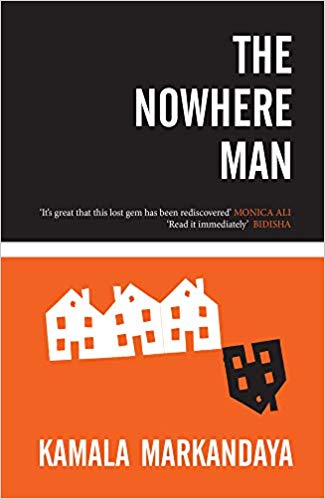
THE NOWHERE MAN
A story of racial violence on the streets of south east London in the 1960s. First published in 1972, the book still has contemporary resonance. Features an extensive new introduction from Paris Review columnist Emma Garman.
Srinivas, an elderly Brahmin, has been living in a south London suburb for thirty years. After the death of his son, and later his wife, this lonely man is befriended by an Englishwoman in her sixties, whom he takes into his home. The two form a deep and abiding relationship. But the haven they have created for themselves proves to be a fragile one. Racist violence enters their world and Srinivas's life changes irrevocably as does his dream of England as a country of tolerance and equality.
First published in 1972, The Nowhere Man depicts a London convulsed by fear and bitterness. A recent re-appraisal of her work in the Paris Review said: 'With The Nowhere Man, Markandaya wrote a British state of the nation novel whose acuteness and depth of understanding , unsung at the time, resounds eerily today. Truly shocking, The Nowhere Man is as relevant today as when it was first published almost fifty years ago.
Kamala Markandaya (1924 - 2004) was born in Mysore, India. She studied history at Madras University and later worked for a small progressive magazine before moving to London in 1948 in pursuit of a career in journalism. There she began writing her novels; Nectar in a Sieve, her first novel published in 1954, was in international best-seller. A contemporary of Ruth Prawer Jhabvala and R.K. Narayan, Kamala Markandaya is now being rediscovered as an essential figure in the post-colonial cannon. Other books by Kamala Markandaya : Nectar in a Sieve; A Silence of Desire; Possession; A Handful of Rice; The Coffer Dams; Two Virgins; The Golden Honeycomb and Bombay Tiger.
Srinivas, an elderly Brahmin, has been living in a south London suburb for thirty years. After the death of his son, and later his wife, this lonely man is befriended by an Englishwoman in her sixties, whom he takes into his home. The two form a deep and abiding relationship. But the haven they have created for themselves proves to be a fragile one. Racist violence enters their world and Srinivas's life changes irrevocably as does his dream of England as a country of tolerance and equality.
First published in 1972, The Nowhere Man depicts a London convulsed by fear and bitterness. A recent re-appraisal of her work in the Paris Review said: 'With The Nowhere Man, Markandaya wrote a British state of the nation novel whose acuteness and depth of understanding , unsung at the time, resounds eerily today. Truly shocking, The Nowhere Man is as relevant today as when it was first published almost fifty years ago.
Kamala Markandaya (1924 - 2004) was born in Mysore, India. She studied history at Madras University and later worked for a small progressive magazine before moving to London in 1948 in pursuit of a career in journalism. There she began writing her novels; Nectar in a Sieve, her first novel published in 1954, was in international best-seller. A contemporary of Ruth Prawer Jhabvala and R.K. Narayan, Kamala Markandaya is now being rediscovered as an essential figure in the post-colonial cannon. Other books by Kamala Markandaya : Nectar in a Sieve; A Silence of Desire; Possession; A Handful of Rice; The Coffer Dams; Two Virgins; The Golden Honeycomb and Bombay Tiger.
| Available products |
|---|
|
Book
Published 2019-07-01 by Small Axes (HopeRoad Publ.) |