| Vendor | |
|---|---|

|
Mohrbooks Literary Agency
Sebastian Ritscher |
| Original language | |
| English | |
| Categories | |
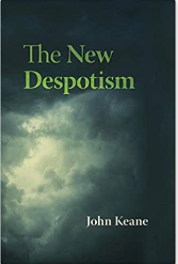
THE NEW DESPOTISM
Imagining The End of Democracy
Investigating the regimes of power in countries including Russia, Vietnam, Iran, Tajikistan, China and Brunei, Saudi Arabia and Hungary, this is an unsettling (and brilliantly written) exposé of the anti-democratic practices of despotic governments now sweeping the world, and the dangers posed to actually existing democracies by many of these same practices.
One day they'll be like us. That was once the West's complacent and self-regarding assumption about countries emerging from poverty, imperial rule, or communism. But many have hardened into something very different from liberal democracy: what the eminent political thinker John Keane describes as a new form of despotism. And one day, he warns, we may be more like them.
Drawing on extensive travels, interviews, and a lifetime of thinking about democracy and its enemies, Keane shows how governments from Russia and China through Central Asia to the Middle East and Europe have mastered a formidable combination of political tools that threaten the established ideals and practices of power-sharing democracy. They mobilize the rhetoric of democracy and win public support for workable forms of government based on patronage, dark money, steady economic growth, sophisticated media controls, strangled judiciaries, dragnet surveillance, and selective violence against their opponents.
Casting doubt on such fashionable terms as dictatorship, autocracy, fascism, and authoritarianism, Keane makes a case for retrieving and refurbishing the old term "despotism" to make sense of how these regimes function and endure. He shows how they cooperate regionally and globally and draw strength from each other's resources while breeding global anxieties and threatening the values and institutions of democracy. Like Montesquieu in the eighteenth century, Keane stresses the willing complicity of comfortable citizens in all these trends. And, like Montesquieu, he worries that the practices of despotism are closer to home than we care to admit.
THE NEW DESPOTISM is both sobering and enlightening. It sets out to make sense of a major political trend shaping our world in these early years of the 21st-century, and shows that democracies can be choked and killed not just by the old methods of social disorder, economic breakdown, political conspiracy and military violence, but that they can be snuffed out by stealth, and by the seductiveness of new methods of government.
John Keane is Professor of Politics at the University of Westminster and at the Wissenschaftszentrum Berlin. In 1989 he founded the Centre for the Study of Democracy. Among his many books are The Media and Democracy (1991); Democracy and Civil Society (1988; 1998); Reflections on Violence (1996); Civil Society: Old Images, New Visions (1998); the prize-winning biography Tom Paine: A Political Life (1995); and a study of power in twentieth century Europe, Václav Havel: A Political Tragedy in Six Acts (1999). In recent years, he has held the prestigious Karl Deutsch Professorship in Berlin and served as a Fellow of the influential London-based think-tank, the Institute for Public Policy Research (IPPR). The Times has ranked him as one of Britain's leading political thinkers and writers whose work has "a world-wide importance". His most recent book, The Life and Death of Democracy, is a full scale history of democracy, the first for over a century and the subject of a 3-part BBC Radio series.
Drawing on extensive travels, interviews, and a lifetime of thinking about democracy and its enemies, Keane shows how governments from Russia and China through Central Asia to the Middle East and Europe have mastered a formidable combination of political tools that threaten the established ideals and practices of power-sharing democracy. They mobilize the rhetoric of democracy and win public support for workable forms of government based on patronage, dark money, steady economic growth, sophisticated media controls, strangled judiciaries, dragnet surveillance, and selective violence against their opponents.
Casting doubt on such fashionable terms as dictatorship, autocracy, fascism, and authoritarianism, Keane makes a case for retrieving and refurbishing the old term "despotism" to make sense of how these regimes function and endure. He shows how they cooperate regionally and globally and draw strength from each other's resources while breeding global anxieties and threatening the values and institutions of democracy. Like Montesquieu in the eighteenth century, Keane stresses the willing complicity of comfortable citizens in all these trends. And, like Montesquieu, he worries that the practices of despotism are closer to home than we care to admit.
THE NEW DESPOTISM is both sobering and enlightening. It sets out to make sense of a major political trend shaping our world in these early years of the 21st-century, and shows that democracies can be choked and killed not just by the old methods of social disorder, economic breakdown, political conspiracy and military violence, but that they can be snuffed out by stealth, and by the seductiveness of new methods of government.
John Keane is Professor of Politics at the University of Westminster and at the Wissenschaftszentrum Berlin. In 1989 he founded the Centre for the Study of Democracy. Among his many books are The Media and Democracy (1991); Democracy and Civil Society (1988; 1998); Reflections on Violence (1996); Civil Society: Old Images, New Visions (1998); the prize-winning biography Tom Paine: A Political Life (1995); and a study of power in twentieth century Europe, Václav Havel: A Political Tragedy in Six Acts (1999). In recent years, he has held the prestigious Karl Deutsch Professorship in Berlin and served as a Fellow of the influential London-based think-tank, the Institute for Public Policy Research (IPPR). The Times has ranked him as one of Britain's leading political thinkers and writers whose work has "a world-wide importance". His most recent book, The Life and Death of Democracy, is a full scale history of democracy, the first for over a century and the subject of a 3-part BBC Radio series.
| Available products |
|---|
|
Book
Published 2020-05-12 by Harvard University Press |
|
Book
Published 2020-05-12 by Harvard University Press |