| Vendor | |
|---|---|

|
Mohrbooks Literary Agency
Sebastian Ritscher |
| Original language | |
| English | |
| Categories | |
| Weblink | |
| patricktucker.com/ | |
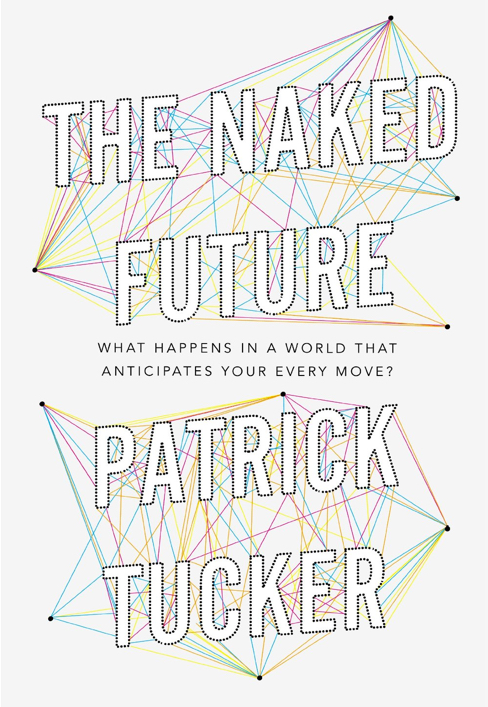
THE NAKED FUTURE
What Happens in a World that Anticipates Your Every Move?
Patrick Tucker’s timely and fascinating THE NAKED FUTURE, is a futurist's in-depth look at what happens when forecasting becomes even more powerful and personal.
We are on the threshold of a historic transition in the way we think about the future. The rapid growth of computer science and a burgeoning network of information collection programs have given rise to enormous data sets. Buried in these information treasure chests are clues that foretell future actions with ever-increasing precision.
Computer-aided forecasting is poised for a rapid growth over the next ten years. We will be able to predict huge areas of the future—not perfectly, but with far greater accuracy, including events long thought to be beyond human inference: the price point at which rising corn prices lead to a riot; the number of kids in a kindergarten class that will catch a cold; even your chances of meeting your perfect match, tonight.
Distinguishing the usable data from the noise will become far easier in the next decade, as Tucker reveals. Soon, predictive analytics may be able to show us how and why:
* Twitter can reveal more about a person’s medical issues than that individual’s doctor knows.
* Robots are being developed with humanistic functioning and verbal responses.
* Random events, such as tornados and herd movement, can indeed be predicted.
The potential for the abuse of predictive analytics is growing exponentially alongside the benefits. There are also moral, ethical, and philosophical dilemmas associated with quantifying the future. Will we be able to predict guilt before a person commits a crime? It's already happening in some countries, where the government can collect information on its citizens and pre-empt public demonstrations. As individuals, as free citizens, and as a society, we need to consider how we will use the powers of computer-aided forecasting to further the interests of freedom and openness and avoid becoming the victims of the predictive capabilities of others. Patrick Tucker is the deputy editor of The Futurist magazine and content director for the magazine’s website. He’s written more than 200 articles on the topics of AI and AGI, information technology, cybernetics, nanotechnology, genetics and genetic ethics, invention, climate change and climate change mitigation, demography, and neuroscience. His writing has appeared in The Futurist magazine, The Wilson Quarterly, Encyclopedia Britannica online, and The Utne Reader. He’s also written for the Discovery Channel.
Computer-aided forecasting is poised for a rapid growth over the next ten years. We will be able to predict huge areas of the future—not perfectly, but with far greater accuracy, including events long thought to be beyond human inference: the price point at which rising corn prices lead to a riot; the number of kids in a kindergarten class that will catch a cold; even your chances of meeting your perfect match, tonight.
Distinguishing the usable data from the noise will become far easier in the next decade, as Tucker reveals. Soon, predictive analytics may be able to show us how and why:
* Twitter can reveal more about a person’s medical issues than that individual’s doctor knows.
* Robots are being developed with humanistic functioning and verbal responses.
* Random events, such as tornados and herd movement, can indeed be predicted.
The potential for the abuse of predictive analytics is growing exponentially alongside the benefits. There are also moral, ethical, and philosophical dilemmas associated with quantifying the future. Will we be able to predict guilt before a person commits a crime? It's already happening in some countries, where the government can collect information on its citizens and pre-empt public demonstrations. As individuals, as free citizens, and as a society, we need to consider how we will use the powers of computer-aided forecasting to further the interests of freedom and openness and avoid becoming the victims of the predictive capabilities of others. Patrick Tucker is the deputy editor of The Futurist magazine and content director for the magazine’s website. He’s written more than 200 articles on the topics of AI and AGI, information technology, cybernetics, nanotechnology, genetics and genetic ethics, invention, climate change and climate change mitigation, demography, and neuroscience. His writing has appeared in The Futurist magazine, The Wilson Quarterly, Encyclopedia Britannica online, and The Utne Reader. He’s also written for the Discovery Channel.
| Available products |
|---|
|
Book
Published 2014-03-06 by Current |
|
Book
Published 2014-03-06 by Current |