| Vendor | |
|---|---|

|
Liepman Literary Agency
Marc Koralnik |
| Original language | |
| English | |
| Weblink | |
| http://www.bloomsbury.com/us/the … | |
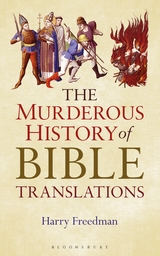
THE MURDEROUS HISTORY OF BIBLE TRANSLATIONS
Power, Conflict and the Quest for Meaning
The Bible has been translated far more than any other book. To our minds it is self-evident that believers would want to read their sacred literature in a language they understand. But the history of Bible translations is far more contentious than reason would suggest. Bible translations underlie an astonishing number of religious conflicts that have plagued the world.
From the start conflict arose about what should even be included in the Bible itself. This led to sectarian fissure of great proportion. Religious establishments through the ages have railed against Bible translations. The Cathar Bible was banned. In England Richard II ordained that anyone possessing a manuscript of Wycliffe's translation was instantly to be thrown into gaol. The Pope ordered that Wycliffe's bones were to be burned. William Tyndale was forced to flee from England and so the story continues to the present day.
This is narrative history at its best. Freedman describes brilliantly the passions and strong emotions that arise when deeply held religious convictions are threatened or undermined. This is about the struggle for authority and orthodoxy in a world where temporal power was always subjugated to the divine. There is no religion and virtually no language on earth that has not been affected by it.
Harry Freedman is a writer and academic with a PhD in Aramaic. His publications include The Gospels' Veiled Agenda and The Talmud: A Biography. He has written for the Guardian, Jewish Chronicle, Jewish Quarterly, Judaism Today and contributed to the Encyclopaedia of Modern Jewish Culture.
From the start conflict arose about what should even be included in the Bible itself. This led to sectarian fissure of great proportion. Religious establishments through the ages have railed against Bible translations. The Cathar Bible was banned. In England Richard II ordained that anyone possessing a manuscript of Wycliffe's translation was instantly to be thrown into gaol. The Pope ordered that Wycliffe's bones were to be burned. William Tyndale was forced to flee from England and so the story continues to the present day.
This is narrative history at its best. Freedman describes brilliantly the passions and strong emotions that arise when deeply held religious convictions are threatened or undermined. This is about the struggle for authority and orthodoxy in a world where temporal power was always subjugated to the divine. There is no religion and virtually no language on earth that has not been affected by it.
Harry Freedman is a writer and academic with a PhD in Aramaic. His publications include The Gospels' Veiled Agenda and The Talmud: A Biography. He has written for the Guardian, Jewish Chronicle, Jewish Quarterly, Judaism Today and contributed to the Encyclopaedia of Modern Jewish Culture.
| Available products |
|---|
|
Book
Published 2016-05-01 by Bloomsbury Continuum |