| Vendor | |
|---|---|

|
Mohrbooks Literary Agency
Sebastian Ritscher |
| Original language | |
| English | |
| Categories | |
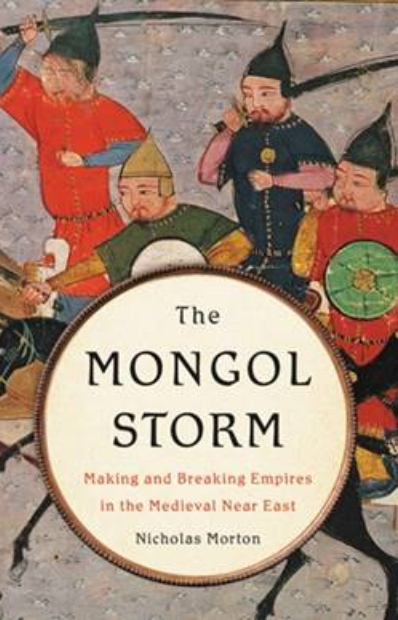
THE MONGOL STORM
Making and Breaking Empires in the Medieval Near East
A new look at how the Mongol invasions remade the world of the Middle Ages.
Drawing upon sources produced by every major Near Eastern society, including artwork, architecture, and a vast array of materials written in Arabic, Persian, Uighur, Armenian, Syriac, Greek, Latin, Old French, and Hebrew, The Mongol Storm will appeal to readers of sweeping books about global interconnections of the premodern world, including Dan Jones's Crusaders, Jack Weatherford's Genghis Khan, and Neil Price's Children of Ash and Elm.
The Mongols have long been viewed in the West as violent barbarians who plundered and wrecked the societies they invaded. But in fact the Mongol Empire was highly sophisticated, and through their conquests they built a new world order. Within the space of a single generation, they swept across the Middle East, tied Europe and Asia together through trade, and completely reshaped global geopolitics.
The Mongol Storm tells the story of the Mongols and the empires they conquered. Drawing on years of deep archival research, historian Nicholas Morton traces the rise of the Mongols in the 13th century through their rapid invasions of eight different Middle Eastern societies. As Mongol armies advanced upon the Middle East, Morton shows, longstanding powers such as the Khwarazmian Empire, the Kingdom of Jerusalem, and the Abbasid Caliphate collapsed, while waves of refugees broke across borders and upset the region's delicate religious and social hierarchies. Amidst the chaos arose aggressive new empires including the Mamluks and the Ottomans, who would ultimately challenge the Mongol Empire's authority and dominate the Middle East for centuries. Even as the Mongols' power declined, the diplomatic and economic ties their conquests had established between once-disparate societies endured, and they left a much more connected Eurasia in their wake, permanently reconfiguring the balance of medieval world power.
The Mongol Storm is an epic account of violent conflict unfolding against the vibrant backdrop of the Seljuk Turks' magnificent garden palaces, mighty Crusader fortresses, Egyptian pyramids, Damascus' sprawling markets, and the vast Mongol wagon cities. Vividly written and vast in scope, it completely revises our understanding of the Mongols and the world of the Middle Ages.
Nicholas Morton is UK-based, a senior lecturer at Nottingham Trent University, and protégé of preeminent medieval historian Jonathan Phillips. He is the author or editor of ten books covering different aspects of Middle Eastern history, and his first trade book The Field of Blood, was praised by The Wall Street Journal for being "lit by vivid re-creations of battles as well as concise descriptions of each warring group's military tactics," while the Washington Independent Review of Books called it "a lively and compact historical survey."
The Mongols have long been viewed in the West as violent barbarians who plundered and wrecked the societies they invaded. But in fact the Mongol Empire was highly sophisticated, and through their conquests they built a new world order. Within the space of a single generation, they swept across the Middle East, tied Europe and Asia together through trade, and completely reshaped global geopolitics.
The Mongol Storm tells the story of the Mongols and the empires they conquered. Drawing on years of deep archival research, historian Nicholas Morton traces the rise of the Mongols in the 13th century through their rapid invasions of eight different Middle Eastern societies. As Mongol armies advanced upon the Middle East, Morton shows, longstanding powers such as the Khwarazmian Empire, the Kingdom of Jerusalem, and the Abbasid Caliphate collapsed, while waves of refugees broke across borders and upset the region's delicate religious and social hierarchies. Amidst the chaos arose aggressive new empires including the Mamluks and the Ottomans, who would ultimately challenge the Mongol Empire's authority and dominate the Middle East for centuries. Even as the Mongols' power declined, the diplomatic and economic ties their conquests had established between once-disparate societies endured, and they left a much more connected Eurasia in their wake, permanently reconfiguring the balance of medieval world power.
The Mongol Storm is an epic account of violent conflict unfolding against the vibrant backdrop of the Seljuk Turks' magnificent garden palaces, mighty Crusader fortresses, Egyptian pyramids, Damascus' sprawling markets, and the vast Mongol wagon cities. Vividly written and vast in scope, it completely revises our understanding of the Mongols and the world of the Middle Ages.
Nicholas Morton is UK-based, a senior lecturer at Nottingham Trent University, and protégé of preeminent medieval historian Jonathan Phillips. He is the author or editor of ten books covering different aspects of Middle Eastern history, and his first trade book The Field of Blood, was praised by The Wall Street Journal for being "lit by vivid re-creations of battles as well as concise descriptions of each warring group's military tactics," while the Washington Independent Review of Books called it "a lively and compact historical survey."
| Available products |
|---|
|
Book
Published 2022-11-15 by Basic Books |
|
Book
Published 2022-11-15 by Basic Books |