| Vendor | |
|---|---|

|
Fritz Agency
Christian Dittus |
| Original language | |
| English | |
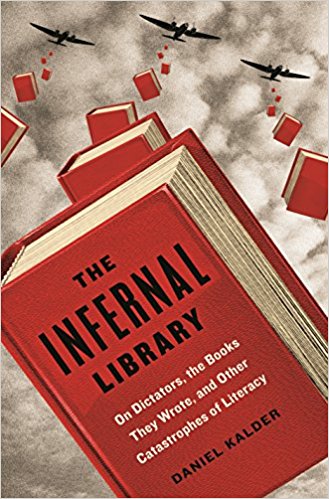
THE INFERNAL LIBRARY
On Dictators, the Books They Wrote, and Other Catastrophes of Literacy
A harrowing tour of dictator literature in the twentieth-century, featuring the soul-killing prose and poetry of Hitler, Mao, and many more, which shows how books have sometimes shaped the world for the worse.
Since the days of the Roman Empire, dictators have written books. But in the twentieth-century despots enjoyed unprecedented print runs to (literally) captive audiences. The titans of the genre?Stalin, Mussolini, and Khomeini among them?produced theoretical works, spiritual manifestos, poetry, memoirs, and even the occasional romance novel, and established a literary tradition of boundless tedium that continues to this day.
How did the production of literature become central to the running of regimes? What do these books reveal about the dictatorial soul? And how can books and literacy, most often viewed as inherently positive, cause immense and lasting harm? Putting daunting research to revelatory use, Daniel Kalder asks and brilliantly answers these questions.
Marshalled upon the beleaguered shelves of the Infernal Library are the books and commissioned works of the century's most notorious figures. Their words led to the deaths of millions. Their conviction in the significance of their own thoughts brooked no argument. It is perhaps no wonder then, as Kalder argues, that many dictators began their careers as writers.
Daniel Kalder is the author of Lost Cosmonaut (2006) and Strange Telescopes (2008). His journalism has appeared in Esquire, The Guardian, The Dallas Morning News and other finer periodicals. He was born in Scotland, reported from Russia for a decade, and is currently living in and writing from Central Texas.
Since the days of the Roman Empire, dictators have written books. But in the twentieth-century despots enjoyed unprecedented print runs to (literally) captive audiences. The titans of the genre?Stalin, Mussolini, and Khomeini among them?produced theoretical works, spiritual manifestos, poetry, memoirs, and even the occasional romance novel, and established a literary tradition of boundless tedium that continues to this day.
How did the production of literature become central to the running of regimes? What do these books reveal about the dictatorial soul? And how can books and literacy, most often viewed as inherently positive, cause immense and lasting harm? Putting daunting research to revelatory use, Daniel Kalder asks and brilliantly answers these questions.
Marshalled upon the beleaguered shelves of the Infernal Library are the books and commissioned works of the century's most notorious figures. Their words led to the deaths of millions. Their conviction in the significance of their own thoughts brooked no argument. It is perhaps no wonder then, as Kalder argues, that many dictators began their careers as writers.
Daniel Kalder is the author of Lost Cosmonaut (2006) and Strange Telescopes (2008). His journalism has appeared in Esquire, The Guardian, The Dallas Morning News and other finer periodicals. He was born in Scotland, reported from Russia for a decade, and is currently living in and writing from Central Texas.
| Available products |
|---|
|
Book
Published 2018-03-01 by Henry Holt |