| Vendor | |
|---|---|

|
Mohrbooks Literary Agency
Sebastian Ritscher |
| Original language | |
| English | |
| Categories | |
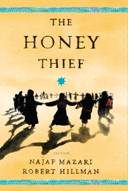
THE HONEY THIEF
THE HONEY THIEF combines elements of memoir, folk tales, and political history, featuring distinct yet interconnected stories and chapters spanning the twentieth century, with wonderful characters taking center stage. The ambition is to retell the history of Afghanistan from the perspective of the plight suffered by the Hazara tribe at the hands of the ruling powers.
These "historical facts" are beautifully juxtaposed to the oral history rooted in the folk tales and mythology of the region.The narrative uses story-telling as a way to understand history and as a way to heal relationships between individuals, groups of people and between nations.
These "historical facts" are beautifully juxtaposed to the oral history rooted in the folk tales and mythology of the region.The narrative uses story-telling as a way to understand history and as a way to heal relationships between individuals, groups of people and between nations.
In The Honey Thief, we read the story of the "king-killer" Abdul Khaliq, who avenged the suffering of the Hazara by murdering the king, with the result that he was brutally executed along with a number of his family members and friends. The mixture of compassion and matter-of-factness makes for a chilling, deeply moving read, because it reminds us of the importance and the deceitful potential of memory and of the circular nature of history.
The book also tells us of the Englishman nicknamed Dobara, who came to the Hazarajat to take photographs of the elusive snow leopard and of his friendship with Mohammad Hussein; and of Konrad (half German, half Hazara) who sings Billie Jean to Abbas, grandson of the honey thief Esmail, and shows Abbas his dance moves before he is killed by a Russian missile. Then we are told of the "Master Poisoner" Ghoroob of Mashad, who had so mastered his craft that he could prepare poisons that were almost an honour to die from. This story is followed by a recipe for how to make poisoned stew, which is a wonderful read in itself. The authors continuously play with both Eastern and Western belief systems, revealing them both as equally valid and potentially equally vacuous. This is done through the charming, sharp tone of the book's pitch-perfect language, which is often tongue-in-cheek and quite lyrical and profound in its simplicity and straightforwardness.
The authors always connect these very specific local characters and storylines with our modern times and to other events from history, reminding us that suffering and injustice are universal. For example, when the story is told of Abdul Khaliq's murder of Mohammad Nadir in 1933, it is likened to and then distinguished from modern suicide bombers.
Najaf Mazari fled upheaval in Afghanistan in 2001 and made his way to Australia, where he now lives with wife, Hakeema, and his daughter, Maria. He is a successful businessman with a shop in Melbourne's antique precinct, selling traditional Afghan rugs. He is deeply involved in creating a better climate for asylum-seekers and in charity activities that provide medical and educational assistance to some of the poorest villages in Afghanistan. Each year, Najaf sponsors an Afghan Evening of traditional song, dance and cuisine that highlights the achievements of Afghans in Australia. In 2008 Najaf co-authored the extraordinarily successful book, The Rugmaker of Mazar-e-Sharif, which eloquently tells the story of his journey as a refugee from Afghanistan to Australia.
Robert Hillman is a Melbourne-based writer of fiction and biography. His autobiography, The Boy in the Green Suit, won the Australian National Biography Award in 2005. His 2007 biography, My Life as a Traitor, written with Zarah Ghahramani, was published by Farrar Straus and Giroux, Bloomsbury in the UK, and published as well Spain, France,Germany,Italy, the Netherlands,Brazil, and Portugal and short-listed for the Prime Minister's Literary Awards in 2008. His first collaboration with Najaf Mazari, The Rugmaker of Mazar-e-Sharif, grew out of an abiding interest in the hardships and triumphs of refugees.
The book also tells us of the Englishman nicknamed Dobara, who came to the Hazarajat to take photographs of the elusive snow leopard and of his friendship with Mohammad Hussein; and of Konrad (half German, half Hazara) who sings Billie Jean to Abbas, grandson of the honey thief Esmail, and shows Abbas his dance moves before he is killed by a Russian missile. Then we are told of the "Master Poisoner" Ghoroob of Mashad, who had so mastered his craft that he could prepare poisons that were almost an honour to die from. This story is followed by a recipe for how to make poisoned stew, which is a wonderful read in itself. The authors continuously play with both Eastern and Western belief systems, revealing them both as equally valid and potentially equally vacuous. This is done through the charming, sharp tone of the book's pitch-perfect language, which is often tongue-in-cheek and quite lyrical and profound in its simplicity and straightforwardness.
The authors always connect these very specific local characters and storylines with our modern times and to other events from history, reminding us that suffering and injustice are universal. For example, when the story is told of Abdul Khaliq's murder of Mohammad Nadir in 1933, it is likened to and then distinguished from modern suicide bombers.
Najaf Mazari fled upheaval in Afghanistan in 2001 and made his way to Australia, where he now lives with wife, Hakeema, and his daughter, Maria. He is a successful businessman with a shop in Melbourne's antique precinct, selling traditional Afghan rugs. He is deeply involved in creating a better climate for asylum-seekers and in charity activities that provide medical and educational assistance to some of the poorest villages in Afghanistan. Each year, Najaf sponsors an Afghan Evening of traditional song, dance and cuisine that highlights the achievements of Afghans in Australia. In 2008 Najaf co-authored the extraordinarily successful book, The Rugmaker of Mazar-e-Sharif, which eloquently tells the story of his journey as a refugee from Afghanistan to Australia.
Robert Hillman is a Melbourne-based writer of fiction and biography. His autobiography, The Boy in the Green Suit, won the Australian National Biography Award in 2005. His 2007 biography, My Life as a Traitor, written with Zarah Ghahramani, was published by Farrar Straus and Giroux, Bloomsbury in the UK, and published as well Spain, France,Germany,Italy, the Netherlands,Brazil, and Portugal and short-listed for the Prime Minister's Literary Awards in 2008. His first collaboration with Najaf Mazari, The Rugmaker of Mazar-e-Sharif, grew out of an abiding interest in the hardships and triumphs of refugees.
| Available products |
|---|
|
Book
Published 2013-04-01 by Viking |
|
Book
Published 2013-04-01 by Viking |