| Vendor | |
|---|---|

|
Liepman Literary Agency
Marc Koralnik |
| Original language | |
| English | |
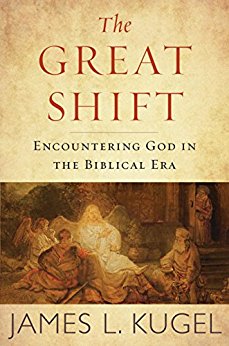
THE GREAT SHIFT: ENCOUNTERING GOD IN THE BIBLICAL ERA
A world-renowned scholar brings a lifetime of study to reveal how a pivotal transformation in spiritual experience during the Biblical Era made us who we are today
Why does the Bible depict a world in which humans, with surprising regularity, encounter the divinewrestling an angel, addressing a burning bush, issuing forth prophecy without any choice in the matter? These stories spoke very differently to their original audience than they do to us, and they reflect a radically distinct understanding of reality and the human mind. Yet over the course of the thousand-year Biblical Era, encounters with God changed dramatically. As James Kugel argues, this transition allows us to glimpse a massive shift in human experiencethe emergence of the modern, Western sense of self.
In this landmark work, Kugel fuses revelatory close readings of ancient texts with modern scholarship from a range of fields, including neuroscience, anthropology, psychology, and archaeology, to explain the origins of belief, worship, and the sense of self, and the changing nature of God through history. In the tradition of books like The Swerve and The Better Angels of Our Nature, The Divine and the Human tells the story of a revolution in human consciousness and the enchantment of everyday life. This book will make believers and seekers think differently not just about the Bible, but about the entire history of the human imagination.
JAMES KUGEL is Starr Professor of Hebrew Literature at Harvard University (emeritus). Kugel is a specialist in the Hebrew Bible and the Dead Sea Scrolls. He is the author of thirteen books, including The Bible As It Was, which won the Grawemeyer Prize in Religion in 2001, and How to Read the Bible, which was awarded the National Jewish Book Award for the best book of 2007. He lives in Tel Aviv, Israel
In this landmark work, Kugel fuses revelatory close readings of ancient texts with modern scholarship from a range of fields, including neuroscience, anthropology, psychology, and archaeology, to explain the origins of belief, worship, and the sense of self, and the changing nature of God through history. In the tradition of books like The Swerve and The Better Angels of Our Nature, The Divine and the Human tells the story of a revolution in human consciousness and the enchantment of everyday life. This book will make believers and seekers think differently not just about the Bible, but about the entire history of the human imagination.
JAMES KUGEL is Starr Professor of Hebrew Literature at Harvard University (emeritus). Kugel is a specialist in the Hebrew Bible and the Dead Sea Scrolls. He is the author of thirteen books, including The Bible As It Was, which won the Grawemeyer Prize in Religion in 2001, and How to Read the Bible, which was awarded the National Jewish Book Award for the best book of 2007. He lives in Tel Aviv, Israel
| Available products |
|---|
|
Book
Published 2017-09-01 by Houghton Mifflin Harcourt |