| Vendor | |
|---|---|

|
Liepman Literary Agency
Marc Koralnik |
| Original language | |
| English | |
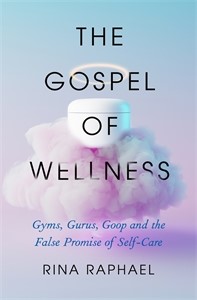
THE GOSPEL OF WELLNESS
Gyms, Gurus, Goop, and the False Promise of Self-Care
Naomi Wolf's "The Beauty Myth" for the 21. century
In THE GOSPEL OF WELLNESS--now subtitled Why Stressed-Out Women are Turning to Gyms, Gurus, and Goop--journalist Rina Raphael looks at the explosion of the wellness industry: how it stems from legitimate complaints, how seductive marketing targets hopeful consumersand why women are opening up their wallets like never before.
Rina Raphael has been there. She's bought cases of kombucha, she's paid $45 for an exercise class, she's sprinkled mushroom superpowder in her coffee, she's gone on luxury mindfulness retreats, and she's hung out with Hollywood's crystal healers. . . . She's a respected journalist who has specialized in health and wellness , so she should know better right? Yes. And No. You see Raphael was once a wellness junkie. Like millions of other women out there, she held out hope that clean eating or the newest strength training class would give her the salvation she sought. Why? Because the modern woman has been sold a bum deal. In their male dominated workplace, stress levels for women are 1.5 times higher than for men. They then venture home, only to be confronted by the second shift.
Just how bad is it? Google searches for self care are at an all-time high. Dentists have seen an uptick in angry women grinding their teeth at night. What have women been sold as coping mechanisms? Meditation apps, detoxes, manifestation gurusthings that only a few years ago might have been considered fringe that are now mainstream. But deep within the underbelly of self-carehidden beneath layers of clever marketingthe wellness industry beckons women with a far stronger, more seductive message. It promises women the one thing they desperately desire: control. They are told they can manage the chaos ruling their life by following a laid-out plan: Eat right, exercise, meditate, then buy all this stuff. This mass consumerism is a metaphor for harnessing everything that feels untenable in their life. Wellness isn't just a lifestyle; it's become something much more. It's something to believe in. Which is why wellness is increasingly adopting patterns similar to religion.
The desire to be healthy is anything but new. But what we're witnessing today is completely unlike its predecessors. Wellness, in its current form, is almost an obsession. What's the reason everyone is guzzling kombucha and taking to aromatherapy now? Why do women feel the weight of the world when they go to the grocery store and choose conventional over the hefty priced organic produce for their families? Why, in this moment, do we find ourselves at what seems to be the peak of alternative health practices? To quote Gwyneth Paltrow at a recent Goop summit, Why do we all not feel well?
THE GOSPEL OF WELLNESS will examine how and why women were led down this costly kale-covered path. Part investigative report, part sociological analysis, part personal account, this book will dive deep into this booming movement, bringing the reader inside the sprawling landscape of wellness and introducing them to its many trends and blind spots.
Blending traditional reporting, first-person narrative, and social critique, Rina Raphael will guide readers through a journey of the modern woman and why she's so dissatisfied with the status quo. Wellness did not sprout in a vacuum: it's a reaction to trends building over decades. Women are searching for meaning, purpose, community, and certaintyand trying to find it through health practices. But what happens when the cure becomes as bad as the disease?
Rina Raphael is a features contributor for Fast Company magazine who specializes in health, wellness, and women's issues. She has contributed to the New York Times, LA Times, CBS, NBC News, Medium's Elemental, among others. Her wellness industry newsletter, Well To Do, which reaches nearly twenty thousand subscribers, covers trends and news and offers biweekly market analysis. Raphael has spoken on the wellness industry at several conferences, including SXSW, the Global Wellness Summit, the Self-Care Summit, and the Fast Company Innovation Festival. Previously, she served as a senior producer and lifestyle editor at the Today show, the number one morning show in America, for nearly a decade.
Please note that although the book focuses on today's wellness landscape, it also includes plenty of international historic anecdotes and examples, delving into Bavarian priest Sebastien Kneipp's revolutionary water therapy and profiling the first (in disguise) female British doctor, "Dr. James Barry" (also known as Margaret Ann Bulky.)
Rina Raphael has been there. She's bought cases of kombucha, she's paid $45 for an exercise class, she's sprinkled mushroom superpowder in her coffee, she's gone on luxury mindfulness retreats, and she's hung out with Hollywood's crystal healers. . . . She's a respected journalist who has specialized in health and wellness , so she should know better right? Yes. And No. You see Raphael was once a wellness junkie. Like millions of other women out there, she held out hope that clean eating or the newest strength training class would give her the salvation she sought. Why? Because the modern woman has been sold a bum deal. In their male dominated workplace, stress levels for women are 1.5 times higher than for men. They then venture home, only to be confronted by the second shift.
Just how bad is it? Google searches for self care are at an all-time high. Dentists have seen an uptick in angry women grinding their teeth at night. What have women been sold as coping mechanisms? Meditation apps, detoxes, manifestation gurusthings that only a few years ago might have been considered fringe that are now mainstream. But deep within the underbelly of self-carehidden beneath layers of clever marketingthe wellness industry beckons women with a far stronger, more seductive message. It promises women the one thing they desperately desire: control. They are told they can manage the chaos ruling their life by following a laid-out plan: Eat right, exercise, meditate, then buy all this stuff. This mass consumerism is a metaphor for harnessing everything that feels untenable in their life. Wellness isn't just a lifestyle; it's become something much more. It's something to believe in. Which is why wellness is increasingly adopting patterns similar to religion.
The desire to be healthy is anything but new. But what we're witnessing today is completely unlike its predecessors. Wellness, in its current form, is almost an obsession. What's the reason everyone is guzzling kombucha and taking to aromatherapy now? Why do women feel the weight of the world when they go to the grocery store and choose conventional over the hefty priced organic produce for their families? Why, in this moment, do we find ourselves at what seems to be the peak of alternative health practices? To quote Gwyneth Paltrow at a recent Goop summit, Why do we all not feel well?
THE GOSPEL OF WELLNESS will examine how and why women were led down this costly kale-covered path. Part investigative report, part sociological analysis, part personal account, this book will dive deep into this booming movement, bringing the reader inside the sprawling landscape of wellness and introducing them to its many trends and blind spots.
Blending traditional reporting, first-person narrative, and social critique, Rina Raphael will guide readers through a journey of the modern woman and why she's so dissatisfied with the status quo. Wellness did not sprout in a vacuum: it's a reaction to trends building over decades. Women are searching for meaning, purpose, community, and certaintyand trying to find it through health practices. But what happens when the cure becomes as bad as the disease?
Rina Raphael is a features contributor for Fast Company magazine who specializes in health, wellness, and women's issues. She has contributed to the New York Times, LA Times, CBS, NBC News, Medium's Elemental, among others. Her wellness industry newsletter, Well To Do, which reaches nearly twenty thousand subscribers, covers trends and news and offers biweekly market analysis. Raphael has spoken on the wellness industry at several conferences, including SXSW, the Global Wellness Summit, the Self-Care Summit, and the Fast Company Innovation Festival. Previously, she served as a senior producer and lifestyle editor at the Today show, the number one morning show in America, for nearly a decade.
Please note that although the book focuses on today's wellness landscape, it also includes plenty of international historic anecdotes and examples, delving into Bavarian priest Sebastien Kneipp's revolutionary water therapy and profiling the first (in disguise) female British doctor, "Dr. James Barry" (also known as Margaret Ann Bulky.)
| Available products |
|---|
|
Book
Published 2022-09-01 by Henry Holt |