| Vendor | |
|---|---|

|
Mohrbooks Literary Agency
Sebastian Ritscher |
| Original language | |
| English | |
| Categories | |
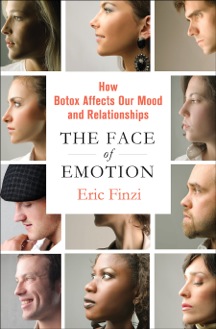
THE FACE OF EMOTION
How Botox Affects Our Mood and Relationships
This groundbreaking book examines how facial expressions feed back to our brains, in a newly described process called emotional proprioception, affecting our thoughts, feelings and moods – and how this unique line of thinking has led to the use of Botox as a new treatment for depression.
Dr. Finzi gives us stories of his clinical trials, including in-depth interviews conducted with the world-renowned psychiatrist and best-selling author Dr. Norman E. Rosenthal, who has written a foreword.
This book traces how nature’s most potent poison, botulinum toxin, has morphed from the dreaded disease of botulism into one of medicine’s most transforming drugs. We discover the interconnections between facial muscles and our mind and how Botox is not just a treatment to reverse the lines of aging; it is also being used to treat to migraine headaches, cerebral palsy, urinary retention, and chronic pain. A dermatologic surgeon for twenty years, and regularly witnessed how changing a person’s face not only affected their relationships with others but also with themselves. Facial muscles can cause emotions, not just reflect them: this is a riveting look at the processes behind this extraordinary relationship, and the proven effect of Botox in treating depression directly through the paralysis of frown muscles.
The evolutionary origin and development of our facial muscles is traced back to primitive primates. We learn how Darwin referred to the corrugator (frown) muscles as the grief muscles, and how he was the first to propose that human facial expressions are innate and understood by all cultures. One hundred years later, the scientific community is catching up with him. We follow the numerous experiments starting in the 1970’s which show that by adopting a particular facial expression you can actually change your thinking, examining how depressed patients consistently show patterns of facial muscle activity that differ from 'normal' individuals. Along the way, we also learn about the “true” Duchenne smile, and how to spot deception.
The new concept of “noncosmetic cosmetic surgery” leads to stories such as how a wife’s involuntary 'corrugator' frown was ruining their marriage, creating arguments with her husband by inflaming trivial disagreement; or how a 74-year-old war veteran and moose hunter is unable to dine in public because a prominent mouth frown convinces the waitress he is angry. Dr. Finzi concludes with an update on current research on the role of Botox in the treatment of depression.
Dr. Eric Finzi, a true modern day Renaissance man, is a board-certified dermasurgeon as weil as an accomplished artist and sculptor who has exhibited worldwide. He graduated summa cum laude with a BA in biology from the University of Pennsyivania and received a flaU scholarship to Mount Sinai School ofMedicine in New York where he earned his MD and PhD in biochernistry. Following medical school, he spent two years as a medical fellow researching causes and treatments for skin cancer at the National Cancer Institute, part ofthe world-renowned National Institutes ofHealth. He completed his dermatology residency at Johns Hopkins Medical Center. He has authored over twenty research publications and has been on the faculey of the Dermatoiogy Department atJohns Hopkins.
His work has also been featured on a variety ofrelevision programs including Good Morning America, Today, A&E‘s Investigative Reports, and PBS. He has been regularly featured on local CBS, NBC, ABC, and FOX radio scations in the D.C. area. In print, he has contributed arcicies Co the Washington Post, Washington BusinessJournal, WashingtonJewish Week, Baltimore Sun, Los Angeles Times, and Boston Heraic? newspapers as weil as Newsweek, New Beauty, Glamour, US. News & World Report. Self Prevention, Allure, Maryland L~fe, and Baltimore Style magazines.
This book traces how nature’s most potent poison, botulinum toxin, has morphed from the dreaded disease of botulism into one of medicine’s most transforming drugs. We discover the interconnections between facial muscles and our mind and how Botox is not just a treatment to reverse the lines of aging; it is also being used to treat to migraine headaches, cerebral palsy, urinary retention, and chronic pain. A dermatologic surgeon for twenty years, and regularly witnessed how changing a person’s face not only affected their relationships with others but also with themselves. Facial muscles can cause emotions, not just reflect them: this is a riveting look at the processes behind this extraordinary relationship, and the proven effect of Botox in treating depression directly through the paralysis of frown muscles.
The evolutionary origin and development of our facial muscles is traced back to primitive primates. We learn how Darwin referred to the corrugator (frown) muscles as the grief muscles, and how he was the first to propose that human facial expressions are innate and understood by all cultures. One hundred years later, the scientific community is catching up with him. We follow the numerous experiments starting in the 1970’s which show that by adopting a particular facial expression you can actually change your thinking, examining how depressed patients consistently show patterns of facial muscle activity that differ from 'normal' individuals. Along the way, we also learn about the “true” Duchenne smile, and how to spot deception.
The new concept of “noncosmetic cosmetic surgery” leads to stories such as how a wife’s involuntary 'corrugator' frown was ruining their marriage, creating arguments with her husband by inflaming trivial disagreement; or how a 74-year-old war veteran and moose hunter is unable to dine in public because a prominent mouth frown convinces the waitress he is angry. Dr. Finzi concludes with an update on current research on the role of Botox in the treatment of depression.
Dr. Eric Finzi, a true modern day Renaissance man, is a board-certified dermasurgeon as weil as an accomplished artist and sculptor who has exhibited worldwide. He graduated summa cum laude with a BA in biology from the University of Pennsyivania and received a flaU scholarship to Mount Sinai School ofMedicine in New York where he earned his MD and PhD in biochernistry. Following medical school, he spent two years as a medical fellow researching causes and treatments for skin cancer at the National Cancer Institute, part ofthe world-renowned National Institutes ofHealth. He completed his dermatology residency at Johns Hopkins Medical Center. He has authored over twenty research publications and has been on the faculey of the Dermatoiogy Department atJohns Hopkins.
His work has also been featured on a variety ofrelevision programs including Good Morning America, Today, A&E‘s Investigative Reports, and PBS. He has been regularly featured on local CBS, NBC, ABC, and FOX radio scations in the D.C. area. In print, he has contributed arcicies Co the Washington Post, Washington BusinessJournal, WashingtonJewish Week, Baltimore Sun, Los Angeles Times, and Boston Heraic? newspapers as weil as Newsweek, New Beauty, Glamour, US. News & World Report. Self Prevention, Allure, Maryland L~fe, and Baltimore Style magazines.
| Available products |
|---|
|
Book
Published 2013-01-01 by Palgrave Macmillan |
|
Book
Published 2013-01-01 by Palgrave Macmillan |