| Vendor | |
|---|---|

|
Fritz Agency
Christian Dittus |
| Original language | |
| English | |
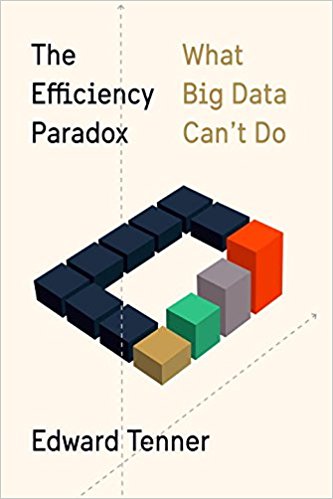
THE EFFICIENCY PARADOX
What Big Data Can't Do
A bold challenge to our obsession with efficiency--and a new understanding of how to benefit from the powerful potential of serendipity.
Algorithms, multitasking, sharing economy, life hacks: our culture can't get enough of efficiency. One of the great promises of the Internet and big data revolutions is the idea that we can improve the processes and routines of our work and personal lives to get more done in less time than ever before. There is no doubt that we're performing at higher scales and going faster than ever, but what if we're headed in the wrong direction?
The Efficiency Paradox questions our ingrained assumptions about efficiency, persuasively showing how relying on the algorithms of platforms can in fact lead to wasted efforts, missed opportunities, and above all an inability to break out of established patterns. Edward Tenner offers a smarter way to think about efficiency, showing how we can combine artificial intelligence and our own intuition, leaving ourselves and our institutions open to learning from the random and unexpected.
Edward Tenner is a historian of technology and culture and the author of OUR OWN DEVICES and WHY THINGS BITE BACK, an international bestseller that has been translated into ten languages. He is an affiliate of the Center for Arts and Cultural Policy at Princeton's Woodrow Wilson School and a Distinguished Scholar of the Smithsonian Lemelson's Center.
Edward Tenner spricht Deutsch.
Algorithms, multitasking, sharing economy, life hacks: our culture can't get enough of efficiency. One of the great promises of the Internet and big data revolutions is the idea that we can improve the processes and routines of our work and personal lives to get more done in less time than ever before. There is no doubt that we're performing at higher scales and going faster than ever, but what if we're headed in the wrong direction?
The Efficiency Paradox questions our ingrained assumptions about efficiency, persuasively showing how relying on the algorithms of platforms can in fact lead to wasted efforts, missed opportunities, and above all an inability to break out of established patterns. Edward Tenner offers a smarter way to think about efficiency, showing how we can combine artificial intelligence and our own intuition, leaving ourselves and our institutions open to learning from the random and unexpected.
Edward Tenner is a historian of technology and culture and the author of OUR OWN DEVICES and WHY THINGS BITE BACK, an international bestseller that has been translated into ten languages. He is an affiliate of the Center for Arts and Cultural Policy at Princeton's Woodrow Wilson School and a Distinguished Scholar of the Smithsonian Lemelson's Center.
Edward Tenner spricht Deutsch.
| Available products |
|---|
|
Book
Published 2018-04-01 by Alfred A. Knopf |