| Vendor | |
|---|---|

|
Liepman Literary Agency
Marc Koralnik |
| Original language | |
| English | |
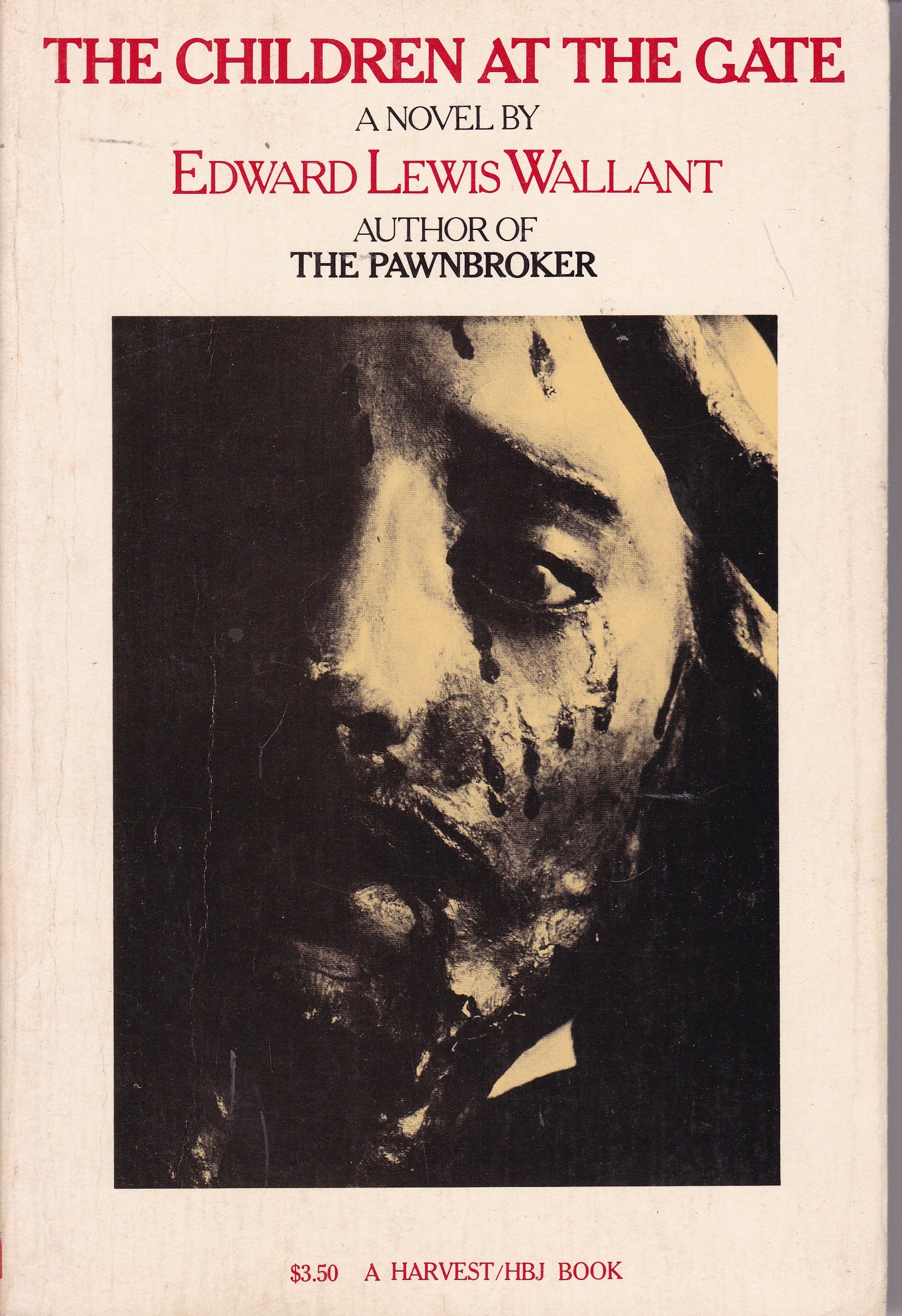
THE CHILDREN AT THE GATE
Before Edward Lewis Wallant's death of an aneurysm at 36, he published two novels - The Human Season and The Pawnbroker - while two others, The Tenants of Moonbloom and The Children at the Gate, were released posthumously. In the short time he was writing - about three years wherein he considered himself and was considered a serious writer - he was counted as part of a brilliant group of postwar Jewish American writers - Saul Bellow, Bernard Malamud, Norman Mailer and Philip Roth among them. The Children at the Gate concerns the patients at a troubled New York City hospital. It is full of weird, explosive characters. The story is intense, and troubling, and full of dark contradictions. (Klappentext)
This posthumously-published novel is, like the author's The Tenants of Moonbloom, excellent, and full of weird, offbeat life and intelligence; its moral is more ambiguous. Angelo, an Italian boy with an idiot sister and a disastrous family, has rejected religion and people for books, science, and reason in a crazy universe. Working for a cousin's drugstore, he visits the local hospital every day where he meets Sammy, a Jewish orderly who, like a mad prophet, is loved and feared by the patients, and who shatters Angelo's calm and irrational tales and acts. Sammy's message is love, and he is killed, ""crucified"" in a sense. Angelo has rejected the idea that Christ died for humanity, and this vague, queer parallel does not precisely save him. It merely leaves him narmoured to life's pain and irrationality. But this parable can be interpreted many ways. Its hospital scenes, its explosive characters, are vivid, strange, intense, and troubling, and its meanings are full of dark contradictions. (Kirkus Review)
EDWARD LEWIS WALLANT, who died last year at the age of 36, was a gifted novelist for whom language was triumphantly alive and whose characters had a rich, idiosyncratic vitality. His themes, however, were almost unrelievedly somber. The Pawnbroker was concerned with a concentration camp survivor, engulfed by the squalor of Harlem, who had little appetite for human affiliation. The Tenants of Moonbloom was about a seclusive rent collector restored to life by the untidy but insistent humanity of his tenants. Retreat from life was a recurrent actionbut the author's sympathies were so quick, his language so passionate, that afffrmation constantly strained against the bleak images of breakdown and defeat.
His new bookthe last of his posthumous novels is also concerned with a solitary voyager, an abstainer from life, who takes refuge in a smalltown drugstore. Wallant, who in the past has written with unusual poignance about Jewish life, this time chose an Italian-American setting. And it is a tribute to his impassioned imagination that he was able to evoke the sullen, brawling life of a lower-middle class Italian family where people woke in violence and spoke in roars, asserting themselves before the specter of a treadmill day.
Angelo DeMarco, the druggist's apprentice, has a petulant mother, an idiot sister and a disgruntled uncle who is at a loss to understand his intellectually abrasive nephew. Angelo himself is the Italian counterpart of James T. Farrell's Danny O'Neill. Inarticulate, brusque, wary of tenderness, he retreats behind his books-and warily watches the play of passions in a hospital where he goes daily to take orders for his employer.
At the hospital he encounters a strange orderly. Sammy is a hypnotic storyteller, an oddly arresting cast-off, a miracleworker who raids the drug cabinet and administers unauthorized dosages. Angelo finds himself darkly involved with this bizarre figure, his isolation gravely threatened.
A little girl is violated in the hospital: the man who assaulted her is apprehended. Sammy, who had originally been under suspicion, stubbornly preaches the gospel of forgiveness and loses his life in the effort. To Angelo, it is a pained return to community
Wallant's earlier novels were somewhat flawed by resolutions too easily achieved, by a call to life too confidently sounded. In The Children at the Gate, Angelo's entrapment by experience has a full measure of tormented ambiguity. What is Sammy? A latter day Jesus? A Dostoevskian hero-villain? A poor little drifter with a gift of gab? He is all of these and moreand it is expressive of his creator's talent that, endlessly fascinated, we never quite make up our minds. (New York Times)
Edward Lewis Wallant (1926-1962) studierte nach dem Kriegsdienst in New York Gestaltung und arbeitete in der Werbung. Mit "The Human Season" (1960) und "The Pawnbroker" (1961) zaehlte er neben Philip Roth, Norman Mailer und Saul Bellow rasch zu den bedeutendsten Autoren seiner Generation. Noch vor der Veroeffentlichung seines dritten Romans "Mr Moonbloom", mit nur 36 Jahren, starb er ueberraschend an einem Gehirnschlag. (Perlentaucher)
This posthumously-published novel is, like the author's The Tenants of Moonbloom, excellent, and full of weird, offbeat life and intelligence; its moral is more ambiguous. Angelo, an Italian boy with an idiot sister and a disastrous family, has rejected religion and people for books, science, and reason in a crazy universe. Working for a cousin's drugstore, he visits the local hospital every day where he meets Sammy, a Jewish orderly who, like a mad prophet, is loved and feared by the patients, and who shatters Angelo's calm and irrational tales and acts. Sammy's message is love, and he is killed, ""crucified"" in a sense. Angelo has rejected the idea that Christ died for humanity, and this vague, queer parallel does not precisely save him. It merely leaves him narmoured to life's pain and irrationality. But this parable can be interpreted many ways. Its hospital scenes, its explosive characters, are vivid, strange, intense, and troubling, and its meanings are full of dark contradictions. (Kirkus Review)
EDWARD LEWIS WALLANT, who died last year at the age of 36, was a gifted novelist for whom language was triumphantly alive and whose characters had a rich, idiosyncratic vitality. His themes, however, were almost unrelievedly somber. The Pawnbroker was concerned with a concentration camp survivor, engulfed by the squalor of Harlem, who had little appetite for human affiliation. The Tenants of Moonbloom was about a seclusive rent collector restored to life by the untidy but insistent humanity of his tenants. Retreat from life was a recurrent actionbut the author's sympathies were so quick, his language so passionate, that afffrmation constantly strained against the bleak images of breakdown and defeat.
His new bookthe last of his posthumous novels is also concerned with a solitary voyager, an abstainer from life, who takes refuge in a smalltown drugstore. Wallant, who in the past has written with unusual poignance about Jewish life, this time chose an Italian-American setting. And it is a tribute to his impassioned imagination that he was able to evoke the sullen, brawling life of a lower-middle class Italian family where people woke in violence and spoke in roars, asserting themselves before the specter of a treadmill day.
Angelo DeMarco, the druggist's apprentice, has a petulant mother, an idiot sister and a disgruntled uncle who is at a loss to understand his intellectually abrasive nephew. Angelo himself is the Italian counterpart of James T. Farrell's Danny O'Neill. Inarticulate, brusque, wary of tenderness, he retreats behind his books-and warily watches the play of passions in a hospital where he goes daily to take orders for his employer.
At the hospital he encounters a strange orderly. Sammy is a hypnotic storyteller, an oddly arresting cast-off, a miracleworker who raids the drug cabinet and administers unauthorized dosages. Angelo finds himself darkly involved with this bizarre figure, his isolation gravely threatened.
A little girl is violated in the hospital: the man who assaulted her is apprehended. Sammy, who had originally been under suspicion, stubbornly preaches the gospel of forgiveness and loses his life in the effort. To Angelo, it is a pained return to community
Wallant's earlier novels were somewhat flawed by resolutions too easily achieved, by a call to life too confidently sounded. In The Children at the Gate, Angelo's entrapment by experience has a full measure of tormented ambiguity. What is Sammy? A latter day Jesus? A Dostoevskian hero-villain? A poor little drifter with a gift of gab? He is all of these and moreand it is expressive of his creator's talent that, endlessly fascinated, we never quite make up our minds. (New York Times)
Edward Lewis Wallant (1926-1962) studierte nach dem Kriegsdienst in New York Gestaltung und arbeitete in der Werbung. Mit "The Human Season" (1960) und "The Pawnbroker" (1961) zaehlte er neben Philip Roth, Norman Mailer und Saul Bellow rasch zu den bedeutendsten Autoren seiner Generation. Noch vor der Veroeffentlichung seines dritten Romans "Mr Moonbloom", mit nur 36 Jahren, starb er ueberraschend an einem Gehirnschlag. (Perlentaucher)
| Available products |
|---|
|
Book
Published 1964-05-11 by Harcourt |