| Vendor | |
|---|---|

|
Mohrbooks Literary Agency
Sebastian Ritscher |
| Original language | |
| English | |
| Categories | |
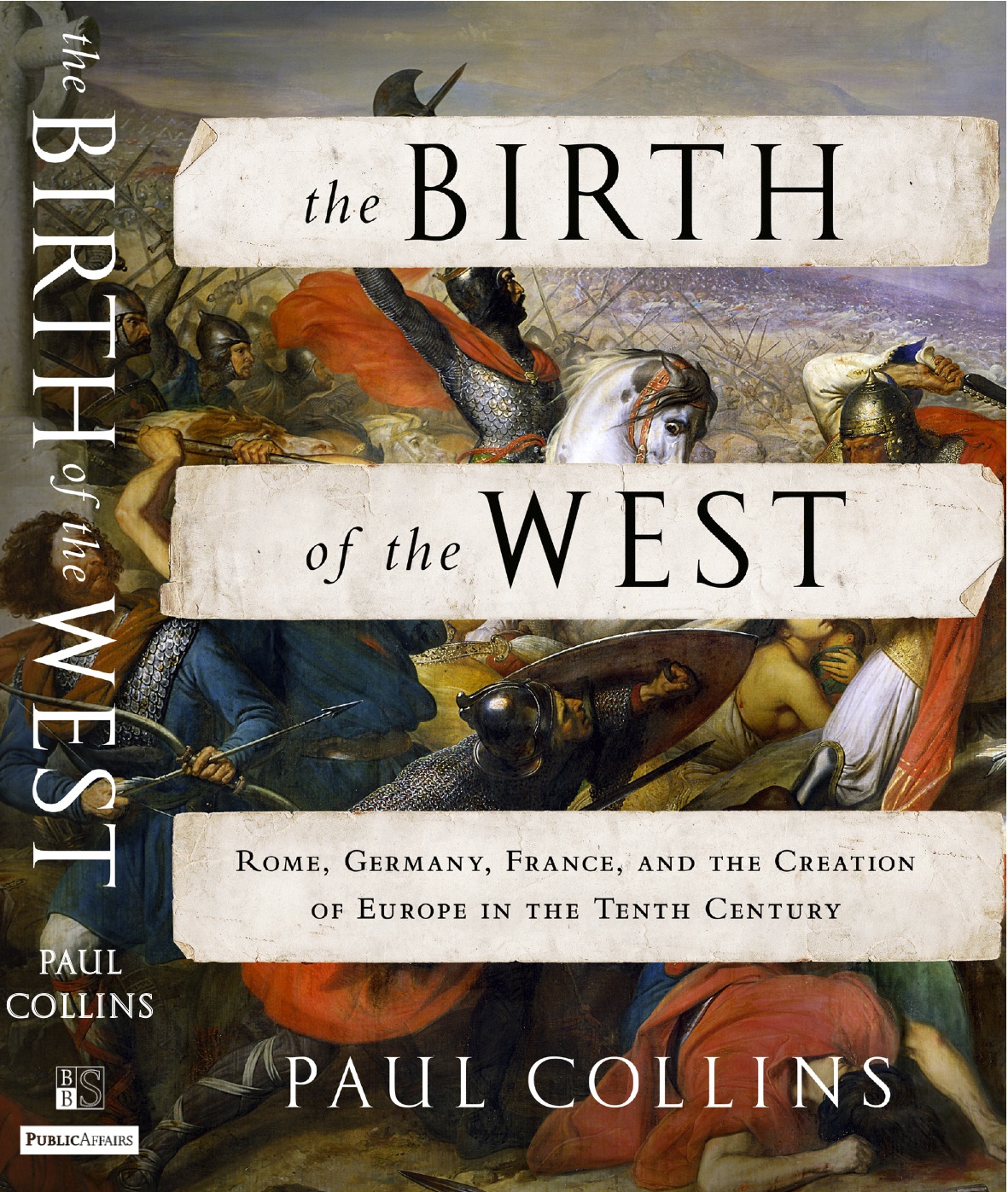
THE BIRTH OF THE WEST
Rome, Germany, France, and the Creation of Europe in the 10th Century
The tenth century dawned in violence and disorder. All effective government had broken down. Charlemagne's empire was divided, the whole of Spain had been claimed by Moorish invaders, and even the papacy in Rome was embroiled in petty, provincial conflicts. To many historians, it was a prime example of the ignorance and uncertainty of the Dark Ages. Yet according to medieval expert Paul Collins, the story of the tenth century is the story of our culture's birth, of the emergence of our civilization into the light of day.
The fact is, by the end of the tenth century order had been restored in Germany, christian Spain was expanding, Italy was suddenly prospering, the Vikings were no longer a threat, and much of europe seemed to be on the rise. Within a century’s time, europe had changed course dra- matically. This shift—the birth of the West as we know it— had come about because German-Saxon rulers like henry the Fowler, Otto I, Otto II, and Otto III, and the Greek- born empress Theophano were able to bring order out of chaos to imagine and realize a new and better way of governing society.
The Birth of the West tells the story of a transformation from chaos to order, and explores the strange and alien landscape of Europe in transition. It is a fascinating narrative, thoroughly renovating old-fashioned conceptions of feudalism and what medieval life was actually like. The result is a wholly new vision of how civilization as we know it sprang from the unlikeliest of origins, and proof that our tenth century ancestors are not so remote as we might think.
The Birth of West is an important work of history which will attract a great deal of attention and discussion on publication.
Paul Collins is an historian, broadcaster, and writer. A Catholic priest for thirty-three years, he resigned from the active priestly ministry in 2001 due to a dispute with the Vatican over his book "Papal Power" (1997). He is the author of thirteen books. He is well known as a commentator on Catholicism and the papacy and he also has a strong interest in ethics, environmental, and population issues. He has a master's degree in theology (ThM) from Harvard University, and a doctorate of philosophy (PhD) in history from the Australian National University. He lives in Canberra, Australia.
The Birth of the West tells the story of a transformation from chaos to order, and explores the strange and alien landscape of Europe in transition. It is a fascinating narrative, thoroughly renovating old-fashioned conceptions of feudalism and what medieval life was actually like. The result is a wholly new vision of how civilization as we know it sprang from the unlikeliest of origins, and proof that our tenth century ancestors are not so remote as we might think.
The Birth of West is an important work of history which will attract a great deal of attention and discussion on publication.
Paul Collins is an historian, broadcaster, and writer. A Catholic priest for thirty-three years, he resigned from the active priestly ministry in 2001 due to a dispute with the Vatican over his book "Papal Power" (1997). He is the author of thirteen books. He is well known as a commentator on Catholicism and the papacy and he also has a strong interest in ethics, environmental, and population issues. He has a master's degree in theology (ThM) from Harvard University, and a doctorate of philosophy (PhD) in history from the Australian National University. He lives in Canberra, Australia.
| Available products |
|---|
|
Book
Published 2013-04-01 by Public Affairs |
|
Book
Published 2013-04-01 by Public Affairs |