| Vendor | |
|---|---|

|
Mohrbooks Literary Agency
Sebastian Ritscher |
| Original language | |
| English | |
| Categories | |
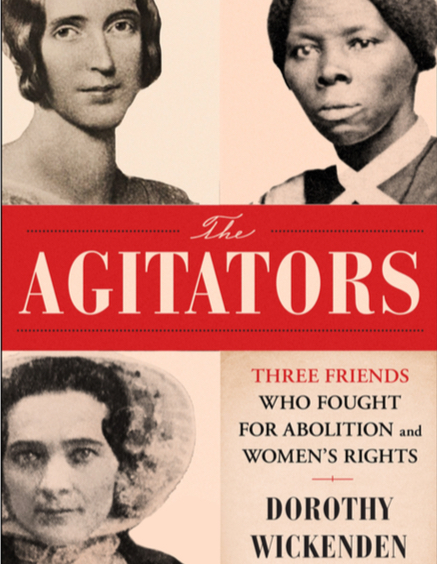
THE AGITATORS
Three Friends Who Fought for Abolition and Women's Rights
From the author of the highly acclaimed New York Times bestseller Nothing Daunted and the executive editor of The New Yorker, a riveting, provocative and revelatory history of abolition and women's rights, told through the story of three women--Harriet Tubman, Frances Seward, and Martha Wright--friends and neighbors in Auburn, New York in the years before, during and after the Civil War.
From the intimate perspective of three friends and neighbors in Auburn, New York -- the seemingly ordinary women who are the "agitators" of the title -- acclaimed author Dorothy Wickenden tells the fascinating and crucial American stories of abolitionism, the Underground Railroad, women's rights activism, and the Civil War.
Harriet Tubman, no-nonsense, funny, uncannily prescient, and strategically brilliant (though illiterate), was one of the most important conductors on the Underground Railroad and hid slaves in the basement kitchens of the middle-class Quaker mother of six, Martha Wright, and socially prominent Frances Seward (the wife of Governor, then Senator, then Secretary of State Seward).
Harriet worked for the Union Army in South Carolina as a nurse and spy, and took part in a river raid in which 800 slaves were freed from rice plantations. At the time, Frances was giving fugitive slaves money and referrals and education assistance; and Martha - facing down jeering mobs - was traveling around New York with Susan B. Anthony and Elizabeth Cady Stanton, advocating women's rights and criticizing Lincoln's - and Seward's - policy on slavery.
The Agitators is brilliant and compelling micro-macro history. Many of the most famous figures - Lincoln, Seward, Daniel Webster, Charles Sumner, John Brown, Harriet Beecher Stowe, William Lloyd Garrison - are seen through the discerning eyes of the protagonists. So are the most explosive political debates: about women's roles and rights during the abolition crusade, emancipation, the arming of black troops, the true meaning of the Declaration of Independence and the Constitution.
Beginning in 1846, when the central protagonists were young women bound by law and tradition, the books ends twenty years later in a radically-changed United States. Wickenden brings this extraordinary period of our history to life through the rich detail in letters her characters wrote nearly every day. Like Doris Kearns Goodwin's No Ordinary Time or David McCullough's John Adams, Wickenden's The Agitators is a masterful amateur history, revelatory and riveting.
Dorothy Wickenden has been the executive editor of The New Yorker since January 1996. She also writes for the magazine and is the moderator of its weekly podcast "The Political Scene." She is on the faculty of The Writers' Institute at CUNY's Graduate Center, where she teaches a course on narrative nonfiction. A former Nieman Fellow at Harvard, Wickenden was national affairs editor at Newsweek from 1993-1995 and before that was the longtime executive editor at The New Republic. Her first book, Nothing Daunted, was a highly acclaimed New York Times bestseller. She lives with her husband and her two daughters in Westchester, New York.
Harriet Tubman, no-nonsense, funny, uncannily prescient, and strategically brilliant (though illiterate), was one of the most important conductors on the Underground Railroad and hid slaves in the basement kitchens of the middle-class Quaker mother of six, Martha Wright, and socially prominent Frances Seward (the wife of Governor, then Senator, then Secretary of State Seward).
Harriet worked for the Union Army in South Carolina as a nurse and spy, and took part in a river raid in which 800 slaves were freed from rice plantations. At the time, Frances was giving fugitive slaves money and referrals and education assistance; and Martha - facing down jeering mobs - was traveling around New York with Susan B. Anthony and Elizabeth Cady Stanton, advocating women's rights and criticizing Lincoln's - and Seward's - policy on slavery.
The Agitators is brilliant and compelling micro-macro history. Many of the most famous figures - Lincoln, Seward, Daniel Webster, Charles Sumner, John Brown, Harriet Beecher Stowe, William Lloyd Garrison - are seen through the discerning eyes of the protagonists. So are the most explosive political debates: about women's roles and rights during the abolition crusade, emancipation, the arming of black troops, the true meaning of the Declaration of Independence and the Constitution.
Beginning in 1846, when the central protagonists were young women bound by law and tradition, the books ends twenty years later in a radically-changed United States. Wickenden brings this extraordinary period of our history to life through the rich detail in letters her characters wrote nearly every day. Like Doris Kearns Goodwin's No Ordinary Time or David McCullough's John Adams, Wickenden's The Agitators is a masterful amateur history, revelatory and riveting.
Dorothy Wickenden has been the executive editor of The New Yorker since January 1996. She also writes for the magazine and is the moderator of its weekly podcast "The Political Scene." She is on the faculty of The Writers' Institute at CUNY's Graduate Center, where she teaches a course on narrative nonfiction. A former Nieman Fellow at Harvard, Wickenden was national affairs editor at Newsweek from 1993-1995 and before that was the longtime executive editor at The New Republic. Her first book, Nothing Daunted, was a highly acclaimed New York Times bestseller. She lives with her husband and her two daughters in Westchester, New York.
| Available products |
|---|
|
Book
Published 2021-03-30 by Scribner |