| Vendor | |
|---|---|

|
Mohrbooks Literary Agency
Sebastian Ritscher |
| Original language | |
| English | |
| Categories | |
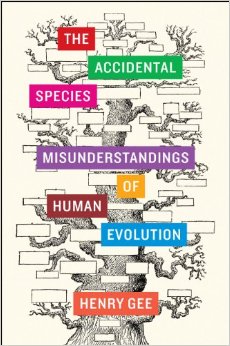
THE ACCIDENTAL SPECIES
Misunderstandings of Human Evolution
The idea of a missing link between humanity and our animal ancestors predates evolution and popular science and actually has religious roots in the deist concept of the Great Chain of Being. Yet, the metaphor has lodged itself in the contemporary imagination, and new fossil discoveries are often hailed in headlines as revealing the elusive transitional step, the moment when we stopped being “animal” and started being “human.”
Henry Gee, longtime paleontology editor at Nature, takes aim at this misleading notion, arguing that it reflects a profound misunderstanding of how evolution works and, when applied to the evolution of our own species, supports mistaken ideas about our own place in the universe.
Gee presents a robust and stark challenge to our tendency to see ourselves as the acme of creation. Far from being a quirk of religious fundamentalism, human exceptionalism, Gee argues, is an error that also infects scientific thought. Touring the many features of human beings that have recurrently been used to distinguish us from the rest of the animal world, Gee shows that our evolutionary outcome is one possibility among many, one that owes more to chance than to an organized progression to supremacy.
The book combines Gee’s firsthand experience on the editorial side of many incredible paleontological findings with healthy skepticism and humor to create a book that aims to overturn popular thinking on human evolution—the key is not what’s missing, but how we’re linked.
Henry Gee is a scientist and a senior editor at the science journal, Nature. His many books include IN SEARCH OF DEEP TIME (Free Press 1999), JACOB'S LADDER (Norton 2004), and A FIELD GUIDE TO DINOSAURS (Chartwell Press 2012), among others. He lives in England with his family.
Gee presents a robust and stark challenge to our tendency to see ourselves as the acme of creation. Far from being a quirk of religious fundamentalism, human exceptionalism, Gee argues, is an error that also infects scientific thought. Touring the many features of human beings that have recurrently been used to distinguish us from the rest of the animal world, Gee shows that our evolutionary outcome is one possibility among many, one that owes more to chance than to an organized progression to supremacy.
The book combines Gee’s firsthand experience on the editorial side of many incredible paleontological findings with healthy skepticism and humor to create a book that aims to overturn popular thinking on human evolution—the key is not what’s missing, but how we’re linked.
Henry Gee is a scientist and a senior editor at the science journal, Nature. His many books include IN SEARCH OF DEEP TIME (Free Press 1999), JACOB'S LADDER (Norton 2004), and A FIELD GUIDE TO DINOSAURS (Chartwell Press 2012), among others. He lives in England with his family.
| Available products |
|---|
|
Book
Published 2013-10-21 by University of Chicago Press |
|
Book
Published 2013-10-21 by University of Chicago Press |