| Vendor | |
|---|---|

|
Liepman Literary Agency
Marc Koralnik |
| Original language | |
| English | |
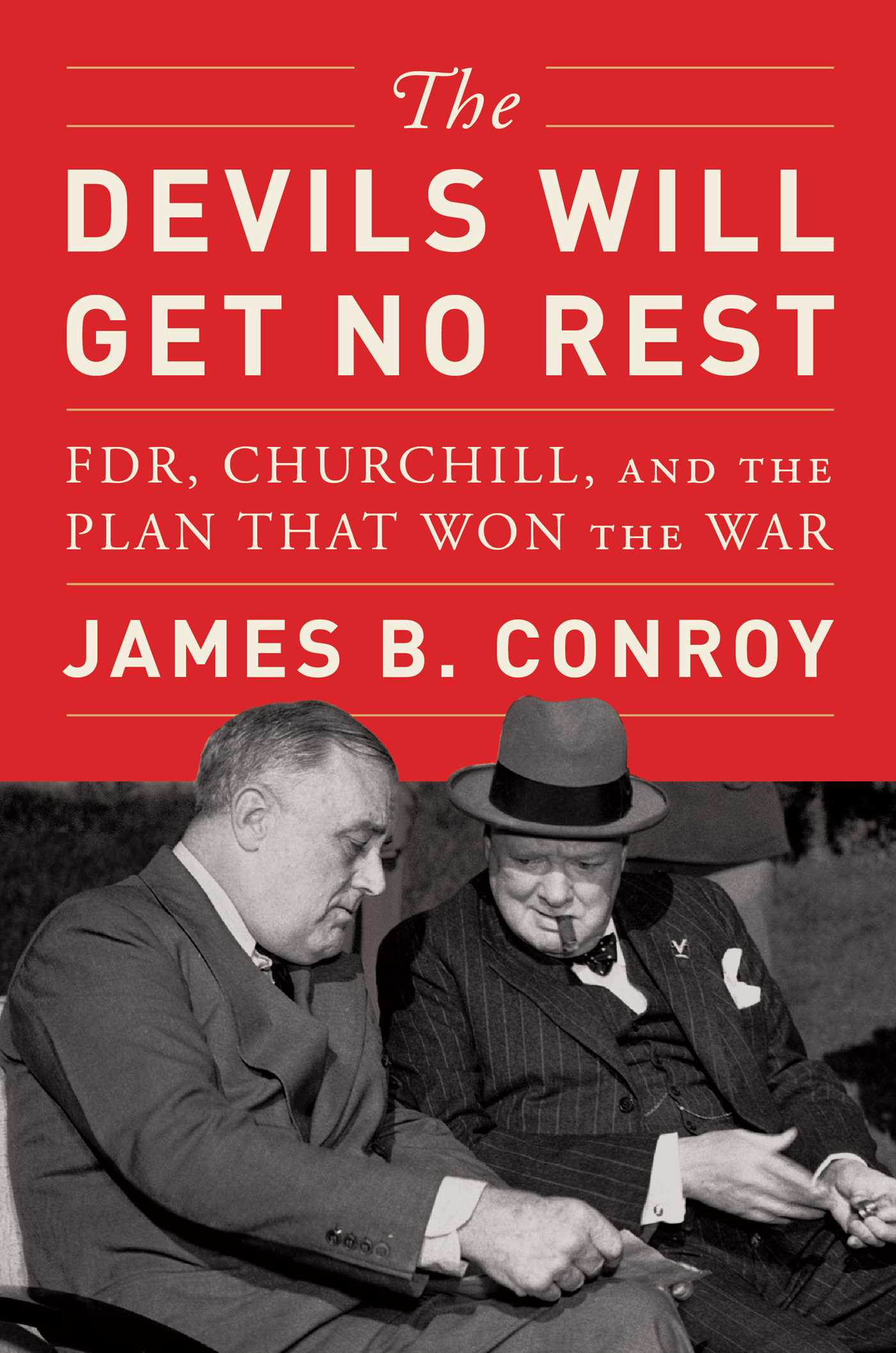
FDR, CHURCHILL, AND THE PLAN THAT WON THE WAR TEN DAYS AT CASABLANCA The Allied High Command and the Plan that Won the War
By the Lincoln Award-winning author of Our One Common Country, TEN DAYS AT CASABLANCA is James Conroy's dramatic narrative history of one of the most important, yet rarely covered events of World War II: the 1943 Casablanca Conference, launched by Winston Churchill at a critical juncture in the war with the U.S. focused on the Pacific Theater and Europe overrun, colorfully portraying the larger-than-life figures in attendance, including President Franklin Roosevelt; General Charles de Gaulle; and American Generals Eisenhower, Marshall, and Patton, who against all odds forged a plan to win the war on both fronts.
The 1943 Casablanca Conference, which Churchill went to great lengths to launch, came at the most critical time in the War. The Western Europeans were being trampled by the Germans, those countries in the Mediterranean not in league with the Germans were or were about to be overpowered by them, as was North Africa. The Americans hadn't dropped one bomb on Germany and in fact, were focused solely on the Pacific theater and had absolutely no intention of diving into the war in Europe. That is until Churchill did the impossible and got Franklin Roosevelt to join him in Casablanca, the conference which totally changed the direction of WWII and the course of history.
- Churchill said the Casablanca Conference was the most important conference of the War and of his life, yet there are no complete books on the subject, though there are numerous books on the Potsdam and Yalta Conferences. There is truly a treasure of unmined original documents directly relating to the conference (see the bibliography attached).
- Desperate for American military support, Churchill managed to convince FDR to meet in Morocco, despite the trip being very dangerous for both of them and despite FDR's extreme fear of flying (he had not been on a plane in eleven years, his last trip being to Chicago to accept the 1932 presidential nomination),
- Every single driving force in WWII was at the conference, all with radically different personalities and most with monstrous egos - including Eisenhower, Churchill (with his arrogant son), FDR (with his two sons), Averill Harriman, Harry Hopkins, General George Marshall, General Charles de Gaulle (about whom Churchill said to FDR, "Don't worry about him, we call him Jeanne d'Arc and are looking for some bishops to burn him"), Harold Macmillan, General George Patton, Admiral of the Fleet Louis Mountbatten.
- The juxtaposition of the radically different cultures of the British and the Americans was exposed at the conference in the starkest contrast, though often in an amusing manner (the British military leaders referred to the American military as "our Italians").
- The story has endless fascinating details, i.e. Churchill left London in an RAF officer's uniform on an American plane with Averill Harriman; they carried rolls of ransom money and cards in Arabic pledging rewards for the lives of the bearers in case the airplane was downed and they were taken by "Arab cutthroats".
- After the conference, Churchill insisted FDR spend the weekend with him in his beloved Marrakesh. When FDR departed, Churchill said, "If anything happened to that man I couldn't stand it. He is the truest friend. He has the farthest vision. He is the greatest man I have ever known".
- Over the course of ten days, the greatest minds of the time came to an understanding; the Americans completely altered their game plan, adopted Britain's vision and embraced a Europe first strategy, thus changing the course of the War and of history.
In 2014, Jim Conroy was elected a Fellow of the Massachusetts Historical Society in recognition of his first book, Our One Common Country: Abraham Lincoln and the Hampton Roads Peace Conference of 1865, the only book ever devoted to Lincoln's little-known peace negotiations with Confederate leaders on a riverboat in Virginia near the end of the Civil War. Our One Common Country was a finalist for the Gilder Lehrman Lincoln Prize, awarded to the author of the best book of the year on Lincoln, a Civil War soldier, or the Civil War era. Conroy's second book, Lincoln's White House: The People's House in Wartime, won the Lincoln Prize and the Abraham Lincoln Institute's annual book award. Leading Jefferson historians have applauded Conroy's newly released third book, Jefferson's White House: Monticello on the Potomac.
- Churchill said the Casablanca Conference was the most important conference of the War and of his life, yet there are no complete books on the subject, though there are numerous books on the Potsdam and Yalta Conferences. There is truly a treasure of unmined original documents directly relating to the conference (see the bibliography attached).
- Desperate for American military support, Churchill managed to convince FDR to meet in Morocco, despite the trip being very dangerous for both of them and despite FDR's extreme fear of flying (he had not been on a plane in eleven years, his last trip being to Chicago to accept the 1932 presidential nomination),
- Every single driving force in WWII was at the conference, all with radically different personalities and most with monstrous egos - including Eisenhower, Churchill (with his arrogant son), FDR (with his two sons), Averill Harriman, Harry Hopkins, General George Marshall, General Charles de Gaulle (about whom Churchill said to FDR, "Don't worry about him, we call him Jeanne d'Arc and are looking for some bishops to burn him"), Harold Macmillan, General George Patton, Admiral of the Fleet Louis Mountbatten.
- The juxtaposition of the radically different cultures of the British and the Americans was exposed at the conference in the starkest contrast, though often in an amusing manner (the British military leaders referred to the American military as "our Italians").
- The story has endless fascinating details, i.e. Churchill left London in an RAF officer's uniform on an American plane with Averill Harriman; they carried rolls of ransom money and cards in Arabic pledging rewards for the lives of the bearers in case the airplane was downed and they were taken by "Arab cutthroats".
- After the conference, Churchill insisted FDR spend the weekend with him in his beloved Marrakesh. When FDR departed, Churchill said, "If anything happened to that man I couldn't stand it. He is the truest friend. He has the farthest vision. He is the greatest man I have ever known".
- Over the course of ten days, the greatest minds of the time came to an understanding; the Americans completely altered their game plan, adopted Britain's vision and embraced a Europe first strategy, thus changing the course of the War and of history.
In 2014, Jim Conroy was elected a Fellow of the Massachusetts Historical Society in recognition of his first book, Our One Common Country: Abraham Lincoln and the Hampton Roads Peace Conference of 1865, the only book ever devoted to Lincoln's little-known peace negotiations with Confederate leaders on a riverboat in Virginia near the end of the Civil War. Our One Common Country was a finalist for the Gilder Lehrman Lincoln Prize, awarded to the author of the best book of the year on Lincoln, a Civil War soldier, or the Civil War era. Conroy's second book, Lincoln's White House: The People's House in Wartime, won the Lincoln Prize and the Abraham Lincoln Institute's annual book award. Leading Jefferson historians have applauded Conroy's newly released third book, Jefferson's White House: Monticello on the Potomac.
| Available products |
|---|
|
Book
Published 2023-06-01 by Simon & Schuster |