| Vendor | |
|---|---|

|
Fritz Agency
Christian Dittus |
| Original language | |
| English | |
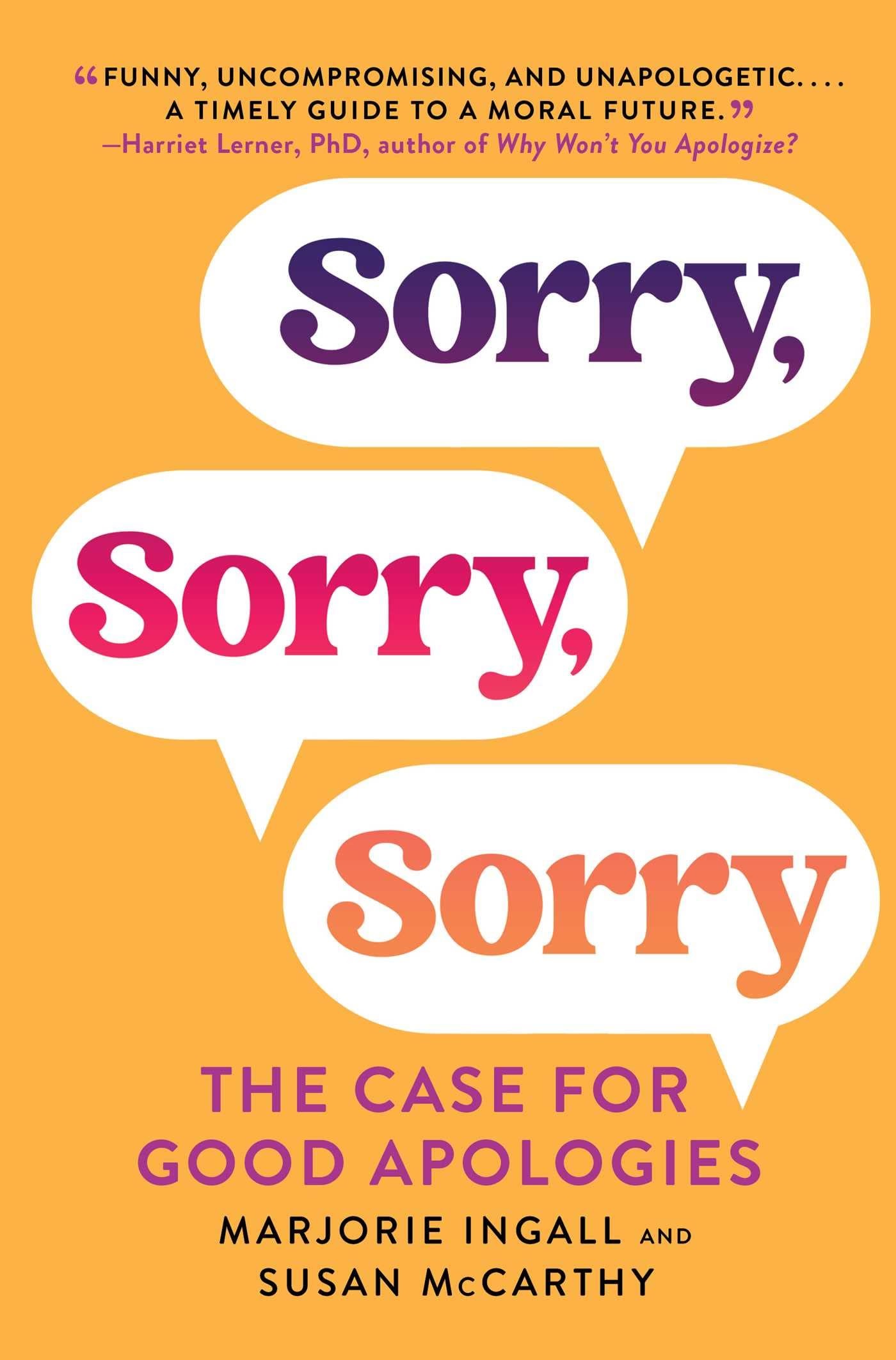
SORRY, SORRY, SORRY
Susan McCarthy Marjorie Ingall
The Case for Good Apologies
It's a truth universally acknowledged that terrible apologies are the worst. We've all been on the receiving end, and oh, how they make us seethe. Horrible public apologiesexcuse-laden, victim blame-y, weaselly statementsoften go viral instantaneously, whether they're from a celebrity, a politician, or a blogger. We all recognize bad apologies when we hear them. So why is it so hard to apologize well? How can we do better? How could they do better?
Marjorie Ingall and Susan McCarthy show us the way. Drawing on a deep well of research in psychology, sociology, law, and medicine, they explain why a good apology is hard to find and why it doesn't have to be. Alongside their six (and a half)-step formula for apologizing beautifully, Ingall and McCarthy also delve into how to respond to a bad apology; why corporations, celebrities, and governments seldom apologize well; how to teach children to apologize; how gender and race affect both apologies and forgiveness; and most of all, why good apologies are essential, powerful, and restorative. A good apology can do so many thingsmend fences, heal wounds, and bring more harmony into ourselves and our society at large.
With wit, deep introspection, and laugh-out-loud humor, Ingall and McCarthy's guidance will help make the world a better place, one apology at a time.
Marjorie Ingall is a frequent contributor to The New York Times Book Review, a former columnist for Tablet magazine and the Forward, and has also written for New York magazine, Town & Country, Ms., Glamour, Self, Elle, and Sassy.
Susan McCarthy is the coauthor (with Jeffrey Moussaieff Masson) of the international bestseller When Elephants Weep: The Emotional Lives of Animals, which has been translated into twenty-one languages. She's also the author of Becoming a Tiger: How Baby Animals Learn to Live in the Wild. Publications she's written for include Parade, The Guardian, WIRED, Smithsonian magazine, Outside, and Salon.
Marjorie Ingall and Susan McCarthy show us the way. Drawing on a deep well of research in psychology, sociology, law, and medicine, they explain why a good apology is hard to find and why it doesn't have to be. Alongside their six (and a half)-step formula for apologizing beautifully, Ingall and McCarthy also delve into how to respond to a bad apology; why corporations, celebrities, and governments seldom apologize well; how to teach children to apologize; how gender and race affect both apologies and forgiveness; and most of all, why good apologies are essential, powerful, and restorative. A good apology can do so many thingsmend fences, heal wounds, and bring more harmony into ourselves and our society at large.
With wit, deep introspection, and laugh-out-loud humor, Ingall and McCarthy's guidance will help make the world a better place, one apology at a time.
Marjorie Ingall is a frequent contributor to The New York Times Book Review, a former columnist for Tablet magazine and the Forward, and has also written for New York magazine, Town & Country, Ms., Glamour, Self, Elle, and Sassy.
Susan McCarthy is the coauthor (with Jeffrey Moussaieff Masson) of the international bestseller When Elephants Weep: The Emotional Lives of Animals, which has been translated into twenty-one languages. She's also the author of Becoming a Tiger: How Baby Animals Learn to Live in the Wild. Publications she's written for include Parade, The Guardian, WIRED, Smithsonian magazine, Outside, and Salon.
| Available products |
|---|
|
Book
Published 2023-01-01 by Gallery |