| Vendor | |
|---|---|

|
Liepman Literary Agency
Marc Koralnik |
| Original language | |
| French | |
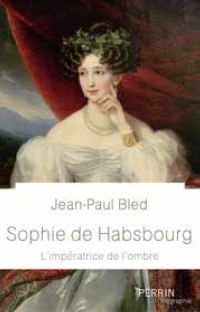
SOPHIE OF HABSBURG
In writing this biography, Jean-Paul Bled has had access to Sophie of Habsburg's journal, little used by German historians because it was written in French. A more nuanced portrait emerges of the often disparaged Archduchess.
Daughter of Maximilian I of Bavaria and Caroline of Baden, Sophie was married in 1824, at the age of nineteen, to Archduke Franz Karl of Habsburg, who for a time was the designated heir to the throne. Possessing a strong personality Metternich would say of her that she is the only man of the family she quickly became a central figure at the court of Vienna. Mother of four boys, she prepared her eldest, the young
Franz Joseph, to reign over Austria one day, an idea that became her obsession. Faced with the revolution that broke out in March 1848, she never wavered. Once the process of restoring the monarchy had begun, her influence was key to the abdication of Ferdinand I in favor of Franz Joseph and not of her husband, little suited to the position.
Her influence did not stop there. Although it would be an exaggeration to picture her as the power behind the throne, Franz Joseph never made a serious decision without discussing it with his mother. But after Austria lost the war of 1859 against France, Sophie withdrew from center stage, not being very favorable to the institutional reforms introduced by her son. In 1867, she was devastated by the execution of her youngest son Maximilian I, who had become emperor of Mexico thanks to Napoleon III.
A black decade following a decade of happiness, which was nonetheless tainted by her daughter-in-law's growing dislike of her. In this respect, the archduchess acquired a dark reputation, which the famous film trilogy devoted to Sissi helped to forge. The wicked Sophie (boese Sophie) was said to have persecuted the daughter-in-law she hated. As is often the case, the historical reality is more nuanced; the historian compares on one side the sincere and unreserved help the archduchess tried to give the young Elisabeth to enable her to assume the role of Empress after she married Franz Joseph in 1854, and on the other, Sissi's obstinate refusal to follow Sophie's lead. Whatever the interpretation, this breach would only increase with time and cause an irremediable separation between the two women. Each, in any case, would die undermined by grief, Sophie in 1872, Sissi in 1898.
A leading expert on Germany and Austria-Hungary and a professor at the University of Paris IV Sorbonne, Jean-Paul Bled has published numerous books, including François-Joseph (Franz Joseph, Fayard, 1987), Histoire de la Prusse (History of Prussia, Fayard, 2007), and, with Perrin, Bismarck (licensed in Italy to Salerno,
Poland to Muza and Serbia to NNK), Marie-Thérèse d'Autriche (Maria Theresa of Austria) and Les Hommes de Hitler (Hitler's men).
Franz Joseph, to reign over Austria one day, an idea that became her obsession. Faced with the revolution that broke out in March 1848, she never wavered. Once the process of restoring the monarchy had begun, her influence was key to the abdication of Ferdinand I in favor of Franz Joseph and not of her husband, little suited to the position.
Her influence did not stop there. Although it would be an exaggeration to picture her as the power behind the throne, Franz Joseph never made a serious decision without discussing it with his mother. But after Austria lost the war of 1859 against France, Sophie withdrew from center stage, not being very favorable to the institutional reforms introduced by her son. In 1867, she was devastated by the execution of her youngest son Maximilian I, who had become emperor of Mexico thanks to Napoleon III.
A black decade following a decade of happiness, which was nonetheless tainted by her daughter-in-law's growing dislike of her. In this respect, the archduchess acquired a dark reputation, which the famous film trilogy devoted to Sissi helped to forge. The wicked Sophie (boese Sophie) was said to have persecuted the daughter-in-law she hated. As is often the case, the historical reality is more nuanced; the historian compares on one side the sincere and unreserved help the archduchess tried to give the young Elisabeth to enable her to assume the role of Empress after she married Franz Joseph in 1854, and on the other, Sissi's obstinate refusal to follow Sophie's lead. Whatever the interpretation, this breach would only increase with time and cause an irremediable separation between the two women. Each, in any case, would die undermined by grief, Sophie in 1872, Sissi in 1898.
A leading expert on Germany and Austria-Hungary and a professor at the University of Paris IV Sorbonne, Jean-Paul Bled has published numerous books, including François-Joseph (Franz Joseph, Fayard, 1987), Histoire de la Prusse (History of Prussia, Fayard, 2007), and, with Perrin, Bismarck (licensed in Italy to Salerno,
Poland to Muza and Serbia to NNK), Marie-Thérèse d'Autriche (Maria Theresa of Austria) and Les Hommes de Hitler (Hitler's men).
| Available products |
|---|
|
Book
Published 2018-01-01 by Perrin |