| Vendor | |
|---|---|

|
Fritz Agency
Christian Dittus |
| Original language | |
| English | |
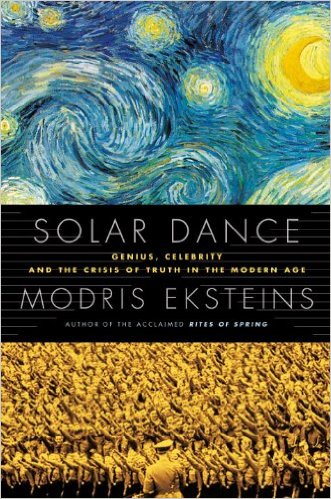
SOLAR DANCE
Genius, Forgery and the Crisis of Truth in the Modern Age
The 19th century was the century of certainty - of Marx, Darwin, Wagner; it was the century of expansion and empire. It believed that there was line to be drawn between the subject and the object. It believed in category.
The 20th century was the century of doubt - of Marcel Duchamp, Werner Heisenberg, and Monty Python; it was the century of contraction and decolonization. It disrupted all category.
A man whose spirit straddled the two ages was Vincent van Gogh. Repudiated in his own time, he became the most loved and expensive artist of the 20th century. He was the great synthesizer who captures in his art the exhilaration of life but also its fragility and tragedy.
Modris Eksteins, whose subject is the 20th century, approaches the era through the lens of the sensational trial of Berlin art dealer Otto Wacker and his role in the forgery of 33 van Gogh paintings. In 1925, Wacker began releasing these hitherto unknown works which he cleverly had authenticated by experts. Through the progress of this drama van Gogh's commercial value rocketed skyward.
Doubt and disaster also were crucial to van Gogh's posthumous success - his own madness and suicidal end, and the subsequent near-destruction of European civilization in fratricidal war.
In the Wacker-van Gogh story, with its cast of characters who both delight and frighten us, is the story of Weimar Germany, the rise of Hitler and the fall of the Berlin Wall. In this thrilling book, Modris Eksteins illuminates the major themes of the modern world where a culture of vitality, life, and art has overwhelmed one of authority, form, and law.
Modris Eksteins is the author of accliamed books on modernism: Rites of Spring, and Walking Since Daybreak. He is Professor of History at the University of Toronto.
The 20th century was the century of doubt - of Marcel Duchamp, Werner Heisenberg, and Monty Python; it was the century of contraction and decolonization. It disrupted all category.
A man whose spirit straddled the two ages was Vincent van Gogh. Repudiated in his own time, he became the most loved and expensive artist of the 20th century. He was the great synthesizer who captures in his art the exhilaration of life but also its fragility and tragedy.
Modris Eksteins, whose subject is the 20th century, approaches the era through the lens of the sensational trial of Berlin art dealer Otto Wacker and his role in the forgery of 33 van Gogh paintings. In 1925, Wacker began releasing these hitherto unknown works which he cleverly had authenticated by experts. Through the progress of this drama van Gogh's commercial value rocketed skyward.
Doubt and disaster also were crucial to van Gogh's posthumous success - his own madness and suicidal end, and the subsequent near-destruction of European civilization in fratricidal war.
In the Wacker-van Gogh story, with its cast of characters who both delight and frighten us, is the story of Weimar Germany, the rise of Hitler and the fall of the Berlin Wall. In this thrilling book, Modris Eksteins illuminates the major themes of the modern world where a culture of vitality, life, and art has overwhelmed one of authority, form, and law.
Modris Eksteins is the author of accliamed books on modernism: Rites of Spring, and Walking Since Daybreak. He is Professor of History at the University of Toronto.
| Available products |
|---|
|
Book
Published 2012-01-01 by Knopf Canada |