| Vendor | |
|---|---|

|
Liepman Literary Agency
Marc Koralnik |
| Original language | |
| English | |
| Weblink | |
| http://www.hup.harvard.edu/catal … | |
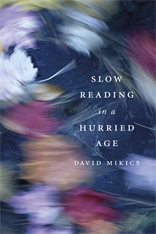
SLOW READING IN A HURRIED AGE
Wrapped in the glow of the computer or phone screen, we cruise websites; we skim and skip. We glance for a brief moment at whatever catches our eye and then move on. Slow Reading in a Hurried Age reminds us of another mode of readingthe kind that requires our full attention and that has as its goal not the mere gathering of information but the deeper understanding that only good books can offer.
Slow Reading in a Hurried Age is a practical guide for anyone who yearns for a more meaningful and satisfying reading experience, and who wants to sharpen reading skills and improve concentration. David Mikics, a noted literary scholar, demonstrates exactly how the tried-and-true methods of slow reading can provide a more immersive, fulfilling experience. He begins with fourteen preliminary rules for slow reading and shows us how to apply them. The rules are followed by excursions into key genres, including short stories, novels, poems, plays, and essays. Reading, Mikics says, should not be drudgery, and not mere escape either, but a way to live life at a higher pitch. A good book is a pathway to finding ourselves, by getting lost in the words and works of others. David Mikics is John and Rebecca Moores Professor of English at the University of Houston.
| Available products |
|---|
|
Book
Published 2013-10-01 by Harvard University Press |