| Vendor | |
|---|---|

|
Liepman Literary Agency
Marc Koralnik |
| Original language | |
| English | |
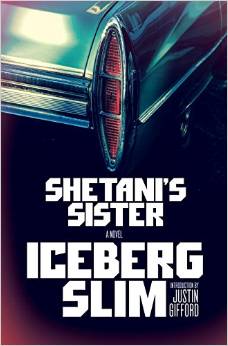
SHETANI'S SISTER
From the multi-million copy master of vernacular black literature and pioneeer of hip hop culture, a masterpiece of crime fiction set in Los Angeles' meanest, toughest streets.
In the canon of African-American crime literature, there is not a more important writer than Robert Beck, better known as Iceberg Slim. The author of an autobiography, five novels, a short story anthology, an essay collection, and a spoken word album, Slim was the dominant black popular writer of the post-Civil Rights era. In 1967, he released his masterwork, Pimp: The Story of My Life, a memoir of his twenty-five-year career as a pimp on the streets of Milwaukee, Chicago, Cleveland, and Detroit. Despite the fact that Pimp was released as a mass-market paperback by a third-tier publishing house, Holloway House, and was ignored by the mainstream literary establishment and the white public, it sold millions of copies at newspaper stands and black bookstores, in barbershops and liquor stores. With titles such as Trick Baby (1967), Mama Black Widow (1969), The Naked Soul of Iceberg Slim (1971), and Airtight Willie and Me (1979), Slim established himself as the definitive voice of black America's urban underworld. Iceberg Slim enjoyed minor celebrity status when Trick Baby was made into a blaxploitation film in 1973, and he appeared on talk shows and in newspaper and magazine interviews, condemning the glorified pimp image. From the early 1980s until his death in 1992, though, Slim remained pretty much out of public view, struggling with diabetes. Despite his failing health, however, he composed two final novels, Night Train to Sugar Hill and Shetani's Sister. He decided not to publish these novels with Holloway House, for over the years the company had gained a reputation for not paying its authors their proper royalties; Slim chose to hide the books away in a drawer rather than allow the company to make another dime off of his work. The manuscript for Shetani's Sister was only uncovered in 2013, when Slim's biographer, Justice Gifford, was conducting research at the home of Slim's widow, Diane Millman Beck. With Shetani's Sister we have an opportunity to appreciate Iceberg Slim from a new perspective. It is in many ways his most mature fictional work, a cross between a detective novel and the pimp literature that made him famous. It provides a powerful glimpse into Los Angeles's criminal underworld, that sidewalk parade of half naked hookers, square pushovers, and sissies clogging the streets and bars. Sex, crime, booze, and dope ruled the treacherous night. The melded odors of bargain colognes and steamy armpits rode the sweltering air like a sour aphrodisiac for gawking male bangers. Slim's prose in Shetani's Sister is as good as any of his earlier workstaut, evocative, and layered with vernacular torn straight from the street corner. At the center of the story are two anti-heroes: Sergeant Russell Rucker, a city vice detective who struggles with alcoholism and a fierce temper, but who attempts to clean up prostitution and police corruption. There is also Shetani, a twenty-five-year veteran pimp from Harlem, who controls a stable of sixteen prostitutes with violence and daily doses of heroin. Much like the acclaimed TV show The Wire, Shetani's Sister is a story told through the alternating perspectives of both the criminals and the cops. Both groups are as courageous as they are deeply flawed, and, as the novel unfolds, their competing worldviews careen toward a spectacular and devastating collision. Iceberg Slim inspired a literary genre and cultural movement with his singular vision of America's mean streets. Read his last novel and you will know precisely why. U.S. & Canada: Vintage Books, August 4, 2015 (Gerald Howard, editor)
| Available products |
|---|
|
Book
Published 2015-08-01 by N-A: Vintage |