| Vendor | |
|---|---|

|
Liepman Literary Agency
Marc Koralnik |
| Original language | |
| French | |
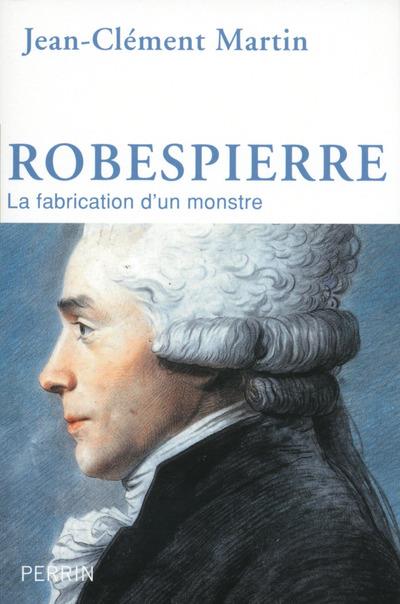
ROBESPIERRE. La fabrication d'un monstre
A new portrait of the revolutionary figure nicknamed the « Incorruptible » it tells the story of how a monster was
created. For the author, the man Robespierre is neither an enigma nor the leader of a sect, but simply one of those young men who become actors in historical events that transcend them and leave them frozen into
caricatures for eternity.
created. For the author, the man Robespierre is neither an enigma nor the leader of a sect, but simply one of those young men who become actors in historical events that transcend them and leave them frozen into
caricatures for eternity.
Two centuries after his death, Robespierre is still a subject that arouses passion and controversy. The life of this obscure lawyer from Arras who became one of the most prominent and most feared revolutionaries in France is seen as enigmatic, even outrageous. This perspective has led Robespierre's biographers of take on the role of judge or defense counsel to explain his life story, which all of them consider unique and incomparable.
This book is the result of a different approach. By refusing to consider Robespierre's short existence as an exceptional destiny, by situating the man among his contemporaries, the author shows how the brilliant student became involved in the nascent Revolution. A recognized orator but a marginalized politician, he had to
wait until the summer of 1793 to share power with his colleagues and organize the victory of the Revolution. He was not the head of the Jacobins, as is often said. It was not until spring 1794 that he came to represent a particular current in the Committee that wanted to control political violence and establish the cult of the
Supreme Being.
His initiatives raised fears that he was fomenting a coup and he was outlawed, and then sent to the guillotine, after a political purge like the ones he had previously helped orchestrate. The essential difference was that in the aftermath of his death, public opinion made him responsible for the Terror.
This book therefore tells the story of how a monster was made. This was the culmination of a personal adventure, one of many in this era marked by very strong personalities, Napoleon Bonaparte providing the example of a success story.
JEAN-CLÉMENT MARTIN, professor emeritus at the University of Paris 1, former director of the Institute of History of the French Revolution, has published Nouvelle Histoire de la Révolution française (New History of the French Revolution) (Perrin, 2012) Rights sold to CRITICA, Spain, La Guerre de Vendée (The Vendée war) (Seuil, 1987 and Points, 2014) and La Machine à fantasmes (The fantasy machine) (Editions Vendémiaire,
2014).
This book is the result of a different approach. By refusing to consider Robespierre's short existence as an exceptional destiny, by situating the man among his contemporaries, the author shows how the brilliant student became involved in the nascent Revolution. A recognized orator but a marginalized politician, he had to
wait until the summer of 1793 to share power with his colleagues and organize the victory of the Revolution. He was not the head of the Jacobins, as is often said. It was not until spring 1794 that he came to represent a particular current in the Committee that wanted to control political violence and establish the cult of the
Supreme Being.
His initiatives raised fears that he was fomenting a coup and he was outlawed, and then sent to the guillotine, after a political purge like the ones he had previously helped orchestrate. The essential difference was that in the aftermath of his death, public opinion made him responsible for the Terror.
This book therefore tells the story of how a monster was made. This was the culmination of a personal adventure, one of many in this era marked by very strong personalities, Napoleon Bonaparte providing the example of a success story.
JEAN-CLÉMENT MARTIN, professor emeritus at the University of Paris 1, former director of the Institute of History of the French Revolution, has published Nouvelle Histoire de la Révolution française (New History of the French Revolution) (Perrin, 2012) Rights sold to CRITICA, Spain, La Guerre de Vendée (The Vendée war) (Seuil, 1987 and Points, 2014) and La Machine à fantasmes (The fantasy machine) (Editions Vendémiaire,
2014).
| Available products |
|---|
|
Book
Published 2016-01-01 by Perrin |