| Vendor | |
|---|---|

|
Fritz Agency
Christian Dittus |
| Original language | |
| English | |
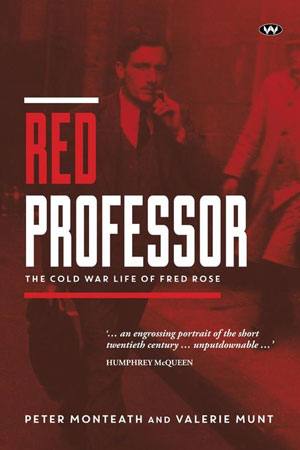
RED PROFESSOR
The Cold War Life of Fred Rose
Fred Rose's life takes us through rip-roaring tales from Australia's northern frontier to enthralling intellectual tussles over kinship systems and political dramas as he runs rings around his Petrov inquisitors.
More than any other injustice, the abuse of Aborigines leads him into the Communist Party in 1942. His move to academic life in what he insisted on calling the German Democratic Republic made him a dissident against anthropological orthodoxies in the Soviet Bloc as he had been in Australia. Those final three decades also see his informing on his children to his Stasi handlers.
Out of relentless research, Peter Monteath and Valerie Munt present an engrossing portrait of the short twentieth century from Rose's birth during the Great War to his death in Berlin shortly after the Wall comes down. The result is unputdownable for its sweep of events while causing us to reflect on how someone can be heroic and horrendous, appalling and admirable.
Peter Monteath teaches History in the School of International Studies at Flinders University in Adelaide, Australia. He is also a Fellow of the Alexander von Humboldt Foundation.
Valerie Munt is an Adjunct Lecturer in History in the School of International Studies at Flinders University.
More than any other injustice, the abuse of Aborigines leads him into the Communist Party in 1942. His move to academic life in what he insisted on calling the German Democratic Republic made him a dissident against anthropological orthodoxies in the Soviet Bloc as he had been in Australia. Those final three decades also see his informing on his children to his Stasi handlers.
Out of relentless research, Peter Monteath and Valerie Munt present an engrossing portrait of the short twentieth century from Rose's birth during the Great War to his death in Berlin shortly after the Wall comes down. The result is unputdownable for its sweep of events while causing us to reflect on how someone can be heroic and horrendous, appalling and admirable.
Peter Monteath teaches History in the School of International Studies at Flinders University in Adelaide, Australia. He is also a Fellow of the Alexander von Humboldt Foundation.
Valerie Munt is an Adjunct Lecturer in History in the School of International Studies at Flinders University.
| Available products |
|---|
|
Book
Published 2015-06-01 by Wakefield Press |