| Vendor | |
|---|---|

|
Liepman Literary Agency
Marc Koralnik |
| Original language | |
| English | |
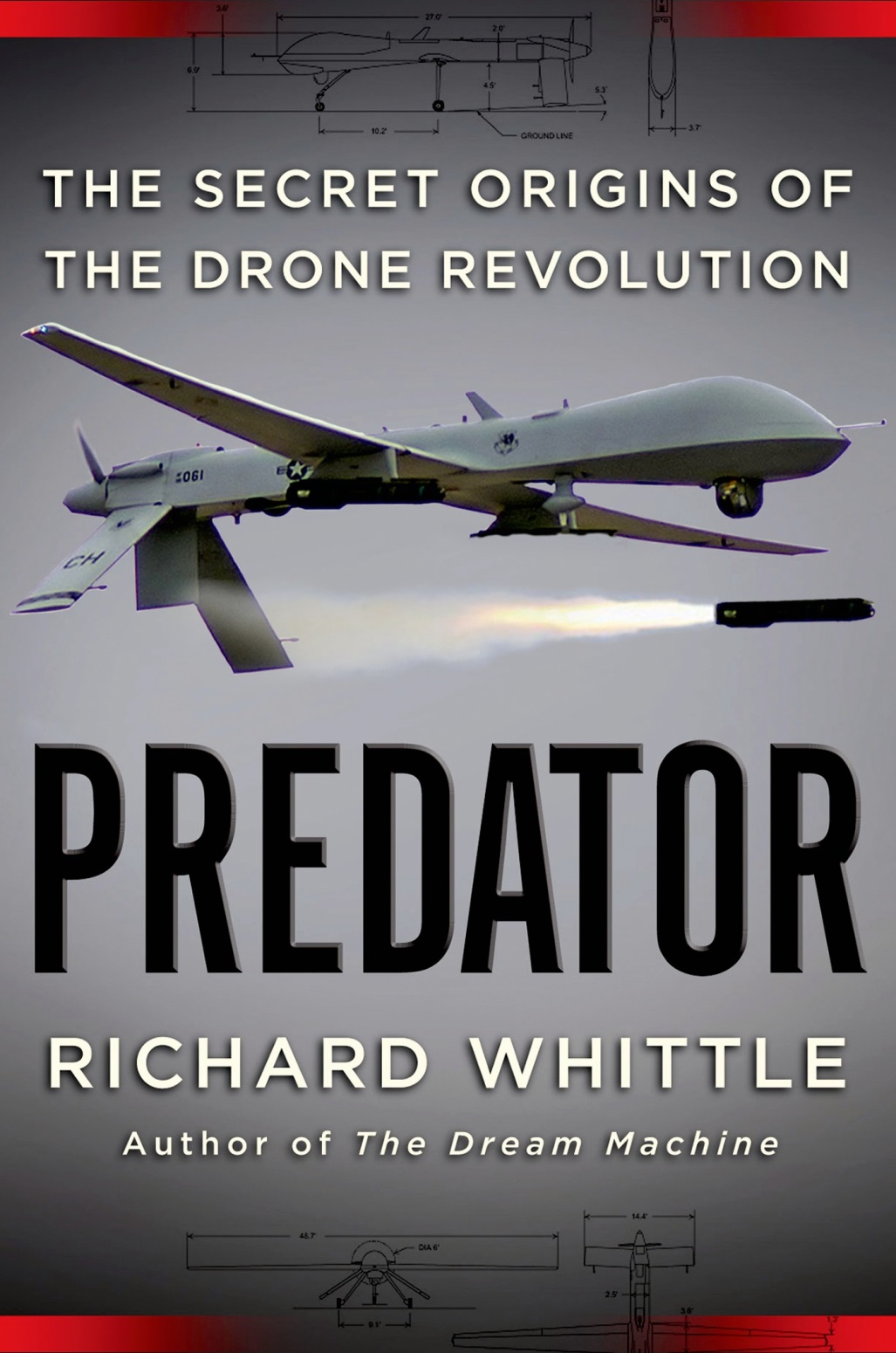
PREDATOR
The Secret Origins of the Drone Revolution
Based on five years of research and hundreds of interviews, Predator is a groundbreaking, dramatic account of the creation of a revolutionary weapon that forever changed the way we wage war.
The creation of the first weapon in history that can stalk and kill an enemy on the other side of the globe was far more than clever engineering. As Richard Whittle shows in Predator, it was the most profound development in military and aerospace technology since the intercontinental ballistic missile. Once considered fragile toys, drones were long thought to be of limited utility. The Predator itself was resisted at nearly every turn by the military establishment, but a few iconoclasts refused to see this new technology smothered at birth. The remarkable cast of characters responsible for developing the Predator includes a former Israeli inventor who turned his Los Angeles garage into a drone laboratory, two billionaire brothers marketing a futuristic weapon that would combat Communism, a pair of fighter pilots willing to buck their white-scarf fraternity, a cunning Pentagon operator nicknamed Snake, and a secretive Air Force organization known as Big Safari. When an Air Force team unleashed the first lethal drone strikes in 2001 for the CIA, the military's view of drones changed nearly overnight. Filled with colorful characters, insider drama and newly reported and controversial facts, Whittle has crafted a non-fiction, hi-tech thriller. Richard Whittle is author of The Dream Machine: The Untold History of the Notorious V-22 Osprey. A Global Fellow at the Woodrow Wilson Center and a 2013-14 Verville Fellow at the National Air and Space Museum, Whittle has covered the military for three decades, including twenty-two years as Pentagon correspondent for The Dallas Morning News. He lives in Chevy Chase, Maryland. Praise for The Dream Machine: A wonderful combination of personal drama, technological detective story, military history, and . . . a valuable and engrossing book that will be read for many years to come. James Fallows, The Atlantic What makes The Dream Machine interesting is the light it sheds on Washington's permanent government,' the lobbyists and consultants and bureaucrats and contractors . . . One of the lessons of Whittle's book is that no one misses a chance to swim in the giant pool of money and power that is the nation's capital, where the defense industry is the biggest fish of all. The Washington Post Book World
| Available products |
|---|
|
Book
Published 2014-09-01 by Henry Holt |