| Vendor | |
|---|---|

|
Mohrbooks Literary Agency
Sebastian Ritscher |
| Original language | |
| English | |
| Categories | |
| Weblink | |
| www.webberenergygroup.com | |
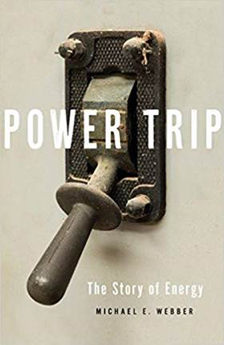
POWER TRIP
The Story of Energy
Energy is the builder of human civilization and also its greatest threat. In Power Trip energy expert Michael E. Webber argues that understanding how societies rise is mostly about understanding how they manage energy sources through time.
In this way, energy is unique: no other physical resource has had such a wide-ranging impact on our ecosystems, economy, public health, and personal liberties. And as concerns about energy have shaped past generations, so too will they shape ours. The turbulent era of fossil fuels - prime players in the past century's environmental, economic, and geopolitical struggles - is stumbling to a close in the West while much of the rest of the world is just waking up to coal. If the story of us is the story of energy, then future prospects look bleak.
But, as Webber points out, history shows us that energy's great value is that it allows societies to reinvent themselves. To be sure, this history is complicated and often surprising. Energy has allowed us to secure life-sustaining resources, build reliable infrastructure, connect continents, democratize wealth, and achieve progress on long-running gender and racial disparities. It helped save North America from deforestation and even played a role in getting women the vote. But it has also accelerated climate change, incited geopolitical insecurity, increased economic inequality, and degraded environments worldwide.
In short, energy development can break civilizations as swiftly as it makes them. But Power Trip offers wisdom for our current predicament. There no magic bullet; energy advances always come with costs. Scientific innovation needs public support. Energy initiatives need to be tailored to individual societies. We must look for long-term solutions. Our current energy crisis is real, but it is solvable. We have the power.
Power Trip is sure to appeal to readers of Gregory Zuckerman's The Fracken, Alex Epstein's The Moral Case for Fossil Fuels, and Seth Siegel's Let There Be Water.
Michael E. Webber is the Josey Centennial Professor in Energy Resources and professor of mechanical engineering at the University of Texas at Austin. He is also author of Thirst for Power. He lives in Paris, France, where he is serving as the Chief Scientific and Technical Officer for Engie, a global energy and infrastructure services firm.
But, as Webber points out, history shows us that energy's great value is that it allows societies to reinvent themselves. To be sure, this history is complicated and often surprising. Energy has allowed us to secure life-sustaining resources, build reliable infrastructure, connect continents, democratize wealth, and achieve progress on long-running gender and racial disparities. It helped save North America from deforestation and even played a role in getting women the vote. But it has also accelerated climate change, incited geopolitical insecurity, increased economic inequality, and degraded environments worldwide.
In short, energy development can break civilizations as swiftly as it makes them. But Power Trip offers wisdom for our current predicament. There no magic bullet; energy advances always come with costs. Scientific innovation needs public support. Energy initiatives need to be tailored to individual societies. We must look for long-term solutions. Our current energy crisis is real, but it is solvable. We have the power.
Power Trip is sure to appeal to readers of Gregory Zuckerman's The Fracken, Alex Epstein's The Moral Case for Fossil Fuels, and Seth Siegel's Let There Be Water.
Michael E. Webber is the Josey Centennial Professor in Energy Resources and professor of mechanical engineering at the University of Texas at Austin. He is also author of Thirst for Power. He lives in Paris, France, where he is serving as the Chief Scientific and Technical Officer for Engie, a global energy and infrastructure services firm.
| Available products |
|---|
|
Book
Published 2019-05-07 by Basic Books |
|
Book
Published 2019-05-07 by Basic Books |