| Vendor | |
|---|---|

|
Fritz Agency
Christian Dittus |
| Original language | |
| English | |
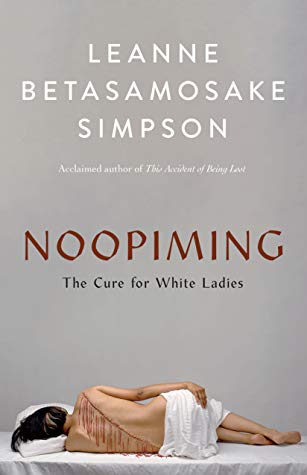
NOOPIMING
The Cure for White Ladies
Leanne Betasamosake Simpson's Noopiming: The Cure for White Ladies is a bold reimagination of the novel, one that combines narrative and poetic fragments through a careful and fierce reclamation of Anishinaabe aesthetics.
Noopiming is Anishinaabemowin for in the bush, and the title is a response to English settler and author Susanna Moodie's 1852 memoir Roughing It in the Bush. It was commissioned as a guidebook for British immigrants coming to North America and has since become a part of our literary canon. Set in the same place as Moodie's colonial memoir, this genre-fluid novel is offered as a cure for Moodie's racist treatment of Mississauga Nishnaabeg in her writing.
She creates for us a world alive with people, animals, ancestors, and spirits who are all busy with the daily labours of healing healing not only themselves, but their individual pieces of the network, of the web that connects them all together. These stories gather up tiny pieces, one at a time, as they slowly circle through the perspectives of different characters, in a breathtaking act of world-building that rewards patience and deep listening. This is the real world, the one where meaning accumulates through close observation and relationship. Enter and be changed.
Noopiming is Anishinaabemowin for in the bush, and the title is a response to English settler and author Susanna Moodie's 1852 memoir Roughing It in the Bush. It was commissioned as a guidebook for British immigrants coming to North America and has since become a part of our literary canon. Set in the same place as Moodie's colonial memoir, this genre-fluid novel is offered as a cure for Moodie's racist treatment of Mississauga Nishnaabeg in her writing.
She creates for us a world alive with people, animals, ancestors, and spirits who are all busy with the daily labours of healing healing not only themselves, but their individual pieces of the network, of the web that connects them all together. These stories gather up tiny pieces, one at a time, as they slowly circle through the perspectives of different characters, in a breathtaking act of world-building that rewards patience and deep listening. This is the real world, the one where meaning accumulates through close observation and relationship. Enter and be changed.
| Available products |
|---|
|
Book
Published 2020-09-01 by House of Anansi Press |