| Vendor | |
|---|---|

|
Fritz Agency
Christian Dittus |
| Original language | |
| English | |
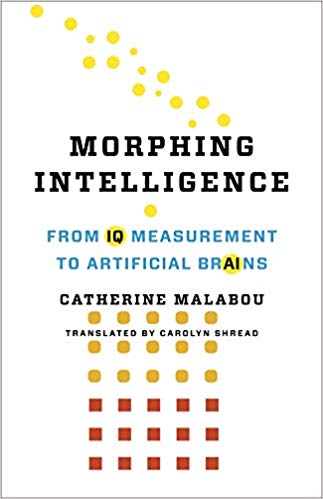
MORPHING INTELLIGENCE
Catherine Malabou Carolyn Shread
From IQ Measurements to Artificial Brains
What is intelligence? The concept crosses and blurs the boundaries between natural and artificial, bridging the human brain and the cybernetic world of AI. In this book, the acclaimed philosopher Catherine Malabou ventures a new approach that emphasizes the intertwined, networked relationships among the biological, the technological, and the symbolic.
Malabou traces the modern metamorphoses of intelligence, seeking to understand how neurobiological and neurotechnological advances have transformed our present-day view. She considers three crucial developments: the notion of intelligence as an empirical, genetically based quality measurable by standardized tests; the shift to the epigenetic paradigm, with its emphasis on neural plasticity; and the dawn of artificial intelligence, with its potential to simulate, replicate, and ultimately surpass the workings of the brain. Malabou concludes that a dialogue between human and cybernetic intelligence offers the best if not the only means to build a democratic future. A strikingly original exploration of our changing notions of intelligence and the human and their far-reaching philosophical and political implications, Morphing Intelligence is an essential analysis of the porous border between symbolic and biological life at a time when once-clear distinctions between mind and machine have become uncertain.
Catherine Malabou is professor of philosophy at the Centre for Research in Modern European Philosophy at Kingston University, London, and of comparative literature at the University of California, Irvine.
Translated from the French by Carolyn Shread
Malabou traces the modern metamorphoses of intelligence, seeking to understand how neurobiological and neurotechnological advances have transformed our present-day view. She considers three crucial developments: the notion of intelligence as an empirical, genetically based quality measurable by standardized tests; the shift to the epigenetic paradigm, with its emphasis on neural plasticity; and the dawn of artificial intelligence, with its potential to simulate, replicate, and ultimately surpass the workings of the brain. Malabou concludes that a dialogue between human and cybernetic intelligence offers the best if not the only means to build a democratic future. A strikingly original exploration of our changing notions of intelligence and the human and their far-reaching philosophical and political implications, Morphing Intelligence is an essential analysis of the porous border between symbolic and biological life at a time when once-clear distinctions between mind and machine have become uncertain.
Catherine Malabou is professor of philosophy at the Centre for Research in Modern European Philosophy at Kingston University, London, and of comparative literature at the University of California, Irvine.
Translated from the French by Carolyn Shread
| Available products |
|---|
|
Book
Published 2019-01-01 by Columbia University Press |