| Vendor | |
|---|---|

|
Fritz Agency
Christian Dittus |
| Original language | |
| English | |
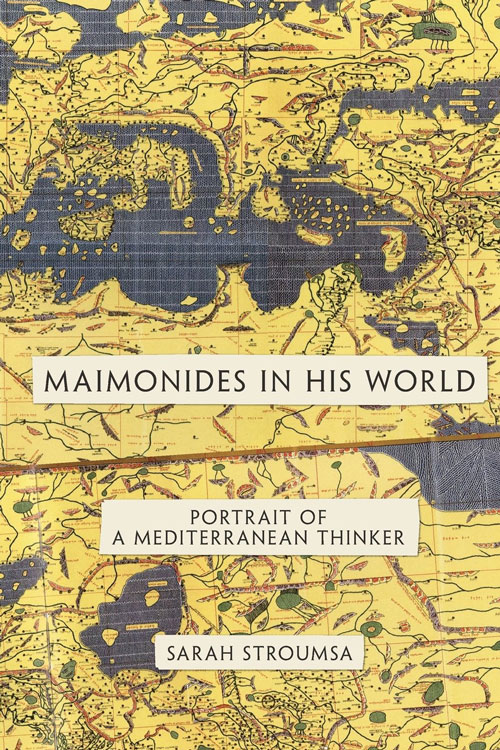
MAIMONIDES IN HIS WORLD
Portrait of a Mediterranean Thinker
While the great medieval philosopher, theologian, and physician Maimonides is acknowledged as a leading Jewish thinker, his intellectual contacts with his surrounding world are often described as related primarily to Islamic philosophy. MAIMONIDES IN HIS WORLD challenges this view by revealing him to have wholeheartedly lived, breathed, and espoused the rich Mediterranean culture of his time.
Sarah Stroumsa argues that Maimonides is most accurately viewed as a Mediterranean thinker who consistently interpreted his own Jewish tradition in contemporary multicultural terms. Maimonides spent his entire life in the Mediterranean region, and the religious and philosophical traditions that fed his thought were those of the wider world in which he lived. Stroumsa demonstrates that he was deeply influenced not only by Islamic philosophy but by Islamic culture as a whole, evidence of which she finds in his philosophy as well as his correspondence and legal and scientific writings. She begins with a concise biography of Maimonides, then carefully examines key aspects of his thought, including his approach to religion and the complex world of theology and religious ideas he encountered among Jews, Christians, Muslims, and even heretics; his views about science; the immense and unacknowledged impact of the Almohads on his thought; and his vision of human perfection.
Sarah Stroumsa is the Alice and Jack Ormut Professor of Arabic Studies at the Hebrew University of Jerusalem, where she currently serves as rector.
Sarah Stroumsa argues that Maimonides is most accurately viewed as a Mediterranean thinker who consistently interpreted his own Jewish tradition in contemporary multicultural terms. Maimonides spent his entire life in the Mediterranean region, and the religious and philosophical traditions that fed his thought were those of the wider world in which he lived. Stroumsa demonstrates that he was deeply influenced not only by Islamic philosophy but by Islamic culture as a whole, evidence of which she finds in his philosophy as well as his correspondence and legal and scientific writings. She begins with a concise biography of Maimonides, then carefully examines key aspects of his thought, including his approach to religion and the complex world of theology and religious ideas he encountered among Jews, Christians, Muslims, and even heretics; his views about science; the immense and unacknowledged impact of the Almohads on his thought; and his vision of human perfection.
Sarah Stroumsa is the Alice and Jack Ormut Professor of Arabic Studies at the Hebrew University of Jerusalem, where she currently serves as rector.
| Available products |
|---|
|
Book
Published 2009-09-01 by Princeton University Press |