| Vendor | |
|---|---|

|
Liepman Literary Agency
Marc Koralnik |
| Original language | |
| French | |
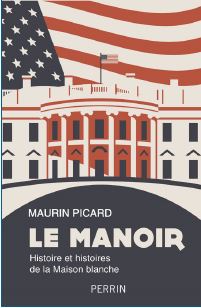
LE MANOIR: The Mansion : A History and Stories of the White House
A different approach to the history of the United States through the annals of its most emblematic building - a story told by a talented writer in twenty suspenseful chapters that constitute a real narrative series.
A citizens' "Versailles" for a young republic born by the force of arms, America's "house of the people" - the White House, more than two centuries after its inauguration, exercises an unparalleled fascination among the world's high places of power.
It has been spared nothing, at least on film and in literature. How many times has it been razed, destroyed, stormed, including by invaders from outer space? How many bloody intrigues has it accommodated, on the big or small screen? How many international crises have been resolved there? How many movies and television series have focused on it, starting with the most popular, The West Wing?
A symbol of absolute power and a source of folklore for the great American saga, the grand patrician residence was indeed the scene of singular and dramatic events that the passage of time has obscured. The White House attracts as much as it repels Americans, who are distrustful of the federal government but passionately devoted to their presidential history.
These presidents were not always fond of the intimidating "executive mansion". Harry Truman called it the "great white prison" and dreamed of escaping it. Surely he felt the crushing weight of the past, eminently glorious but so tragic. The ghost of Abraham Lincoln is said to have wandered its corridors since that fateful evening in April 1865 and the play he would gladly have missed. The ghosts of inconsolable First Ladies also lurk: Jane Pierce and Mary Todd Lincoln, mourning the children they lost. And the ghosts of slaves who toiled to build the mansion between 1792 and 1800, whose memory Michelle Obama eventually honored in 2016.
A historian and journalist, MAURIN PICARD is a correspondent for the newspaper Le Figaro in the United States. He has previously published Des héros ordinaires (Ordinary Heroes, 2016) with Perrin and Ils ont tué monsieur H. (They killed Mr. H., 2019) at Le Seuil.
It has been spared nothing, at least on film and in literature. How many times has it been razed, destroyed, stormed, including by invaders from outer space? How many bloody intrigues has it accommodated, on the big or small screen? How many international crises have been resolved there? How many movies and television series have focused on it, starting with the most popular, The West Wing?
A symbol of absolute power and a source of folklore for the great American saga, the grand patrician residence was indeed the scene of singular and dramatic events that the passage of time has obscured. The White House attracts as much as it repels Americans, who are distrustful of the federal government but passionately devoted to their presidential history.
These presidents were not always fond of the intimidating "executive mansion". Harry Truman called it the "great white prison" and dreamed of escaping it. Surely he felt the crushing weight of the past, eminently glorious but so tragic. The ghost of Abraham Lincoln is said to have wandered its corridors since that fateful evening in April 1865 and the play he would gladly have missed. The ghosts of inconsolable First Ladies also lurk: Jane Pierce and Mary Todd Lincoln, mourning the children they lost. And the ghosts of slaves who toiled to build the mansion between 1792 and 1800, whose memory Michelle Obama eventually honored in 2016.
A historian and journalist, MAURIN PICARD is a correspondent for the newspaper Le Figaro in the United States. He has previously published Des héros ordinaires (Ordinary Heroes, 2016) with Perrin and Ils ont tué monsieur H. (They killed Mr. H., 2019) at Le Seuil.
| Available products |
|---|
|
Book
Published 2020-10-01 by Perrin |