| Vendor | |
|---|---|

|
Liepman Literary Agency
Marc Koralnik |
| Original language | |
| French | |
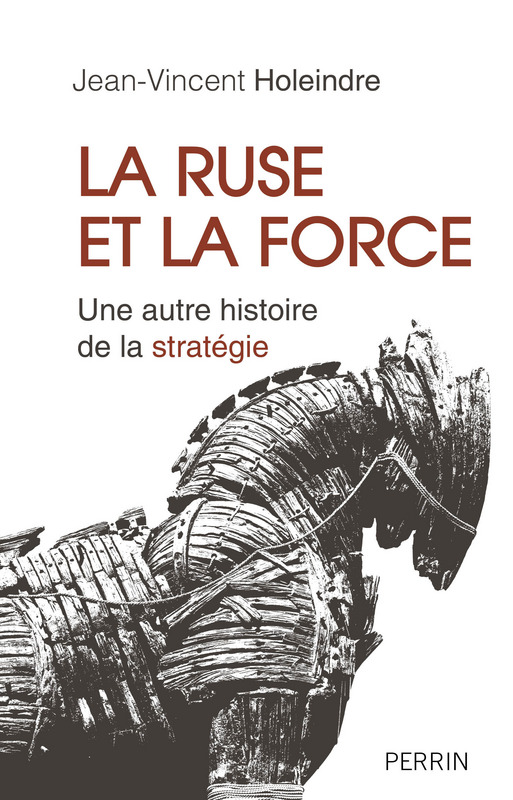
LA RUSE ET LA FORCE
Une autre histoire de la stratégie
Calling into question the Western model of war, this book seeks to illustrate how much strategy in the Western world owes to ruse, identifying the key moments in its history, from the ancient Greeks to terrorist movements of the 21st century.
A long history of strategy thus unfolds, which stages, for the first time and in a systematic way, the uninterrupted dialogue between cunning and strength.
In the eighth century BC, Homer gave us a striking account of the duality that underlies strategy. In the Iliad and the Odyssey, the Greek poet dramatizes war through two leading figures. Achilles, the hero of strength, is a warrior: his honor is paramount. Ulysses, the hero of cunning, is a strategist: winning is all that counts.
This combination of force and ruse seems to structure the history of strategy in the West from the outset. Yet it is force that has attracted more attention from historians. In Victor Davis Hanson's The Western Way of War, ruse never appears as a major element of strategy. On the contrary, it is a foil. This military and strategic
Orientalism is obviously not acceptable, because it simply does not reflect the historical reality and it echoes an ideological discourse.
A specialist in the history of strategy and war with advanced degrees in political science, Jean Vincent Holeindre is a professor at the University of Poitiers where he teaches political philosophy and international relations. He also teaches at Sciences Po Paris and is an associate member of the Institut Michel Villey. With Jean Baechler, he edited the collective books Penseurs de la stratégie (Thinkers of Strategy, Hermann, 2014) and Guerre et politique (War and Politics, Hermann, 2014).
In the eighth century BC, Homer gave us a striking account of the duality that underlies strategy. In the Iliad and the Odyssey, the Greek poet dramatizes war through two leading figures. Achilles, the hero of strength, is a warrior: his honor is paramount. Ulysses, the hero of cunning, is a strategist: winning is all that counts.
This combination of force and ruse seems to structure the history of strategy in the West from the outset. Yet it is force that has attracted more attention from historians. In Victor Davis Hanson's The Western Way of War, ruse never appears as a major element of strategy. On the contrary, it is a foil. This military and strategic
Orientalism is obviously not acceptable, because it simply does not reflect the historical reality and it echoes an ideological discourse.
A specialist in the history of strategy and war with advanced degrees in political science, Jean Vincent Holeindre is a professor at the University of Poitiers where he teaches political philosophy and international relations. He also teaches at Sciences Po Paris and is an associate member of the Institut Michel Villey. With Jean Baechler, he edited the collective books Penseurs de la stratégie (Thinkers of Strategy, Hermann, 2014) and Guerre et politique (War and Politics, Hermann, 2014).
| Available products |
|---|
|
Book
Published 2017-02-01 by Perrin |