| Vendor | |
|---|---|

|
Fritz Agency
Christian Dittus |
| Original language | |
| English | |
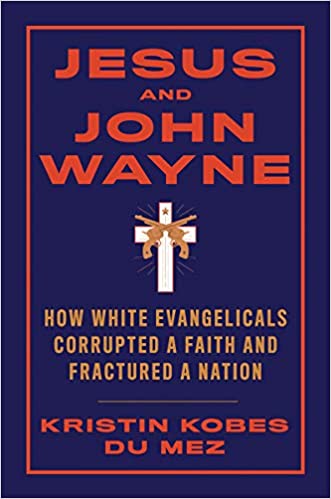
JESUS AND JOHN WAYNE
How White Evangelicals Corrupted a Faith and Fractured a Nation
A scholar of American Christianity presents a seventy-five-year history of evangelicalism that identifies the forces that have turned Donald Trump into a hero of the Religious Right.
How did a libertine who lacks even the most basic knowledge of the Christian faith win 81 percent of the white evangelical vote in 2016? And why have white evangelicals become a presidential reprobate's staunchest supporters? These are among the questions acclaimed historian Kristin Kobes Du Mez asks in Jesus and John Wayne, which delves beyond facile headlines to explain how white evangelicals have brought us to our fractured political moment. Challenging the commonly held assumption that the "moral majority" backed Donald Trump for purely pragmatic reasons, Du Mez reveals that Donald Trump in fact represents the fulfillment, rather than the betrayal, of white evangelicals' most deeply held values.
With 15 b/w illustrations
How did a libertine who lacks even the most basic knowledge of the Christian faith win 81 percent of the white evangelical vote in 2016? And why have white evangelicals become a presidential reprobate's staunchest supporters? These are among the questions acclaimed historian Kristin Kobes Du Mez asks in Jesus and John Wayne, which delves beyond facile headlines to explain how white evangelicals have brought us to our fractured political moment. Challenging the commonly held assumption that the "moral majority" backed Donald Trump for purely pragmatic reasons, Du Mez reveals that Donald Trump in fact represents the fulfillment, rather than the betrayal, of white evangelicals' most deeply held values.
With 15 b/w illustrations
| Available products |
|---|
|
Book
Published 2020-06-01 by Liveright (W.W. Norton) |