| Vendor | |
|---|---|

|
Mohrbooks Literary Agency
Sebastian Ritscher |
| Original language | |
| English | |
| Categories | |
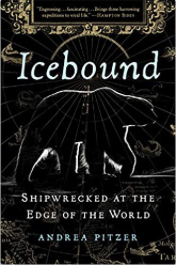
ICEBOUND
Shipwrecked at the Edge of the World
On an Arctic expedition in 1596 - "the first true polar voyage ever made" - Dutch navigator William Barents sailed from Amsterdam in search of a northeast trade route to China. Skirting the Scandinavian coastline that May on his third attempt to find navigable waters, he left the safety of the continent for the mysteries of the far North and the open sea he hoped to discover there.
Instead, by September, Barents and sixteen crewmembers found themselves trapped, icebound in the high Arctic. Forced off their ship and stranded for the winter, they struggled to survive an inhuman climate.
Catastrophes endured by the crew subjected them to horrific suffering, but also changed history. Expanding the edges of the mapped world, making scientific discoveries, and inspiring countless explorers who followed in their wake, William Barents and those who sailed with him influenced the search for commerce and shaped the path of colonialism engulfing the globe. The modern world is still buffeted by the historical tides unleashed in his era. Icebound will narrate the deadly challenges facing the sailors on Barents' three expeditions and their place in history.
An account of Barents' last voyage - the first overwintering in the high Arctic - became an international bestseller just two years later. His ordeals inspired and terrified explorers for hundreds of years. They were so well-known to audiences that they found use as a cultural touchstone by Shakespeare in Twelfth Night ("You are now sailed into the north of my lady's opinion, where you will hang like an icicle on a Dutchman's beard"). Yet the details of these exploits faded from public memory over time until they became footnotes in tales of later expeditions, and the literary references were forgotten. ICEBOUND will exhume the full story.
Andrea Pitzer is the founder of Nieman Storyboard, the narrative nonfiction site of the Nieman Foundation for Journalism at Harvard University (which she also edited during its first years). She was for several years spent a judge for the National Magazine Awards. She has written for Slate, USA Today, Vox, the Los Angeles Review of Books, Longreads, and Lapham's Quarterly, among other publications. Her writing has previously been reviewed or featured by NPR, PRI, the New Yorker, the New York Review of Books, Smithsonian, Foreign Policy, the Boston Globe, the New Republic, as well as dozens of other print, radio, and television outlets. Andrea is sailing for the Barents Sea on a tall ship beginning Sept. 28, 2018. She'll be out in the Arctic until Oct. 19, incommunicado. She'll be living this story (in a way)!
Catastrophes endured by the crew subjected them to horrific suffering, but also changed history. Expanding the edges of the mapped world, making scientific discoveries, and inspiring countless explorers who followed in their wake, William Barents and those who sailed with him influenced the search for commerce and shaped the path of colonialism engulfing the globe. The modern world is still buffeted by the historical tides unleashed in his era. Icebound will narrate the deadly challenges facing the sailors on Barents' three expeditions and their place in history.
An account of Barents' last voyage - the first overwintering in the high Arctic - became an international bestseller just two years later. His ordeals inspired and terrified explorers for hundreds of years. They were so well-known to audiences that they found use as a cultural touchstone by Shakespeare in Twelfth Night ("You are now sailed into the north of my lady's opinion, where you will hang like an icicle on a Dutchman's beard"). Yet the details of these exploits faded from public memory over time until they became footnotes in tales of later expeditions, and the literary references were forgotten. ICEBOUND will exhume the full story.
Andrea Pitzer is the founder of Nieman Storyboard, the narrative nonfiction site of the Nieman Foundation for Journalism at Harvard University (which she also edited during its first years). She was for several years spent a judge for the National Magazine Awards. She has written for Slate, USA Today, Vox, the Los Angeles Review of Books, Longreads, and Lapham's Quarterly, among other publications. Her writing has previously been reviewed or featured by NPR, PRI, the New Yorker, the New York Review of Books, Smithsonian, Foreign Policy, the Boston Globe, the New Republic, as well as dozens of other print, radio, and television outlets. Andrea is sailing for the Barents Sea on a tall ship beginning Sept. 28, 2018. She'll be out in the Arctic until Oct. 19, incommunicado. She'll be living this story (in a way)!
| Available products |
|---|
|
Book
Published 2021-01-07 by Scribner |
|
Book
Published 2021-01-07 by Scribner |